
900 V CoolGaN Bidirectional Switches: An Electronicseng Semiconductors Perspective on Infineon and Enphase AI Power Paths
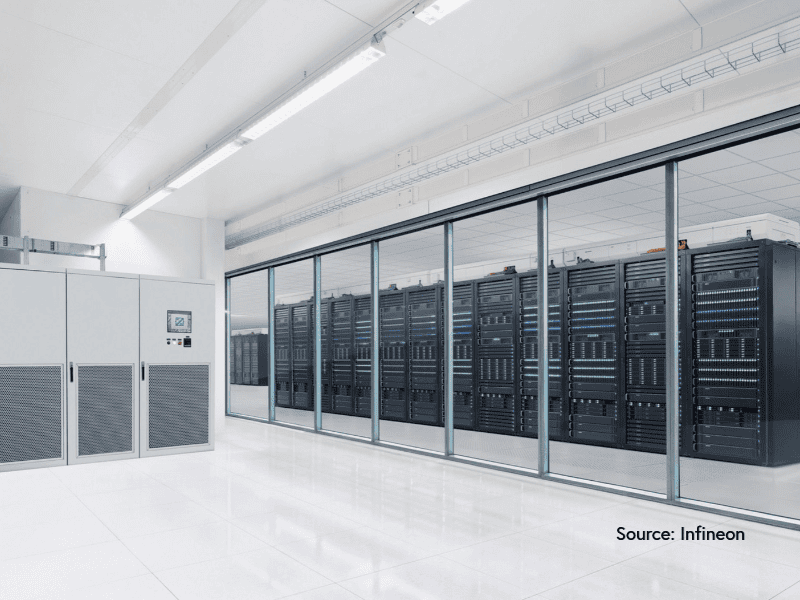
Although the item was originally directed at eeNews Europe readers working on power electronics, the more useful question for Electronicseng Semiconductors readers is different: what does a 900 V GaN device change in semiconductor architecture, not merely in product headlines? Infineon Technologies and Enphase Energy have aligned their CoolGaN effort around a monolithic bidirectional switch that targets solid-state transformers in AI data centre power systems, while also pointing toward three-phase commercial solar inverter use cases. For engineers and procurement teams, the signal is about voltage class migration, stage reduction, reliability planning, and the gap between demonstrated devices and production availability.
By Rachel Williams, Electronics & Engineering. Contact: info@electronicseng.com
Why the 900 V GaN switch changes component planning
Infineon Technologies presents the device as part of the CoolGaN family, and the key term is monolithic. The 900 V GaN bidirectional switch integrates bidirectional voltage blocking and bidirectional current conduction inside one semiconductor device. Conventional power switching arrangements may need multiple devices to achieve bidirectional operation. In a power system bill of materials, that distinction can be more important than the voltage number alone, because it changes the number of parts placed in the conversion path, the number of interconnections to validate, and the architectural options available to a solid-state transformer or inverter designer.
The device claim is not simply that GaN can operate at a higher voltage rating. The companies describe the CoolGaN devices as the world's first monolithic GaN bidirectional switches at this voltage rating, which is why the announcement matters to readers who evaluate power semiconductors by system impact rather than by a single datasheet field. The relevant engineering test is whether the integrated bidirectional behaviour reduces enough complexity to justify a new design cycle.
GaN's high-frequency operating characteristics remain a second pillar. High switching frequency can influence magnetic-component size and power density. In a solid-state transformer, magnetics and power path components are central to volume, layout, and thermal behaviour. In an inverter or converter, they also affect how a product package is structured. A higher voltage class can give designers additional margin, but the benefit appears only if the system architecture is planned to exploit that margin instead of treating the device as a near-direct replacement.
Infineon's stated architecture link is the transition toward 800 V and future 1,500 VDC power distribution systems. That is not a claim that all AI data centre systems will move immediately. It is a semiconductor-design claim: a 900 V blocking rating can provide headroom when the target system voltage is raised above the class where 650 V GaN switches were used. The value proposition depends on whether a design can collapse or simplify stages because of that headroom.
What Infineon Technologies and Enphase Energy are each adding
Infineon Technologies brings the device family and the voltage-class message. Enphase Energy brings a named system target: the IQ Solid-State Transformer, developed for AI data centres where electrical efficiency, reliability, and power density affect infrastructure operating costs. Power electronics are used inside solid-state transformers to perform voltage conversion and power management, positioning them as an alternative to conventional transformer-based distribution architectures.
Adam White, Division President Power Systems at Infineon, framed the work as part of a broader portfolio rather than a single-technology race. He stated: The future of power conversion will be enabled by a broad portfolio of semiconductor technologies, and added: With our new 900 V CoolGaN BDS, we are extending the range of applications where customers can benefit from the efficiency and power density advantages of GaN and bringing the technology into a voltage class that opens new possibilities for high-performance power conversion systems.
For system planners, the Enphase statement about voltage headroom is important. Moving to 900 V enables additional voltage margin, which can potentially eliminate conversion stages and reduce the number of components in the power path. That is where a device-level rating becomes architecture-level change: if a converter previously needed several stages to bridge system voltages, a higher blocking voltage may allow fewer stages or fewer devices, provided losses, thermal limits, reliability, and qualification are acceptable.
This collaboration also follows earlier work with 650 V GaN bidirectional switches used in Enphase IQ9 microinverters. The 650 V reference provides an application precedent. It tells readers that the companies have already worked with GaN in bidirectional conversion for energy systems; the new point is extending the voltage class and the device architecture from that earlier context into solid-state transformer applications and higher-voltage conversion paths.
Architecture comparison: conventional paths versus 900 V CoolGaN framing
| Design dimension | Conventional switching arrangements | 900 V CoolGaN monolithic bidirectional switch framing | Semiconductor engineering note |
|---|---|---|---|
| Bidirectional function | Multiple devices may be needed to achieve bidirectional operation. | Bidirectional voltage blocking and current conduction are integrated in one semiconductor device. | Component count and interconnection complexity become the first comparison points. |
| Power stage count | Higher system voltage can require more conversion or management stages. | Additional 900 V headroom may potentially eliminate conversion stages. | Validate whether stage elimination is feasible in the specific topology. |
| Magnetics and density | Topology and switching frequency constrain magnetic size. | GaN high-frequency behaviour supports smaller magnetic components and higher power density. | Layout, cooling, and isolation assumptions need redesign review. |
| System voltage targets | Existing distribution voltages remain the working baseline. | 800 V and future 1,500 VDC are positioned as higher-voltage DC directions. | The device is most relevant when a roadmap reaches this headroom range. |
| Application breadth | Data centre and solar systems may use different architectures. | AI data centre power systems and three-phase commercial solar inverter designs are named. | A single voltage class can serve multiple power-conversion programmes. |
| Availability risk | Known devices may already have qualification paths. | Initial testing complete, integration underway, production qualification expected, no timetable. | Procurement should treat the switch as a forward-looking design option. |
Application map: where the 900 V rating is likely to be evaluated
- AI data centre power systems: solid-state transformers need voltage conversion and power management while balancing efficiency, reliability, and power density against infrastructure operating costs.
- Solid-state transformer development: Enphase's IQ Solid-State Transformer is the stated system where the device is being integrated, with initial testing completed and development continuing.
- 800 V and 1,500 VDC distribution: the higher blocking voltage supports flexibility for systems transitioning toward these DC voltage classes.
- Three-phase commercial solar inverters: designs at 480 V in the United States and 400 V in other markets are named as additional potential application areas.
- Stage-count reduction: where voltage headroom is sufficient, the architecture may allow fewer components in the power path and potentially fewer conversion stages.
Common misconceptions to avoid
- A 900 V rating means immediate commercial supply. The stated status is completed initial testing, integration into Enphase development, expected production qualification, and no announced timetable.
- The device is only an AI data centre component. The companies also point to three-phase commercial solar inverter designs operating at 480 V in the United States and 400 V in other markets.
- Higher voltage automatically reduces cost. Fewer switches, lower conversion losses, and reduced system costs are expectations enabled by the device and system architecture, but they depend on design realization and qualification.
- 900 V CoolGaN is a simple replacement for 650 V GaN. The earlier 650 V GaN switches used in IQ9 microinverters establish continuity, yet the new device introduces a different voltage class and a monolithic bidirectional switch concept.
FAQ for semiconductor and power-system readers
What is the key claim behind the 900 V CoolGaN device?
Infineon Technologies and Enphase Energy describe the CoolGaN devices as the world's first monolithic GaN bidirectional switches at this voltage rating. The engineering substance is the integration of bidirectional voltage blocking and current conduction in one device.
Why does Enphase mention voltage headroom?
Moving to 900 V creates additional margin, which may potentially eliminate conversion stages and reduce components in the power path of the IQ Solid-State Transformer.
Are the switches already available?
No timetable for commercial availability has been announced. Initial testing is complete, integration is under way, and production qualification is expected to follow.
Which non-data-centre application is cited?
Three-phase commercial solar inverter designs at 480 V in the United States and 400 V in other markets are cited.
How does the 650 V GaN work relate?
It builds on earlier 650 V GaN bidirectional switches used in Enphase IQ9 microinverters, showing a prior use case for GaN in bidirectional energy conversion.
Checklist for engineers evaluating 900 V GaN in a power path
- Identify the system voltage target and note whether 800 V or future 1,500 VDC architecture direction changes stage planning.
- Compare conventional bidirectional switching devices with the monolithic 900 V CoolGaN approach at component count, interconnection count, and conversion-stage count.
- Model the power path for potential conversion-stage elimination before assuming cost or reliability benefits.
- Review magnetic-component size, power density, layout, cooling, and isolation constraints where GaN high-frequency operation is exploited.
- Track production qualification status, because the companies have not announced a commercial availability timetable.
- Document design assumptions if the platform may later move from 650 V GaN precedent to a higher-voltage bidirectional architecture.
Action recommendations for Electronicseng readers
For Electronicseng Semiconductors readers, the practical response is to treat the 900 V GaN switch as an architecture probe rather than an immediate procurement replacement. Engineers working on solid-state transformers, higher-voltage DC distribution, or three-phase inverter platforms should first ask whether the headroom allows them to remove a stage, merge a path, or reduce component count without moving risk into magnetics, controls, or qualification. Supply-chain teams should add the device to a watchlist, not a baseline bill of materials, until production qualification details and availability are confirmed. Design leads can use the 800 V, 1,500 VDC, 480 V, and 400 V references as boundary markers for where the next evaluation would be meaningful.