
Electronicseng Semiconductors Review: AI Output, Memory Costs, and the 2026 Production Split
For 2026, the electronics cycle is not one story. Semiconductor Intelligence's 22 October analysis separates AI-driven manufacturing strength, most visible in Taiwan, from consumer-device weakness tied to memory-supply tightness and rising memory prices. Across major manufacturing economies, output growth accelerated, but the gains and losses point to different sourcing, planning, and design decisions.
Measurement lens: why the reporting method matters
The consultancy reports production by using a three-month average and comparing it with a year earlier. That method smooths month-to-month volatility and gives a cleaner view of industrial momentum. For semiconductor managers, the smoothing is practical: a single shipment month can overstate a temporary inventory effect, while the three-month average reduces the risk of reacting to noise.
Taiwan: concentrated AI-module strength
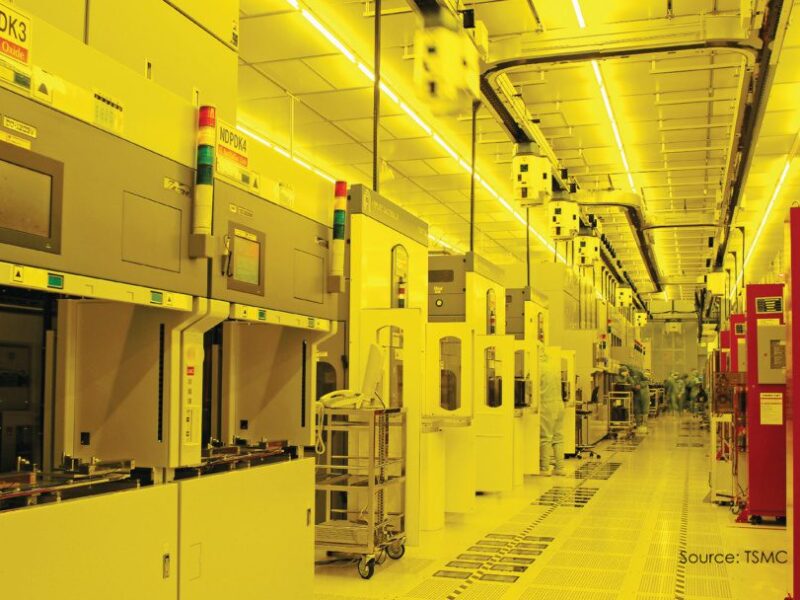
Taiwan is the standout in the 2026 dataset. Over much of the year, its electronics output increased more than 100% relative to a year earlier. Semiconductor Intelligence traces most of that lift to AI modules associated with NVIDIA; in the described chain, TSMC produces integrated circuits while other suppliers assemble the modules. This is not a broad consumer-led recovery. It is a module-linked production expansion pulling output higher.
For engineers, the key inference is that growth in this dataset is tightly linked to specific platform demand. The cited series shows AI-module manufacturing strength even as other device categories face weaker shipments.
Japan, EU27 and US: different recovery clocks
The remaining advanced manufacturing economies show improvement, but not on the same schedule. Japan turned from a 1.5% negative reading in January into a 17.6% positive reading in August. EU27 shifted from a 10.5% negative reading in January to a 16.9% positive reading in July. US electronics production recorded 8.1% growth in August, continuing an acceleration that began in October 2025.
- Japan: the swing goes from a 1.5% contraction reading in January to 17.6% growth in August.
- EU27: the recovery path moves from 10.5% contraction in January to 16.9% growth in July.
- US: the 8.1% August increase extends momentum that started before the current year, in October 2025.
Those timing differences matter for supply-chain teams. A January contraction does not define the full year, and an August growth number does not necessarily mean the same pace will apply in another market. The three-month average shows direction, not a fixed annual rate.
Asian production hubs: broad expansion, local differences
Outside the largest technology economies, the data show a wide regional lift. The country-level figures should be read as production movements in each economy, not as one combined world number.
| Economy | Reported electronics production growth | Reference month |
|---|---|---|
| Thailand | 71% | August |
| Vietnam | 40% | August |
| Malaysia | 22% | August |
| South Korea | 18% | August |
| China | 17% | August |
| India | 14% | July |
The table also shows why publication timing should be checked carefully. Most cited readings use August, while the India figure is shown for July. That does not make the comparison invalid, but it means planners should not treat every country number as exactly synchronized.
Consumer devices: where the memory squeeze shows up
The same AI buildout is not lifting all electronics categories. IDC figures referenced in the analysis show PC shipments down about 20% year-on-year in the third quarter of 2026, while smartphone shipments fell by 22%. Memory cost is the sharpest pressure point: over the year to the third quarter, the analysis puts memory cost growth at 350%, driven by strong demand for DRAM and flash memory.
For memory-dependent system designers, the practical question is not only whether devices can be manufactured, but whether component economics still support the target market. A 350% cost move can change production planning even when AI infrastructure demand remains robust.
Forecasts and planning risk
The projected demand picture reinforces the split. IDC expects PC shipments to contract 11.3% in 2026, while Semiconductor Intelligence notes an expected 13.9% decline in smartphone shipments. The mobile DRAM price story, which eeNews Europe covered earlier, helps explain why handset manufacturers are reconsidering production plans, especially for lower-priced devices.
The cited source singles out lower-priced devices as a pressure point. For those product families, the memory-cost move is not a minor price update; it can affect production feasibility and volume commitments.
Global outlook: wider measurement
Beyond the country production series, Atradius expects global output growth of 11% in 2026 and 7.3% in 2027 in its August electronics and ICT industry outlook. That estimate covers a broader industry measure than the national production series analysed by Semiconductor Intelligence.
The two measurement sets answer different questions. National production data tell planners where output is changing. Atradius's wider industry forecast tells planners what the overall electronics and ICT environment may look like through 2027. Used together, they separate AI-linked expansion from consumer-device contraction and from the longer-term global outlook.
Selection and planning implications
- AI-linked platforms: the NVIDIA/TSMC module chain indicates where high-growth demand is concentrated in the cited 2026 data.
- Consumer-device platforms: PC and smartphone shipment declines suggest lower unit-volume assumptions for 2026 product plans.
- Memory sourcing: strong DRAM and flash demand points to cost sensitivity in designs exposed to memory pricing.
- Regional manufacturing: positive national growth in Japan, EU27, US, Thailand, Vietnam, Malaysia, South Korea, China, and India indicates expanding production, but the pace and product mix differ by economy.
Common misconceptions
- A national growth rate is not a global sector number. A figure such as Thailand's 71% or Vietnam's 40% describes that economy's production change, not worldwide electronics output.
- AI-related strength does not eliminate consumer-device weakness. The same dataset contains rapid AI-linked expansion and falling PC and smartphone volumes.
- A 350% memory-cost move is not a short-term purchasing note. It can affect production planning, especially in lower-priced device categories.
- A three-month average is not a permanent structural trend. It is a smoothing comparison against a year earlier, designed to reduce monthly noise.
Action checklist for electronics and semiconductor teams
- Map exposure to the AI-module chain: identify whether designs, sourcing, or revenue plans depend on NVIDIA-linked module demand, TSMC-produced ICs, or the assembly suppliers described in the Taiwan case.
- Reassess memory-heavy product economics: review PC, smartphone, and consumer-device designs against DRAM and flash cost pressure, especially where the 350% move is relevant to the 2026 planning cycle.
- Align shipment assumptions with cited forecasts: use the 11.3% PC contraction and 13.9% smartphone decline as reference points for near-term volume planning.
- Separate country momentum from global growth: keep Thailand, Vietnam, Malaysia, South Korea, China, and India readings distinct from Atradius's global output estimate of 11% in 2026 and 7.3% in 2027.
- Document the three-month average basis: internal models should note that the analysis compares smoothed output with a year earlier, so decision-makers do not overreact to one month's data.
FAQ
What accelerated in 2026?
Electronics production growth accelerated across major manufacturing economies in 2026. Taiwan's AI-linked expansion was the strongest, with output rising more than 100% year-on-year over much of the year.
Which data point is most relevant for procurement?
Memory cost pressure is a key exposure. Over the year to the third quarter, memory costs rose by 350%, while AI-linked production demand continued to grow.
Why is US growth still notable?
US production rose 8.1% in August, continuing an acceleration that began in October 2025, showing that momentum has been building longer than the current year.
Can the country list be used as global growth?
No. The Thailand, Vietnam, Malaysia, South Korea, China, and India figures are national growth rates. The separate global forecast is Atradius's 11% for 2026 and 7.3% for 2027.
How should engineers interpret Taiwan's result?
As a signal of AI-module chain strength, not as uniform consumer electronics recovery. The analysis links Taiwan's increase to NVIDIA AI modules, TSMC IC production, and downstream module assembly.
The 2026 picture is therefore best managed as a split forecast. AI semiconductor and electronics manufacturing demand can support expansion, while consumer device teams must plan around shipment declines and memory-cost inflation. That distinction is the practical value of the 22 October analysis for Electronicseng readers.