
Electronicseng Semiconductors: Radeon GDDR6 Supply-Kit Pricing Pressure Ahead of November 2026
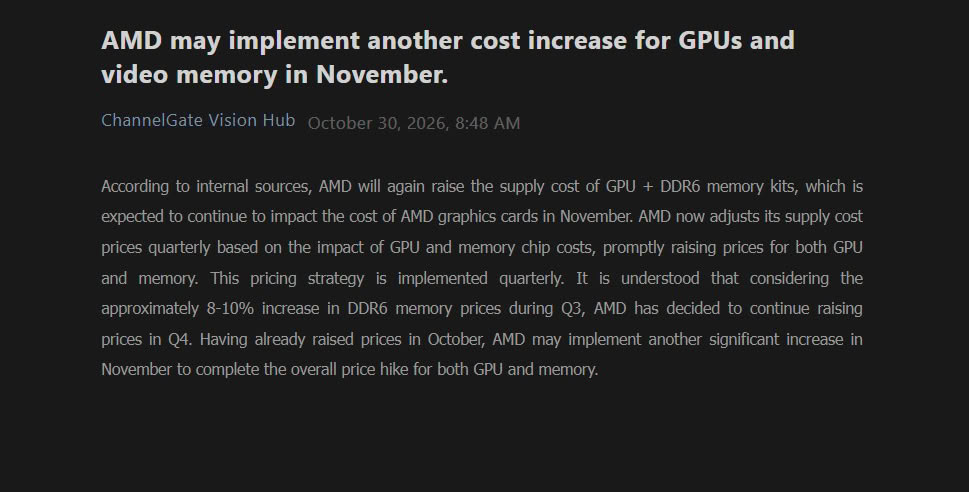
For semiconductor and hardware supply-chain teams, the current Radeon cost question is less about a finished graphics-card price tag than about the upstream bundle that feeds it: the GPU core plus its GDDR6 memory kit. A supply-chain signal from China-based forum Bobangtang, later echoed by VideoCardz, indicates that AMD is weighing another adjustment in November 2026, only one month after an October change. AMD has not officially confirmed it, and the increase has not been disclosed.
What the reported repricing would actually cover
The reported change would target AMD's supply of GPU-and-GDDR6 memory combos to board partners such as ASUS, Sapphire and XFX. It is not the same thing as AMD directly raising the sticker price of an assembled retail card. In a graphics-card bill of materials, the board partner buys the core and memory parts first; any higher input cost can then move through manufacturing, distribution, channel inventory and retail pricing.
Memory supply pressure behind the Radeon platform
Supply-chain messages point to GDDR6 memory prices rising by about 8% to 10% during the third quarter of 2026. AMD had already touched related supply pricing on October 1, which makes another November move appear as part of a continuing cost trend rather than a one-off step. The broader driver is global demand for AI infrastructure: Samsung, SK Hynix and Micron are directing more production resources toward HBM and server DRAM, which carry higher margins. GDDR6 and HBM are different memory categories, but they share some DRAM production resources, so allocation shifts still matter for graphics memory supply.
Earlier market signs were stronger than the quarterly figure alone. GDDR6 spot prices have been reported to have reached several-fold their late 2025 level at one point, increasing procurement pressure on board makers. AMD held supply pricing relatively stable for a period, but as prior procurement arrangements wind down, cost increases can show up more clearly in partner purchase prices.
Why RX 9000 models are in focus
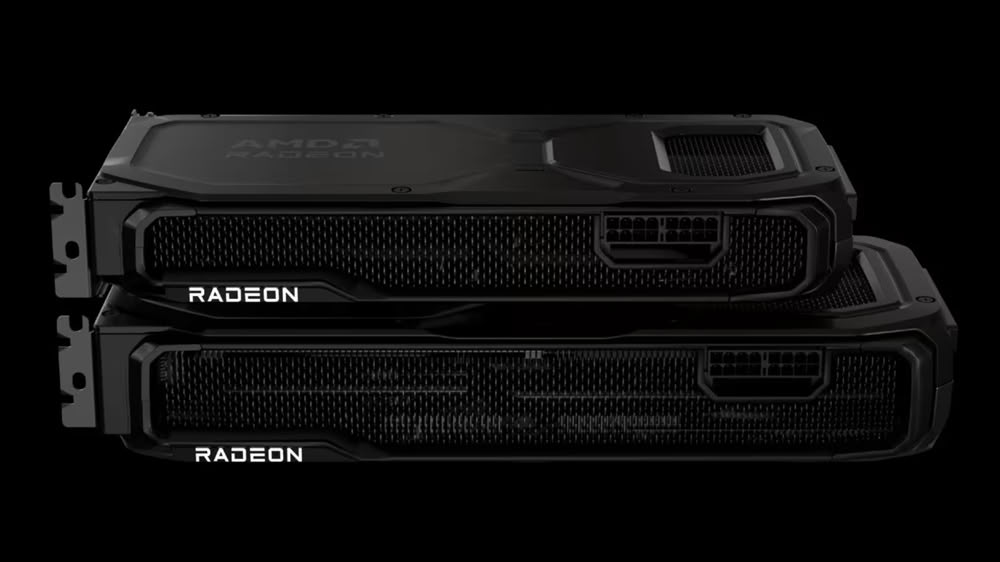
The Radeon RX 9000 line is the most immediate point of exposure because it uses the RDNA 4 architecture and all listed models use GDDR6 memory. Several variants carry 16GB of VRAM, which means a larger number of GDDR6 devices per card and a higher memory-cost share in the overall bill of materials.
Retail data shows pressure, but not a direct mirror
Hardware Unboxed surveyed graphics-card retail prices in 10 countries. Its data says the global average selling price rose by about 10% in October 2026 compared with the previous month. Within that group, RX 9060 XT 16GB rose 17%, while RX 9070 and RX 9070 XT increased by about 12%. These are consumer-facing prices, not AMD's partner supply prices, and the difference between upstream and downstream prices can be large because channel inventory can be bought at older costs.
Supply-chain transmission checklist
- Upstream input: AMD GPU plus GDDR6 kit pricing is the reported variable, not necessarily finished-card retail price.
- Board-partner cost: ASUS, Sapphire and XFX absorb higher component purchases if the November 2026 adjustment proceeds.
- Transmission path: new cost passes through production, distribution and inventory replacement; old stock can slow retail reaction.
- Timing risk: if a new adjustment lands in November, price pressure may be felt more clearly during December shopping season.
- Exposure gradient: 16GB cards require more GDDR6 devices, so they may feel memory-cost increases more directly than lower-capacity models.
Comparison table: upstream kit, retail evidence and unknowns
| Signal | What is known from reports | What is not confirmed | Supply-chain meaning |
|---|---|---|---|
| November 2026 adjustment | AMD may change Radeon GPU-and-GDDR6 kit pricing again. | Official confirmation; exact increase; affected models; partner execution timing by region. | Another upstream cost step following October. |
| Recent price history | Adjustments were linked to August and October 2026; August supply increase was said to be at least 10%; October 1 change had already occurred. | Whether November follows the same scope or different partner terms. | Short interval, one month after an October change, may compound partner planning pressure. |
| GDDR6 cost trend | Third quarter of 2026 increase about 8% to 10%; spot prices had earlier risen several-fold since late 2025. | Final magnitude and distribution of another November move. | Memory, not only GPU die, is now a core cost variable. |
| Retail evidence | Hardware Unboxed data in 10 countries: October 2026 global average up about 10%; RX 9060 XT 16GB up 17%; RX 9070 and RX 9070 XT up about 12%. | How much future upstream change will transfer to retail. | Downstream prices have moved, but the mapping is not one-to-one. |
| Capacity driver | Global AI infrastructure demand pulls Samsung, SK Hynix and Micron resources toward HBM and server DRAM. | How long DRAM resource sharing will constrain GDDR6 supply. | Graphics memory remains exposed to memory-market allocation shifts. |
Common misconceptions
- A higher GPU-and-GDDR6 kit price does not automatically raise every retail card by the same percentage.
- The RX 9000 series is not insulated because it is new; RDNA 4 and 16GB GDDR6 configurations can increase, not reduce, memory-cost sensitivity.
- GDDR6 and HBM are not interchangeable products, but they can still be connected through shared DRAM manufacturing resources.
- Partner inventory does not instantly reset to the latest upstream cost; older purchases can keep some shelf prices temporarily lower.
FAQ
Has AMD confirmed the November 2026 change?
No. The report comes from China-based supply-chain forum Bobangtang and was noted by VideoCardz; AMD has not confirmed the adjustment or its percentage.
What exactly is being repriced?
The reported subject is the AMD supply bundle of Radeon GPU cores and GDDR6 memory sold to partners such as ASUS, Sapphire and XFX, rather than a directly announced retail card price.
Why could RX 9060 XT 16GB matter more?
It uses GDDR6 memory and a 16GB capacity, so more memory devices are embedded in the card design; if GDDR6 cost keeps rising, that can make the model more sensitive than lower-capacity variants.
Will December shopping season see the impact?
Not necessarily immediately. The reported November 2026 change must pass through partner production, distribution and inventory turnover. Available reporting suggests consumers may feel stronger pressure during December, but that is a transmission pattern described by supply-chain context, not an official forecast.
Action recommendations for Electronicseng readers
- Track AMD partner announcements before treating the November 2026 story as a confirmed price increase.
- Compare component-level GDDR6 quotes with finished-card retail indexes from Hardware Unboxed before deciding how much of the increase has reached the end market.
- Watch RX 9000 SKUs with 16GB memory, especially RX 9060 XT 16GB, RX 9070 and RX 9070 XT, as the most visible exposure points.
- For procurement planning, distinguish the October change from any possible November follow-on and note that an adjustment only one month apart may compress supplier inventory and resale assumptions.
- For supply-chain monitoring, follow Samsung, SK Hynix and Micron capacity allocations between HBM, server DRAM and GDDR6, because those choices shape graphics memory cost.
At this stage, the signal is clear but not confirmed: AMD's November 2026 Radeon GPU-and-GDDR6 pricing plan, if implemented, would continue a chain of cost moves that already includes August and October 2026. The next meaningful change for Electronicseng Semiconductors readers will be whether the increase reaches official partner quotes, how large it becomes and how quickly 16GB RX 9000 retail pricing responds during December.