
Why AMD Radeon Overtook GeForce on Amazon US: A GPU Supply and Pricing Case Study
A ranking that stood unchallenged for the best part of a year has broken. For the first time, AMD's GPU unit sales on Amazon in the United States surpassed Nvidia's — and the cause is not a sudden win in microarchitecture. It is a supply-and-cost event: Nvidia reportedly pulled back its own GeForce stack while memory repricing inflated street prices. For engineers, hardware buyers and analysts, this case is a lesson in reading availability, bill-of-materials exposure and channel data rather than benchmark charts.
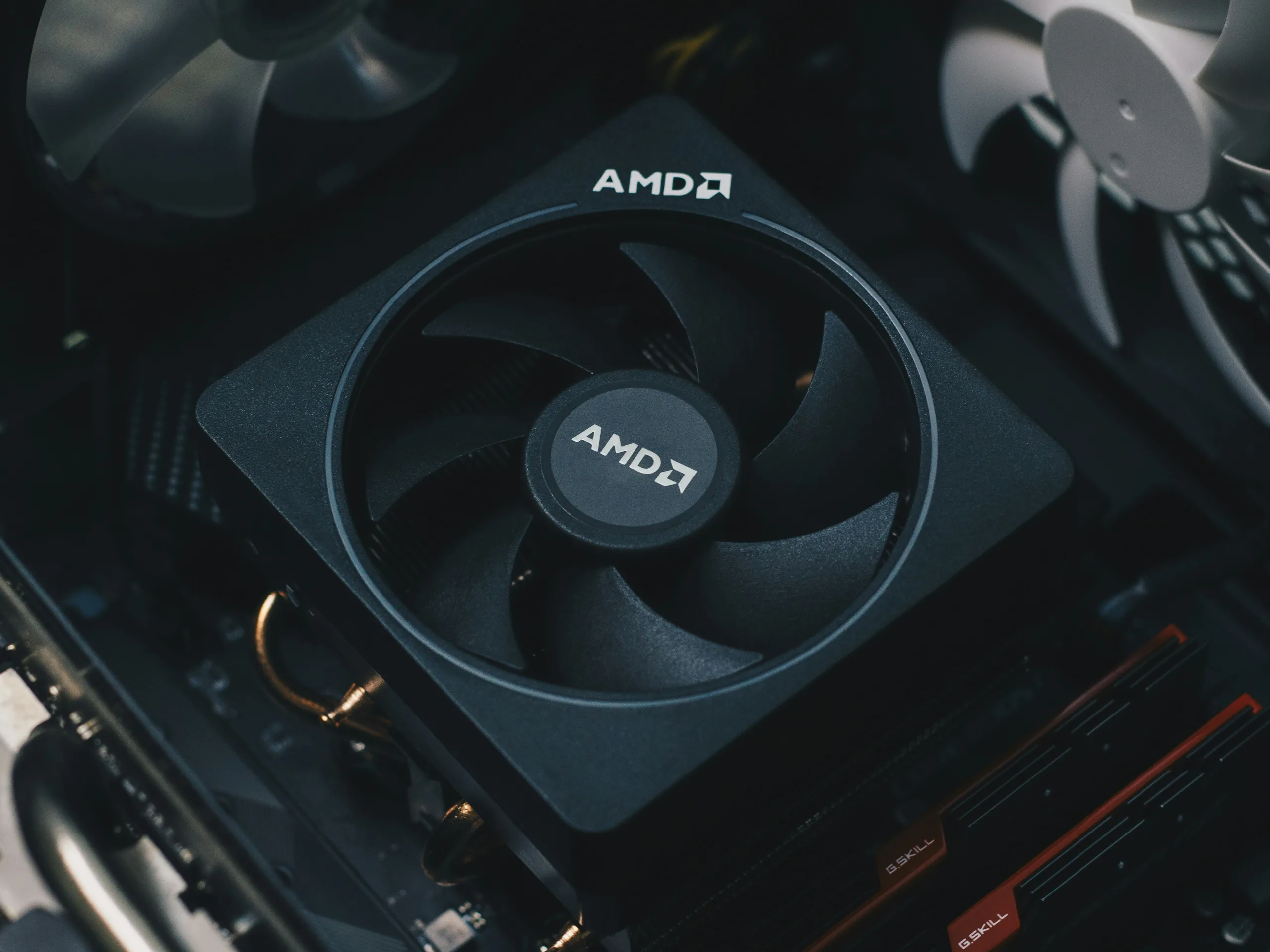
AMD currently has no flagship RDNA 4 GPU, and several of its pricing decisions remain contentious. Yet the business has performed well enough to produce this crossover. Tech Epiphany, the firm that aggregates Amazon CPU and GPU retail sell-through data, posted the finding to its social channel: "for the first time, AMD's GPU sales on Amazon in the United States overtook Nvidia's". The same report frames the paradox that matters — the DIY gaming PC market is still weak, so total GPU units sold fell; but because per-card prices rose sharply, overall revenue soared.
What actually flipped on Amazon US — and what did not
Conclusion first: the crossover is a unit-share event driven by price bands, not a revenue or installed-base reversal. Tech Epiphany's own history shows how wide the gap was only months earlier.
| Indicator (Amazon US, Tech Epiphany tracking) | June 2025 baseline | Crossover snapshot |
|---|---|---|
| Unit share leader | Nvidia 70.51% (31,200 units); AMD 27.57% (12,200 units) | AMD ahead for the first time |
| Revenue share | Nvidia 78.61% ($18,720,000); AMD 20.49% ($4,880,000) | Revenue soared even as units fell |
| Implied average selling price (calculated from the two rows above) | Nvidia ≈ $600; AMD ≈ $400 | ASP inflation is now the dominant variable on both sides |
| Market condition | Blackwell mid-range ramp carrying volume | DIY demand still poor; total units down |
Reading units alone flatters AMD; reading revenue alone flatters Nvidia. The 18-point spread between Nvidia's unit share and its revenue share in June 2025 is the mechanical fingerprint of a premium mix. That spread, not the headline ranking, is the number a buyer should carry into a quotation cycle.
How the market reached the crossover: a case timeline
- March 2025 — RDNA 4 lands in the value band. The RX 9070 XT and its sibling arrived at a time when Nvidia's mid-range stack was still finding its footing. A Radeon vice president at AMD described demand for the RX 9070 XT as "unprecedented" at launch, and shop-floor reality matched: available supply, not interest, was the constraint (Tom's Hardware).
- April 2025 — the reference price that anchored the argument. The RTX 5060 Ti 16 GB launched at $429, a price point that made 16 GB of framebuffer the default expectation rather than a luxury.
- Mid-2025 — shipments and retail diverge. Jon Peddie Research put Nvidia at 94% of add-in-board shipments in Q2 2025 (TechPowerUp / JPR), while Amazon US still showed Nvidia at 70.51% of units. Two accurate datasets, two different pictures.
- 2026 — the memory shock transmits into consumer boards. J.P. Morgan Global Research estimates DRAM prices will have risen more than 400% from the start of 2024 to the end of 2026 (J.P. Morgan), and Samsung has warned of shortages driving industry-wide price increases, with Gartner forecasting a 47% DRAM price rise in 2026 on undersupply in both traditional and legacy segments (Network World).
- Late 2026 — GeForce top-end supply thins. The RTX 5080 disappeared from Nvidia's own store while street prices reached $2,199.99, roughly 2.2 times its original MSRP (Tom's Hardware).
- Today — the ranking turns. Radeon leads Amazon US units, while the flagship GeForce options are scarce, expensive or quietly being rationalised.
Root cause 1: why GeForce supply narrowed
AMD's position today rests mainly on two moves made by its competitor rather than by itself.
- Portfolio reallocation. Nvidia appears to have lost interest in the consumer GPU market. It has reportedly discontinued the RTX 5090 and RTX 5080 to get ahead of an AI market crash — a defensive allocation decision, not a product-cycle one. Coverage of the leaked end-of-life notices also noted that Nvidia publicly pushed back on the claim that the RTX 5090 had ended, which is precisely the ambiguity that makes these SKUs unsafe to design in (TweakTown).
- Output reduction. Nvidia's GPU production volumes appear to be falling, and desktop card prices have moved sharply higher as a result.
For an engineering manager, the operational reading is blunt: when a vendor's highest-margin demand and its consumer line draw on the same die, wafer and memory budget, the consumer line loses. Reported EOL dates are the visible symptom; allocation is the underlying mechanism.
Root cause 2: why memory, not silicon, now sets the price
Conclusion: the DRAM on the board is the fastest-growing term in a graphics card's bill of materials, and the pricing damage is proportional to buffer size.
A 16 GB board carries twice the memory quantity of an 8 GB one drawn from the same global supply pool. As HBM and server DRAM demand absorbed wafer starts, graphics memory was outbid rather than physically scarce at the die level. IEEE Spectrum's analysis of the shortage describes AI's appetite for HBM as the driver pushing conventional DRAM prices up across downstream categories (IEEE Spectrum).
That mechanism explains the shape of the crossover. Nvidia's consumer stack is memory-heavy and premium-weighted, so its street prices inflated fastest. AMD's RDNA 4 portfolio, which never reached a flagship tier in this generation and concentrated on the upper mid-range, was repriced upward too — but from a lower base and with less dependency on the scarcest buffer configurations.
Root cause 3: why retail charts move before shipment data
Channel sell-through responds to availability and price elasticity within weeks; add-in-board shipment statistics lag by a quarter and weight distributor inventory. The same week that Amazon US showed AMD ahead, German retailer Mindfactory data had Radeon at roughly 56% of weekly GPU sales against Nvidia's 40% (TechSpot), while shipment-based trackers still recorded a dominant Nvidia share. Add Intel to the picture and the fragmentation is complete: JPR put Intel at about 1% of the add-in board market in Q3 2025 (PC Gamer).
How the current price gap should be read for board selection
AMD Radeon card prices have also risen, but the situation is markedly better. The table below converts the observed street prices into a selection framework.
| SKU | Reference point | Currently on Amazon US | Procurement implication |
|---|---|---|---|
| RTX 5060 Ti 16 GB | Launched April 2025 at $429 | Above $700 | Roughly a 60%+ premium over launch; budget re-approval needed on any open design-in |
| RTX 5060 / RTX 5070 / RTX 5070 Ti | Original launch bands | Similar upward drift across all three | Whole-tier risk, not a single-SKU anomaly |
| RX 9070 XT | Direct RTX 5070 Ti competitor | From $920 | Head-to-head substitute where the workload does not lock in GeForce-only features |
| RTX 5070 Ti | Priced against RX 9070 XT at launch | Most models above $1700 | Nearly double the competing Radeon part; hard to justify on price-performance |
| RTX 5090 / RTX 5080 | Flagship tiers | Reportedly discontinued; residual stock | Treat as end-of-life: avoid new design-ins, plan for support and driver-branch longevity |
Common misconceptions in this case
- "AMD won on architecture." The crossover tracks supply withdrawal and price bands far more closely than any measured generational leap; AMD still lacks a flagship RDNA 4 part.
- "Unit share equals market share." June 2025 alone shows Nvidia taking 78.61% of Amazon US revenue while holding 70.51% of units — two defensible numbers that support opposite narratives.
- "Falling units mean falling demand." Total GPU units sold declined while revenue soared; the market shrank in volume and grew in cash precisely because availability tightened.
- "MSRP is a planning number." With street prices at 2.2x MSRP on some GeForce SKUs, list price is now a historical footnote rather than a procurement baseline.
- "Retail charts and shipment charts disagree, so one is wrong." They measure different things — sell-through versus shipments into channel inventory — and both can be right simultaneously.
Action list for engineers, buyers and analysts
- Freeze the substitution window. Where a design specifies a GeForce mid-range board, validate the RX 9070 XT class as a parallel path now, while its price is materially lower, rather than after a stock-out.
- Price the memory, not the GPU. Request framebuffer capacity and DRAM type in every quotation; a 16 GB configuration carries most of the cost risk in the current cycle.
- Separate design-in from opportunistic purchase. Treat the RTX 5090 and RTX 5080 as lifecycle-truncated parts for new platforms, but buy them opportunistically for capacity you already own.
- Watch AI capex, not GPU reviews. Hyperscaler capital spending is the upstream variable; UBS expects that spend's growth to decelerate to 25% in 2027 and 6% in 2028 (Reuters). That deceleration is the most credible trigger for consumer supply to re-open.
- Use two data sources for every claim. Pair shipment studies such as Jon Peddie Research with retail sell-through such as Tech Epiphany; quoting one without the other is how forecasts go wrong.
- Set a price re-check cadence. Weekly street-price review beats quarterly budget cycles in a market where a card can move from $429 to above $700 inside a product generation.
What could change next year
The realistic hope is that the consumer market improves next year, because expectations of an AI market slowdown should force both AMD and Nvidia to redirect attention to the DIY channel they have neglected. Two conditions decide whether that happens: memory prices stabilising, and allocation lines being cut back before a demand cliff rather than after one. J.P. Morgan's estimate of roughly $5 trillion in cumulative AI capex by 2030 shows how much inertia sits behind the current allocation, so a refocus on the DIY market would be a strategic retreat, not a plan.
FAQ: what engineers ask about the crossover
Did AMD overtake Nvidia in GPU market share?
AMD overtook Nvidia in GPU unit sales on Amazon in the United States for the first time, according to Tech Epiphany. That is a retail unit ranking on one channel; shipment-based market share measured by Jon Peddie Research still showed Nvidia dominant at 94% of add-in-board shipments in Q2 2025.
Why are GPU prices rising if demand is weak?
Because supply tightened faster than demand. Nvidia's output appears to be shrinking, its flagship GeForce cards have reportedly been discontinued, and DRAM costs — J.P. Morgan puts the increase at more than 400% between the start of 2024 and the end of 2026 — are being passed into board prices. Falling units with soaring revenue is the signature of that combination.
Is the RX 9070 XT a rational substitute for the RTX 5070 Ti?
On price-performance, currently yes: the RX 9070 XT starts at $920 while most RTX 5070 Ti models on Amazon retail above $1700. The substitution fails only where a workload is locked to GeForce-specific acceleration, capture or inference toolchains, which should be verified before standardising.
What should a buyer watch to time a purchase?
Three signals: hyperscaler capex guidance, DRAM contract pricing, and the continued presence of RTX 5080 and RTX 5090 SKUs in vendor channel lists. Any one of those reversing is enough to break the price escalation.
Sources and further reading
- Tech Epiphany — Amazon US GPU retail sell-through tracking (units and revenue share): x.com/TechEpiphanyYT
- Jon Peddie Research — quarterly PC and add-in-board GPU market reports: jonpeddie.com
- J.P. Morgan Global Research — AI-driven memory shortage and DRAM price outlook: jpmorgan.com
- IEEE Spectrum — how and when the memory chip shortage will end: spectrum.ieee.org
- Reuters — investors positioning for slower hyperscaler spending growth: reuters.com
- Tom's Hardware — Radeon VP on RX 9070 XT demand; RTX 5080 pulled from Nvidia's store at 2.2x MSRP
Written by Rachel Williams, Electronics & Engineering (Electronicseng). For supply-chain briefings or corrections, contact info@electronicseng.com.