
Electronicseng Semiconductors Guide: ASML 2028 EUV Capacity, 120 Tools and Fab Planning
For semiconductor planners, the key takeaway from Digitimes is that ASML's third-quarter 2026 signal does not close the supply gap. AI-driven logic and memory expansion keeps demand above capacity through 2028, even if Bank of America models 120 EUV tools, while value-based pricing tightens procurement risk. Buyers should track allocated lithography slots, not nominal tool counts, when committing fab budgets.
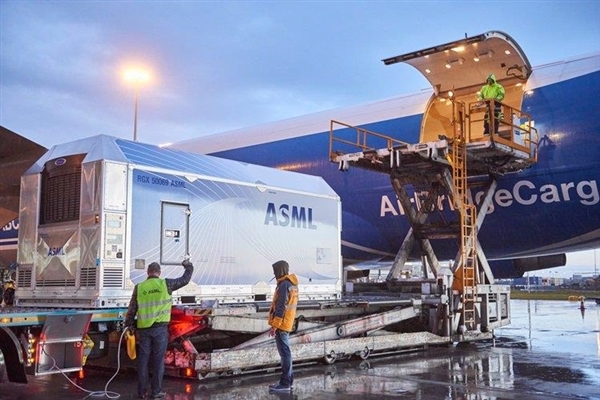
What does ASML's 2028 capacity story actually say?
The report referenced by Digitimes places ASML at the centre of a bottleneck that is no longer a short-lived order spike. In the third quarter of 2026, ASML recorded net sales of EUR 11.62 billion, up 55.2% year over year; Kuai Technology translated that figure as approximately RMB 87.7 billion. ASML CEO and President Christophe Fouquet said the company's planned 2027 and 2028 supply still cannot cover customer requirements, with some customers already discussing 2029 and 2030 orders.
The practical message for semiconductor teams is that capacity is becoming a multi-year financial variable, not only a manufacturing variable. The company raised its annual outlook three times for 2026, now guiding full-year 2026 net sales to EUR 44 billion to EUR 45 billion; Kuai Technology converted that range to RMB 331.1 billion to RMB 338.6 billion. Bank of America expects ASML's 2028 EUV shipments to reach 120 units, with product average selling prices rising about 5%, which would support earnings per share but also raise tool-level project budgets.
How should procurement and engineering teams use the capacity signal?
- Convert the roadmap into lithography slots, not wafer starts. If a node uses multiple EUV-critical layers, each layer adds sensitivity to tool availability, install timing and process qualification.
- Lock 2027 and 2028 allocations early. ASML plans to lift low numerical aperture EUV and immersion DUV capacity by about 30% in 2027, and is evaluating a further increase of more than 30% in 2028; that still leaves demand ahead of planned supply.
- Open 2029 and 2030 discussions now. Christophe Fouquet's statement makes clear that leading customers are already moving beyond the usual two-year planning horizon.
- Model the value-based pricing shift. CFO Roger Dassen said ASML has completed value-based pricing conversations with major customers and has increased prices on some lithography products. Buyers should include a pricing reserve, not only a volume reserve.
- Add installation and qualification time to the procurement calendar. Industry supply-chain analyses place EUV delivery windows at roughly 12 to 18 months in normal queue conditions, with cleanroom integration and qualification adding further months. A tool assigned in 2027 may not become productive output in 2027.
What do EUV, immersion DUV and High-NA mean for a 2026 to 2028 plan?
| Tool class | Capacity or demand signal | Why it matters for fabs | Cost and risk note |
|---|---|---|---|
| Low numerical aperture EUV | ASML plans about 30% capacity growth in 2027 and is considering more than 30% growth in 2028; Bank of America forecasts 120 EUV units in 2028. | Most exposed to advanced logic and AI memory expansion. Allocation timing now determines whether fab construction schedules remain viable. | Value-based pricing is being applied to some products, and about 5% average selling price uplift is a useful planning proxy for near-term ASP pressure. |
| Immersion DUV | Included in the same 2027 expansion logic as EUV, but demand remains elevated across mature-advanced transitions. | Teams that assume DUV can absorb EUV congestion without penalty may understate layer-count, overlay and process-window costs. | Supply remains tighter than many planners expect after previous capacity cuts; replacement parts and service costs should be modeled separately. |
| High-NA EUV | Not the anchor for most 2026 to 2028 volume plans, but media and industry analyses describe the tools as capital-intensive, with costs around USD 400 million per system in public reporting. | Useful for long-range node economics, yet it can divert engineering and budget attention away from near-term EUV allocation risk. | High-NA business cases need separate yield, productivity and depreciation assumptions; they should not be used as a default solution for a short-term tool shortage. |
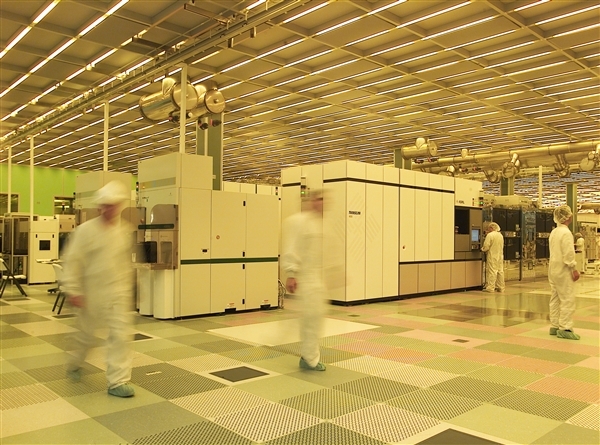
Which common mistakes distort semiconductor capacity planning?
- Confusing shipments with productive capacity. A shipment is not a wafer; it becomes wafer output only after installation, qualification and process integration.
- Treating 120 EUV units as a market-clearing number. The Bank of America forecast is a supply-side benchmark, not proof that demand has been satisfied through 2028.
- Assuming only AI logic fabs are exposed. Storage expansion, especially where EUV layers are introduced in DRAM roadmaps, can intensify tool competition.
- Leaving service and spare parts out of long-term contracts. Value-based pricing can move beyond new tools, so lifetime cost must be separated from list price.
- Planning 2028 in 2027. Once allocation cycles stretch to 2029 and 2030, late entrants face both volume risk and price risk.
FAQ for semiconductor engineers and supply-chain managers
Why can ASML plan 2028 EUV shipments of 120 units and still miss demand?
Because the demand curve moves faster than tool assembly, component supply and fab readiness. The forecast is useful, but Christophe Fouquet's disclosure that customers are negotiating 2029 and 2030 orders indicates that the shortage is not solved by a single-year supply step.
Should a fab switch from EUV to immersion DUV if EUV slots are delayed?
Only as a qualified fallback, not as a free substitution. Immersion DUV may preserve some continuity, but additional patterning steps, overlay control and process development can increase wafer cost and cycle time. The expansion plan for immersion DUV is also part of the tight capacity picture.
What is the most important number for a capital committee?
The combined signal from EUR 11.62 billion in third-quarter 2026 net sales, guidance raised three times, a EUR 44 billion to EUR 45 billion full-year 2026 range, and a value-based pricing stance. It suggests ASML's leverage is not a one-quarter result but a structural supplier position.
How should a company price its own products if litho costs rise?
Use three layers: tool allocation risk, ASP uplift and depreciation. A planned average selling price increase of about 5% changes equipment amortization per wafer, but only if the tool actually arrives on schedule and reaches productive qualification.
Action checklist before your next fab review
- Build a tool-by-tool allocation map for 2027, 2028 and long-term 2029 and 2030 exposure.
- Quantify how many EUV layers your selected node actually needs, including future revisions.
- Run a price scenario with about 5% ASP pressure and a separate value-based pricing clause.
- Add install, qualification and ramp time to the model, rather than using shipment year alone.
- Review service parts, software and labor commitments as part of total lithography ownership cost.
References and data notes
- Reuters, ASML examining ways it can make more than 110 EUV tools in 2028, JPMorgan says: reuters.com
- CNBC, Exclusive look at High NA, ASML's new $400 million chipmaking colossus: cnbc.com
- SiliconAnalysts, The Lithography Chokepoint: ASML EUV Shipment Ramp and Fab Capex: siliconanalysts.com
- Electronics & Engineering analysis based on ASML earnings commentary summarized by Digitimes, including Kuai Technology's currency conversions.
Prepared for Electronicseng Semiconductors by Rachel Williams, Electronics & Engineering. For roadmap review support, contact info@electronicseng.com.