
Intel Classiq Acquisition Breakdown: Spin Qubits, 18A Process Reuse and a Missing Top Layer | Electronicseng
By Rachel Williams — Electronics & Engineering, Semiconductors desk · Comments or corrections: info@electronicseng.com
Viewed from the fab floor rather than from a headline, Intel's proposed acquisition of Classiq marks the moment a long-running research program accepts that it needs a commercial surface. Intel has invested more than a decade in the physical half of quantum computing—silicon spin-qubit devices, the cryogenic control electronics that drive them, and the compilation layer in between. What it never owned was the abstraction environment where an application team, rather than a physicist, states the problem.
Two parameters frame the transaction for engineering and procurement readers. Timing: pending regulatory approvals, Intel expects the deal to complete in the first half of 2027. Economics: no purchase price was revealed, and Intel CTO Pushkar Ranade was blunt about the return profile.
“This is not going to be a high-margin business from day one,” he said. “This is really a bet on the future.”
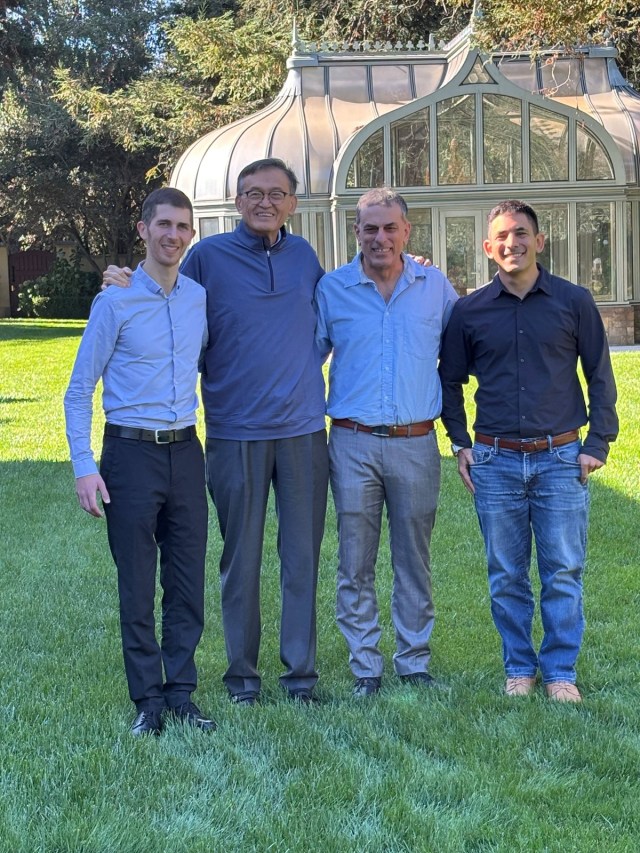 Left to right: Nir Minerbi, co-founder and CEO of Classiq; Lip-Bu Tan, CEO of Intel; Yehuda Naveh, co-founder and CTO of Classiq; Amir Naveh, co-founder and CPO of Classiq (Source: Intel Corporation)
Deal parameters, read the way engineers read a datasheet
| Parameter | Value on the record | Source |
|---|---|---|
| Closing window | first half of 2027, subject to regulatory approval | Intel |
| Purchase price | not disclosed | Intel |
| Duration of in-house quantum work | more than a decade | Intel / Ranade |
| Qubit and control-electronics fab | Hillsboro, Oregon | Ranade |
| Process labels | 18AQ (qubit) and 18AC (cryogenic) | Intel |
| Process equipment shared with Intel's existing flow | more than 90% | Ranade |
| Named enterprise adopters of the acquired platform | BMW, Lufthansa, Comcast, Wells Fargo, Merck | Minerbi |
The gap in the stack, in Intel's own words
Ranade's framing is unusually plain for an acquisition announcement. “We haven’t really done much by way of customer engagement or trying to commercialize our technology,” he said on a media call, adding: “We believe we have most of the elements of the quantum computing stack except for the very top platform layer,” which is exactly what Classiq supplies.
The purchase would extend Intel's offering from qubit chips and control electronics up through the software used to build applications, and it also changes how the company presents its quantum effort internally and externally. The commercial case still rests on two independent variables: how fast spin-qubit hardware scales, and how well Intel can serve a sector in which several competing modalities are being pursued at once. Intel stated that Classiq's support for other hardware platforms will be maintained.
Gate-level coding, synthesis and a familiar EDA lesson
Classiq co-founder and CEO Nir Minerbi built the company on a prediction: as hardware advanced, software would become the limiting factor.
Early quantum programming was done at the gate level, which Minerbi likened to designing a chip transistor by transistor. The company instead pushed abstraction upward—the developer specifies intent, and the tool constructs the circuit.
“We embraced many of the technologies that allowed scaling up in classical computing, like EDA technologies, modeling, synthesis, compilation,” Minerbi said on the call.
In his description, that model has let companies, universities and government bodies assemble quantum teams without making every participant a specialist: domain experts bring the problem, algorithm people bring the machine model. He named BMW, Lufthansa, Comcast, Wells Fargo and Merck as users—organizations staffing teams, creating intellectual property and developing applications ahead of more capable hardware.
“All of them are preparing for the day when commercial value could be extracted from this hardware,” Minerbi said.
Read that boundary carefully. The software supports application exploration and preparation today; nothing in Minerbi's remarks indicates those applications already deliver a commercial advantage on Intel quantum processors.
Algorithmic circuits and hybrid compilation are not the same layer
Intel's own software sits beneath the acquired platform. Anne Matsuura, Intel's senior director of quantum software and system architecture, explained that Classiq produces algorithmic quantum circuits, which then pass into Intel's hybrid quantum-classical compiler and runtime.
“Our compiler deals with both the quantum and classical parts of a quantum program, and it separates them and optimizes them separately,” Matsuura said.
She also drew the distinction most coverage skips: algorithmic circuits differ from the physical circuits and wiring inside a quantum computer, and the platform operates several layers above the device. That split is the wider systems problem in this industry—linking an end user's problem to hardware whose characteristics vary between systems.
| Function in the chain | Owner today | Output | Why it matters at selection time |
|---|---|---|---|
| Modeling, synthesis and compilation of the problem | Classiq | Algorithmic quantum circuits | Cross-hardware reach, team assembly, IP creation |
| Hybrid quantum-classical compilation and runtime | Intel (Matsuura's group) | Separated and separately optimized quantum and classical code paths | Decides how a program lands on Intel control electronics |
| Qubit device and cryogenic control | Intel fab, Hillsboro, Oregon | 18AQ qubit wafers, 18AC cryogenic process | Ties quantum scaling to a known semiconductor base |
A close-to-hardware peer on what the deal signals
Izhar Medalsy, co-founder and CEO of Quantum Elements, treats the two firms as complementary: Classiq concentrates on translating end-user problems into quantum circuits, while hardware providers must handle the characteristics of their own systems.
“Classiq has done a strong job of understanding enterprise needs,” Medalsy told EE Times. “The acquisition is a signal that Intel wants to engage more directly with end users and their applications.”
Quantum Elements works nearer the device, using digital representations of quantum processors to help build software for different systems—another piece of the same complementary picture.
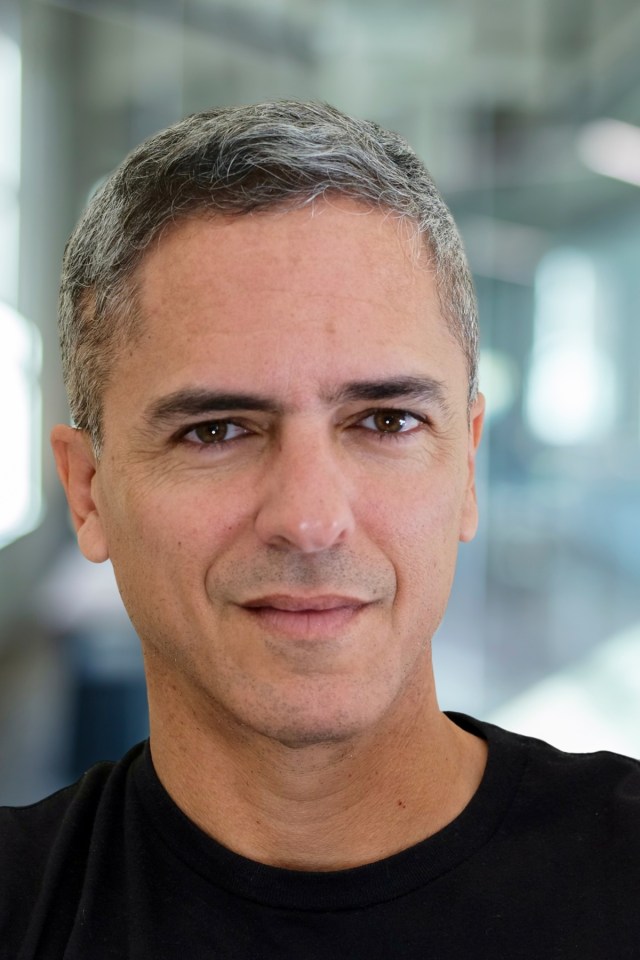 Izhar Medalsy
18AQ and 18AC: where Intel's manufacturing history pays
Intel selected silicon spin qubits as the foundation of its own hardware, and that is a process argument as much as a physics one: spin qubits can be fabricated using processes related to semiconductor manufacturing, which plays to a company with Intel's fabrication experience.
Ranade said Intel produces qubit chips and control electronics at its fab in Hillsboro, Oregon, labelling the two processes 18AQ—Q for quantum—and 18AC, with C for cryogenic.
The qubit process uses interconnect geometry and design rules based on Intel's 18A technology, Ranade said, but the step that forms the qubit device itself is distinct and needs some specialized equipment. He put the overlap at more than 90% of the process equipment being the same.
Intel spin qubit wafer (Source: Intel)
Scaling problems that physics alone does not solve
Owen Lozman, managing partner of Copenhagen-based quantum investment fund 55 North, regards Intel's semiconductor manufacturing and packaging capability, along with its demonstrated ability to run development and test cycles quickly, as real strengths—while noting that spin qubits still have to be scaled into a useful quantum computer.
“There are a lot of engineering challenges to overcome, even if you get the physics right,” Lozman told EE Times.
On his list: achieving uniformity across spin qubits, and managing the wiring and control signals required as systems expand.
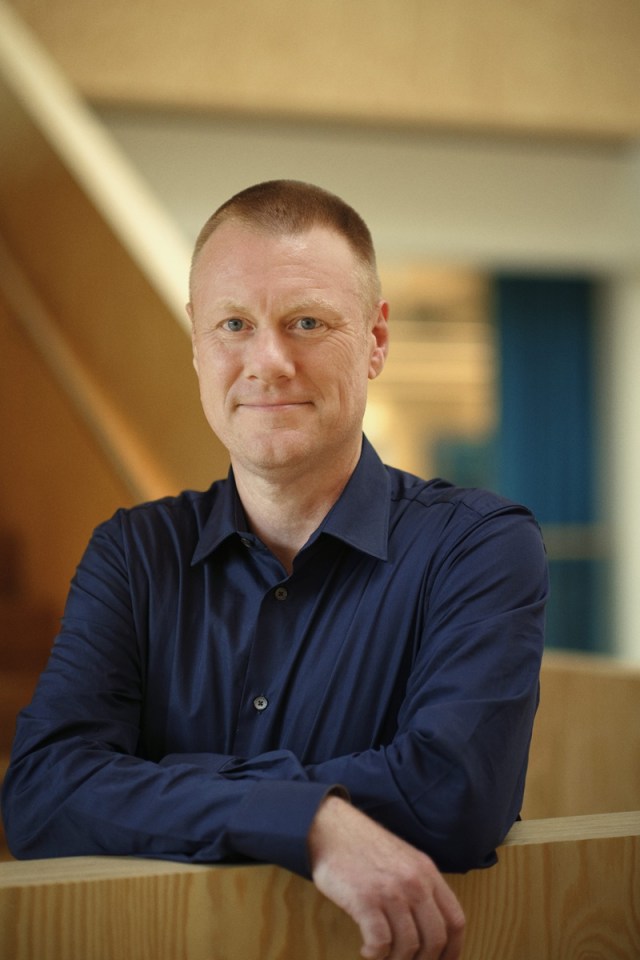 Owen Lozman
His fund has invested in Groove, another company developing spin-qubit technology; Lozman said 55 North does not hold a position in Classiq. He also sees practical value in putting software in developers' hands while hardware is still maturing, so they can prepare applications and understand the resources their algorithms will require. The acquisition, in his reading, hands Intel an experienced team working on a layer the company did not previously own.
“I think you have to kind of move early,” he said. “I think they get an early mover advantage.”
Can an owned platform stay neutral?
Intel's commitment to spin qubits gives its hardware a fixed direction; Classiq's value proposition is the opposite, a platform built for a field in which several approaches compete and the eventual leaders are unknown. The tension engineers should track: can Intel use Classiq to strengthen its own offering while preserving the confidence of customers and hardware providers that rely on cross-platform software?
For Medalsy, independence matters. His company also works with multiple hardware partners, and he said customers watch closely whether a software provider is tied to a particular system.
“I think keeping yourself independent and not coupled to any specific hardware provider is extremely important,” he said.
Intel says it intends to continue supporting Classiq's existing integrations and to maintain a hardware-agnostic platform. Medalsy expects the change of ownership itself to generate concerns: “Time will tell if the industry will accept that as a neutral play or maybe more of a fully integrated approach,” he said.
Asked what commitments or safeguards would preserve partner confidence, Minerbi said the response so far had been positive and argued that hardware vendors need access to end users, which Classiq can provide; during the call he did not identify specific safeguards.
Ranade's wider logic is that Intel's own qubit development stays on spin qubits while the company remains open to providing foundry services, photonics and advanced packaging to firms pursuing other modalities. “We are completely agnostic to the modality,” he said of the Classiq platform. “Our intent is to have Classiq continue to support all modalities.”
Minerbi argued the combination could let Intel reach other hardware providers as well as end users, creating customers for its manufacturing capabilities while widening the software's reach. Lozman believes that breadth is worth protecting—visibility across the ecosystem and a route to recovering the investment—but said the balance between ownership advantage and third-party usefulness must be managed carefully.
“It’s not easy,” Lozman said. “It will take a lot of discipline.”
Common misconceptions to drop
- That a signed acquisition means measurable commercial advantage on Intel quantum processors today; the platform supports exploration and preparation.
- That algorithmic circuits are the physical circuits and wiring of a machine; they sit several layers above the hardware.
- That 18AQ is simply a renamed 18A CMOS process; interconnect geometry and design rules carry over, but the qubit device step is distinct and needs specialized equipment.
- That getting the qubit physics right ends the engineering work; uniformity plus wiring and control-signal overhead remain open.
- That a change of ownership automatically settles the neutrality question; Intel says support continues, and the industry is still watching.
Checklist before committing to a quantum software stack
- Ask which hardware integrations are live today, and what happens to each after closing.
- Locate the abstraction boundary in writing: modeling and synthesis versus compilation, runtime and control.
- Require a resource estimate for your candidate algorithms—the basis for judging what future hardware must supply.
- Trace the classical portion of the workload, since separation and optimization of quantum and classical parts is where Intel's compiler operates.
- Put the vendor's own margin expectations into your business case; Intel says this will not be high-margin from day one.
- Record the modality concentration: Intel's devices remain silicon spin qubits while competing approaches advance.
Action recommendations
- Use the pre-closing window through the first half of 2027 to test tool access, documentation and integrations against what has been promised.
- Keep application IP in hardware-portable form so modality decisions stay open for as long as the field is unsettled.
- Run one representative internal workload through the modeling and synthesis flow now, to collect resource data rather than assumptions.
- Include process and packaging staff in quantum reviews; the more than 90% equipment overlap with an existing flow is the reason hardware scaling here is judged on semiconductor terms.
- Track neutrality as a quarterly signal: newly supported platforms, retained integrations, and any language change from either side.
FAQ
- What exactly is Intel buying? The upper platform layer of the quantum stack—software that lets users design algorithms and run them on a range of hardware—sitting above Intel's own compiler and runtime.
- When does the deal close, and at what price? Intel expects completion in the first half of 2027 pending regulatory approvals; the purchase price was not disclosed.
- Will Classiq keep running on non-Intel hardware? Intel states it will maintain existing integrations and a hardware-agnostic platform, with Ranade naming support for all modalities as the intent.
- Where is the quantum hardware made? At Intel's facility in Hillsboro, Oregon, under the 18AQ and 18AC process labels.
- Does this make quantum a profitable Intel line soon? Not by the company's own description; margins are not expected from day one.
- Who else sits in this picture? Quantum Elements works closer to hardware on digital processor representations; 55 North, a Copenhagen-based fund, has invested in Groove and holds no Classiq position.
For semiconductor readers the transaction is best filed as a supply-chain signal rather than product news. The measurable content is a decade-plus hardware build, a fab flow that keeps more than 90% of process equipment in common with an existing line, a platform layer acquired rather than grown, and a revenue line Intel itself calls a future bet. Everything useful to an engineering plan sits around the closing window: whether the abstraction layer remains open to rival machines, and whether spin-qubit uniformity and wiring overhead behave as scaling assumptions require.
Rachel Williams leads coverage for the Semiconductors desk at Electronics & Engineering (Electronicseng). Reach the desk at info@electronicseng.com.