
Intel Moon Lake Leak: Four Low-Power Efficient Cores, 6 to 15 W, and a Budget Windows Direction
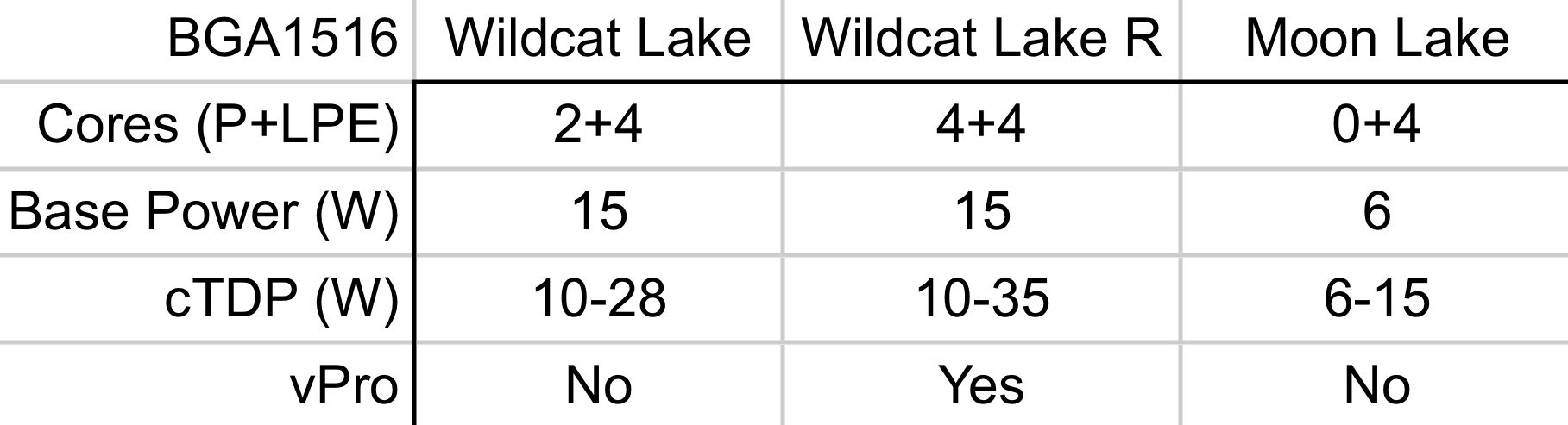
The newest leak around Intel’s rumored Moon Lake gives a narrower picture than a confirmed roadmap: instead of a large hybrid core block, the material points to four low-power efficient cores, a thermal envelope of 6 to 15 W, and targets in low-cost Windows laptops and mini PCs. Intel has not announced or confirmed the chip, so the useful reading is how a leaked core mix, package route, and price band might shape entry-level platform planning.
What the leaked materials are claiming
The leak describes Moon Lake as using Darkmont LP-E low-power efficient cores. The reported configuration is 4 low-power efficient cores, not a four-core mix plus performance cores. It also says the design would continue the direction Intel introduced this year with Wildcat Lake. In that framing, Moon Lake is described as removing up to two performance cores from a broader hybrid layout while leaving four low-power efficient cores to form the low-power core block.
A second layer in the leak is packaging and process: the chip is described as having a multi-chiplet design using a BGA1516 package, and the compute tile may be manufactured on Intel 18A process. Those details matter before clock frequency and memory support are known. The leak, however, does not list clock speed, integrated graphics, or memory support.
How the reported configuration sits against the N series
On paper, Moon Lake has an entry-level comparison path. The leak-related comparison points to Intel’s N150, which also uses a 4-core design and has a 6 W base power. The reported Moon Lake range is 6 to 15 W thermal envelope, so it overlaps with the low end while leaving room for a higher power state. The key reported change is not a larger core count; it is an architecture update. If each clock cycle can process more tasks, Moon Lake could improve performance at similar power, or lower power in thin and low-cost devices. No benchmark data is available to prove that outcome.
Comparison table: Moon Lake leak versus N150 reference
| Item | Reported Moon Lake | N150 reference |
|---|---|---|
| Core count | 4 low-power efficient cores | 4-core design |
| Power | 6 to 15 W TDP | 6 W base power |
| Architecture direction | Darkmont LP-E; reported to continue the design direction Intel introduced this year with Wildcat Lake | Used in the leak material as an entry-level N series comparator |
| Confirmed status | Not confirmed by Intel | Concrete reference from the leak material |
| Pricing context | Reported low-cost Windows laptops and mini PCs, with market estimates of 300 to 500 USD | Price not given in the leak material |
Data citation and missing fields
The concrete numbers in the leak are: four low-power efficient cores, 6 to 15 W thermal envelope, BGA1516 package, Intel 18A process for the compute tile, 2028 timing reported by related coverage, and 300 to 500 USD device pricing estimate. The missing fields are equally important: clock frequency, integrated graphics, memory support, performance-core count beyond the “up to two removed” description, and any Intel confirmation. Memory and storage supply and price movement is also cited as a factor that may affect final device cost.
FAQ for engineers and supply-chain readers
Has Intel confirmed Moon Lake?
No. The report says the specifications have not been published or confirmed by Intel.
What is the reported core configuration?
Four low-power efficient cores, with the core complex said to use Darkmont LP-E. The leak does not describe a performance-core block in the reported configuration.
What power target is mentioned?
6 to 15 W thermal envelope.
What package and process are claimed?
A multi-chiplet design using BGA1516 package, with the compute tile possibly on Intel 18A process.
When could it appear?
Related reports mention 2028, but that timing is unconfirmed.
What device price range is rumored?
300 to 500 USD, while memory and storage supply and price changes could affect the final price.
Common misconceptions to avoid
- Mistaking a rumored low-power core count for a finished product plan. The leak describes four low-power efficient cores, but Intel has not confirmed it.
- Assuming Moon Lake is just a renamed N150. The leak compares core count and base power, but it also points to a different core architecture direction and missing performance details.
- Reading the 6 to 15 W range as a performance conclusion. Without clocks, integrated graphics, memory support, and benchmarks, it is a power envelope, not a confirmed outcome.
- Treating 300 to 500 USD as a guaranteed retail range. The leak-related market estimate still depends on future memory and storage supply and price changes.
Action checklist before committing to a design roadmap
- Wait for Intel to confirm or deny the Moon Lake leak before changing a Windows device plan that depends on a 2028 chip.
- Request or monitor the missing specification fields: clock frequency, integrated graphics, and memory support.
- Use N150 as a paper comparison only, not a substitute for measured Moon Lake data.
- If a near-term launch is required, keep the current component path as primary and treat Moon Lake as a later evaluation candidate.
- Track memory and storage supply and price exposure before using a 300 to 500 USD device target.
Conclusion: a narrow signal, not a confirmed platform
Moon Lake, if the leak is accurate, points to an efficiency-first entry-level direction rather than a broad performance roadmap: four low-power efficient cores, a 6 to 15 W window, a multi-chiplet BGA1516 presentation, and a possible Intel 18A compute tile. For now, the engineering decision is to record the claims, preserve the unknowns, and wait for Intel’s own specifications before pricing or validating future low-cost Windows designs.