
Electronicseng Semiconductors Briefing: Intel Q3 AI Demand, Memory Crunch, and PC Supply Risks
For electronics engineering and semiconductor supply-chain readers, Intel reported third-quarter 2026 revenue of $16.5 billion, up 21% year over year, as data center demand expanded enough to counter manufacturing bottlenecks and a sharp contraction in personal computer sales. The quarter therefore offers a practical view of how AI infrastructure, memory pricing, fab disruption, and PC demand interact inside one silicon-to-system supply chain.
For Semiconductors analysis, the key point is not simply growth or decline. The results show a structural divide across technology hardware: AI infrastructure raises chip sales for server processors and memory suppliers, while component shortages and elevated memory prices increase system costs and weigh on consumer hardware demand.
Engineering and procurement checklist
- Revenue anchor: third-quarter 2026 Intel revenue was $16.5 billion, up 21% year over year.
- Data center anchor: Data Center and AI group revenue was $7.3 billion, up 78% year over year.
- Client anchor: Client Computing and Physical AI Group revenue declined 5% year over year to $8.1 billion.
- Fab disruption: a two-week shutdown at Intel’s Haifa, Israel fabrication facility followed a gas explosion.
- Wafer-cycle constraint: turning silicon wafers into finished chips takes roughly three months.
- Financial guidance: fourth-quarter revenue guidance was $15.0 billion to $16.0 billion, with non-GAAP gross margin of 38.0%, down from 44.1% in the third quarter.
- Market context: Counterpoint Research reported global personal computer shipments fell 21% year over year to 57 million units in the third quarter of 2026, with a further 27% year-over-year decline forecast for the fourth quarter.
AI server demand runs into production constraints
The Data Center and AI group generated $7.3 billion in third-quarter revenue, up 78% year over year, reflecting strong demand from hyperscale, enterprise, and cloud customers. That growth places Intel’s Xeon server products at the center of AI infrastructure demand, while PC-facing silicon faces a different cost environment.
Supply did not scale as fast as demand: raw materials, substrates, and other critical components constrained fulfillment for Intel’s Xeon server family, while a two-week shutdown at an Intel fabrication facility in Haifa, Israel followed a gas explosion.
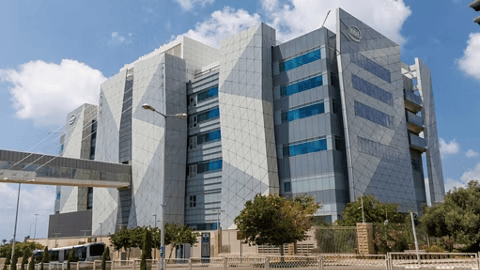
Because silicon wafers need roughly three months to become finished chips, wafers still in process when the fab shut down will likely be scrapped. David Zinsner, Intel CFO, said during the earnings call that most of those write-offs should land in the fourth quarter, and he does not expect further scrapping in the first quarter. He added that the disruption will have an estimated $300 million impact on revenue in the fourth quarter of 2026, with a similar impact in the first quarter of 2027.

Intel CEO Lip-Bu Tan said in the press release, “Our Q3 results demonstrate improving execution, meaningful progress expanding supply and continued advancement of our process technology,”
“I’m disappointed that we were not able to meet strong customer demand in this quarter,” Tan said during the earnings call.
“We face near-term challenges, including manufacturing supply shortage, the unprecedented memory crunch, and the resulting softness in PC demand. But I remain confident in our path forward.”
The fourth-quarter outlook points to revenue of $15.0 billion to $16.0 billion and a non-GAAP gross margin of 38.0%, down from 44.1% in the third quarter.
Memory shortage and PC market contraction
The memory side tells a different story: Samsung and SK Hynix recently reported record quarterly profits, reflecting rising demand from AI infrastructure investment.
Higher memory costs created direct pressure on personal computer manufacturers and Intel’s Client Computing and Physical AI Group, where revenue declined 5% year over year to $8.1 billion. DRAM cost increases from vendors including Samsung, SK Hynix, and Micron forced PC makers to raise retail prices, prompting buyers to defer upgrades.
“We expect the current environment to persist until memory availability and prices begin to normalize,” Tan said during the earnings call.
“While the next few quarters will be challenging for the PC market, our roadmap continues to strengthen, and our long-term outlook remains positive.”
Industry adjustment and outlook
Counterpoint Research data indicates that global personal computer shipments fell 21% year over year in the third quarter of 2026 to 57 million units. The firm forecasts a further 27% year-over-year decline in the fourth quarter.
Minsoo Kang, a senior analyst at Counterpoint Research, noted in a report, “The global PC market is facing mounting pressure as rising memory and component costs push system prices higher and force consumers to delay replacement purchases.”
David Naranjo, associate director at Counterpoint Research, stated: “The PC industry is entering a period of structural adjustment, where rising component costs, higher system prices, and longer replacement cycles are fundamentally reshaping market dynamics.”
Zinsner said Intel does not expect to generate positive free cash flow in 2027, which he described as an “investment year”. The group plans to increase capital expenditure to rebuild production capacity.
Related Intel topics in the source included Classiq, Tesla, SpaceX and Terafab.
Segment comparison table
| Dimension | Data Center and AI group | Client Computing and Physical AI Group |
|---|---|---|
| third-quarter revenue | $7.3 billion | $8.1 billion |
| Year-over-year change | up 78% year over year | declined 5% year over year |
| Demand side | hyperscale, enterprise, and cloud customers; Xeon server family | personal computer makers |
| Supply or cost pressure | raw materials, substrates, critical components, two-week Haifa, Israel fab shutdown | memory prices, PC retail prices, buyer upgrade deferrals |
| 2026-2027 read-through | estimated $300 million impact in fourth quarter of 2026 and first quarter of 2027 | shipments fell 21% year over year to 57 million units; forecast a further 27% year-over-year decline |
Common misconceptions
- Misconception: strong Q3 Intel growth means component supply is no longer limiting Xeon availability. Correction: Intel said shortages limited ability to meet demand, and the Haifa fab disruption affects the fourth quarter of 2026 and the first quarter of 2027.
- Misconception: record memory vendor profits automatically translate into healthy PC manufacturing. Correction: memory prices raised system costs, and Client Computing and Physical AI Group revenue declined 5% year over year to $8.1 billion.
- Misconception: a short fab halt is contained within the incident window. Correction: because wafer processing takes roughly three months, work-in-process wafers can be scrapped, shifting impact into later quarters.
FAQ for semiconductor and hardware readers
What did Intel report for third-quarter 2026?
Intel reported revenue of $16.5 billion, up 21% year over year. The Data Center and AI group contributed $7.3 billion, up 78% year over year, while the Client Computing and Physical AI Group reported $8.1 billion, declined 5% year over year.
Why did AI strength not fully offset PC weakness?
AI demand lifted server-related revenue, but PC demand weakened because memory prices and component costs raised system prices. Counterpoint Research reported shipments fell 21% year over year to 57 million units in the third quarter of 2026 and forecasts a further 27% year-over-year decline in the fourth quarter.
How material is the Haifa, Israel fab halt?
Intel described the two-week shutdown as an estimated $300 million impact on revenue in the fourth quarter of 2026, with a similar impact in the first quarter of 2027. The roughly three months wafer-to-chip timeline explains why disruption appears beyond the immediate two-week event.
Which vendors and data points are most relevant?
Samsung, SK Hynix, and Micron are cited in relation to DRAM cost pressure. Counterpoint Research provides shipment and replacement-cycle context. Related Intel topics in the source included Classiq, Tesla, SpaceX and Terafab.
Action recommendations
- Map BOM exposure to DRAM and memory cost pressure from Samsung, SK Hynix, and Micron before setting retail or project pricing.
- Use the fourth-quarter guidance band of $15.0 billion to $16.0 billion, plus the gross margin step from 44.1% to 38.0%, as a scenario range for supplier negotiation.
- Build inventory and qualification plans around the roughly three months wafer processing cycle, because a two-week fab shutdown can produce write-offs in the fourth quarter and first quarter.
- Treat 2027 as an investment year when assessing capacity rebuilding, because Intel does not expect positive free cash flow in 2027.
Prepared by Rachel Williams for Electronicseng Semiconductors.