
Electronicseng Semiconductors: Memory Tightness Splits Intel's Story - Server Growth, PC Caution, and Intel 18A Readiness
For electronics and engineering teams watching component markets, the October 30 third-quarter earnings call delivered a split signal. Intel Chief Executive Officer Lip-Bu Tan said memory prices and supply are affecting customers, and the personal-computer market has shown slowdown signals in recent weeks. At the same time, Intel's data-center and artificial-intelligence business remained strong and recorded the fastest revenue growth in 15 years. The result is not a single story of either weakness or strength: near-term challenges include manufacturing supply shortage, unprecedented memory tightness, and softer demand from PC customers, while server, AI, advanced packaging, and process-node progress continue to support the longer-term case.
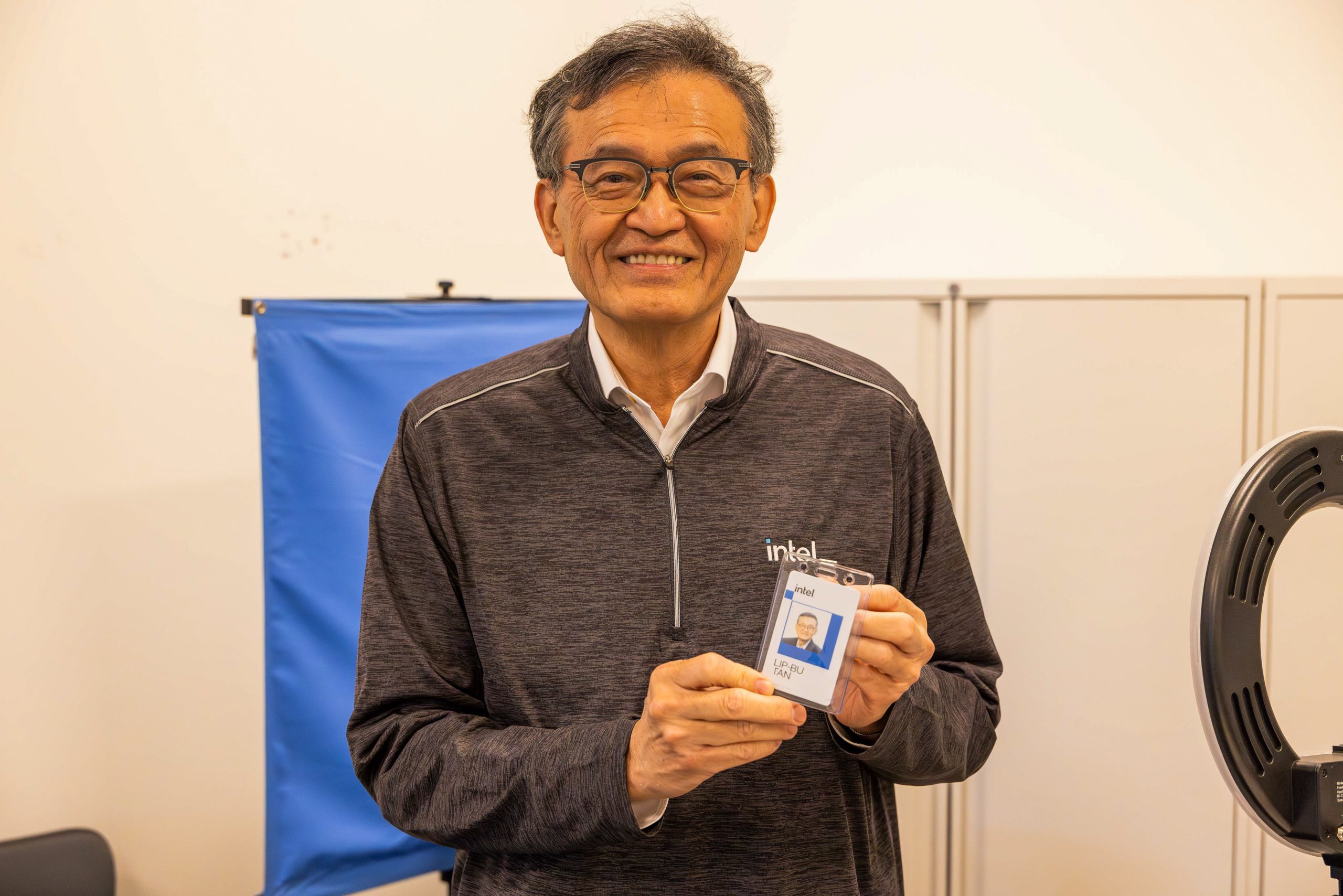
Lip-Bu Tan framed the near-term situation as a supply-side constraint rather than a loss of strategic direction. He said manufacturing supply shortages, memory tightness, and the resulting weakness in PC demand are the challenges Intel is facing now, while expressing confidence in the company's long-term development.
Financial anchors: what the third-quarter report showed
The headline results were above the company's earlier expectations. Third-quarter revenue reached $16.51 billion, up 21% year over year. The non-United States generally accepted accounting principles earnings per share figure was $0.52, compared with $0.38 previously guided. The non-United States generally accepted accounting principles gross margin was 44.1%, about 2 percentage points higher than both the second quarter and the company's prior guide.
Data citations and quick facts
- Event: October 30, third-quarter earnings call.
- Executive: Intel Chief Executive Officer Lip-Bu Tan; Chief Financial Officer David Zinsner, later referred to as Zinsner.
- Overall revenue: $16.51 billion, up 21% year over year.
- Profitability: non-United States generally accepted accounting principles earnings per share of $0.52 versus $0.38 previously guided; gross margin of 44.1%, about 2 percentage points higher than the second quarter and prior guide.
- Growth engine: data-center and artificial-intelligence revenue of $7.3 billion, up 78% year over year; operating profit of $3.0 billion, about 42% of that revenue, and about $0.6 billion higher quarter over quarter.
- Client side: client computing and physical artificial-intelligence revenue of $8.1 billion, down 5% year over year; artificial-intelligence personal-computer revenue rose 35% in the same period; Wildcat Lake shipments rose about 70% quarter over quarter and are currently sold out, a point also noted by wsj.com.
- Forward items: fourth-quarter revenue guidance of $15 billion to $16 billion; total capital expenditure planned at $20 billion in 2026, with a substantial increase expected in 2027.
Data-center and artificial-intelligence: the fastest growth in 15 years
The largest source of upside was the data-center and artificial-intelligence portfolio. Revenue in this area reached $7.3 billion in the third quarter, growing 78% year over year. Operating profit of $3.0 billion represented roughly 42% of segment revenue and was about $0.6 billion higher than the previous quarter. This is the fastest revenue growth recorded by the business in 15 years.
Product execution supports the result. Granite Rapids, which uses Intel 3, became one of the fastest server products Intel has ramped. Clearwater Forest, the company's first server product built on Intel 18A, has begun shipping and recognizing revenue. Management expects substantial demand for Clearwater Forest in 2027.
PC and client computing: weaker volumes, stronger artificial-intelligence features
Client computing and physical artificial-intelligence revenue was $8.1 billion, down 5% year over year. David Zinsner said the picture is uneven: artificial-intelligence personal-computer revenue grew 35% in the same period, while cost-optimized client processor Wildcat Lake shipments rose about 70% quarter over quarter. Wildcat Lake is currently sold out. He noted that memory availability and pricing are the reason to be cautious on PC demand, a point referenced by wsj.com.
The roadmap is moving to Intel 18A and then to Intel 18A-P. Panther Lake, based on Intel 18A, has completed volume production ramp. Nova Lake, the first client product using Intel 18A-P, is ahead of schedule. Lip-Bu Tan said the number of design-in commitments expected at launch will be double that of Panther Lake, or two times higher.
Process, packaging, foundry, and custom silicon: building blocks for the next cycle
Manufacturing is another positive read. Lip-Bu Tan said Intel 3 and Intel 18A both improved yields in the third quarter. For the two types of nodes, Intel 3 and Intel 18A, yield improvement was reported, with Intel 18A improving by a double-digit percentage. Wafer output for both process nodes exceeded expectations.
Intel 18A-P is expected to appear in Intel internal products by year-end. Intel 14A is progressing according to plan. In October, Intel sent a version 0.9 process design kit to selected customers.
Beyond the core x86 business, Intel is investing in custom chips, advanced packaging, and external foundry services. Zinsner said specialized custom-chip revenue increased by more than 50% quarter over quarter and more than doubled year over year. However, these three businesses are still small relative to the company's main revenue streams.
Comparison: where Intel is strong and where pressure remains
| Area | Reported metric | What it means for engineering and procurement |
|---|---|---|
| Data-center and artificial intelligence | $7.3 billion revenue, up 78% year over year; operating profit $3.0 billion; margin about 42%; fastest growth in 15 years | Server and accelerator platforms are the near-term growth anchor; Granite Rapids and Clearwater Forest show the product pipeline behind the numbers. |
| Client computing and personal computers | $8.1 billion revenue, down 5% year over year; artificial-intelligence personal-computer revenue up 35% in the same period; Wildcat Lake sold out | PC demand is not uniformly weak: cost-optimized and artificial-intelligence PC parts are moving, while memory pressure is slowing broader platform refresh. |
| Manufacturing and process | Intel 3 and Intel 18A yields improved; Intel 18A double-digit improvement; version 0.9 Intel 14A process design kit issued in October | Process maturity is a prerequisite for future server, client, foundry, and custom products; roadmap confidence still depends on yield and customer design-in. |
Checklist: how to interpret the quarter without overreading it
- Separate memory-driven PC softness from server and artificial-intelligence strength. The data center result does not automatically cancel the client decline, and the client decline does not invalidate the data-center growth.
- Tie product names to nodes: Granite Rapids to Intel 3, Clearwater Forest to Intel 18A, Panther Lake to Intel 18A, Nova Lake to Intel 18A-P, and Intel 14A as the next node with a version 0.9 process design kit in October.
- Watch Wildcat Lake and artificial-intelligence personal-computer revenue as evidence that cost-optimized and artificial-intelligence features can still grow while total client revenue falls 5% year over year.
- Read the capital-expenditure plan as a manufacturing commitment: $20 billion in 2026, with a larger increase planned in 2027, and fourth-quarter guidance of $15 billion to $16 billion.
- Use custom chips, advanced packaging, and external foundry as small but strategically important three-business indicators, not as immediate replacements for the core x86 franchise.
Common misconceptions to avoid
- Misconception: the memory shortage only affects memory suppliers. The October 30 call instead tied manufacturing supply shortage, memory tightness, and PC demand softness to Intel's near-term challenge.
- Misconception: artificial-intelligence personal-computer growth proves the whole PC market is expanding. The third-quarter client computing figure was still $8.1 billion and down 5% year over year, even though artificial-intelligence personal-computer revenue rose 35% in the same period.
- Misconception: data-center growth means the client business has become irrelevant. The client roadmap continues with Panther Lake, Nova Lake, and Wildcat Lake, and Wildcat Lake is currently sold out.
- Misconception: custom-chip, packaging, and foundry results are large enough to change the company's overall financial profile now. Zinsner said the three businesses remain small, even when specialized custom-chip revenue rose by more than 50% quarter over quarter and more than doubled year over year.
Action recommendations for electronics, semiconductor, and engineering buyers
- Recheck personal-computer and embedded-client platform schedules against memory availability. If a design depends on PC refresh timing, treat the recent weeks' slowdown signal as a planning risk.
- Map server and artificial-intelligence selection around Granite Rapids and Clearwater Forest readiness. For 2027 deployments, include Clearwater Forest demand expectations and Intel 18A maturity in qualification plans.
- Consider Wildcat Lake for cost-sensitive client designs, but validate supply timing because the product is currently sold out.
- Track Intel 18A-P with Nova Lake at launch. If design-in numbers reach two times Panther Lake, the product pipeline could be more robust than the current PC pressure suggests.
- For advanced process evaluation, monitor version 0.9 Intel 14A process design kit progress and Intel 18A double-digit yield improvement. These are manufacturing readiness markers, not a substitute for customer-specific validation.
Frequently asked questions
Q: What did Intel report for the third quarter?
A: Revenue was $16.51 billion, up 21% year over year. Non-United States generally accepted accounting principles earnings per share was $0.52 versus $0.38 previously guided. Gross margin was 44.1%, about 2 percentage points above the second quarter and prior guide.
Q: Which business produced the fastest growth?
A: Data center and artificial intelligence produced revenue of $7.3 billion, up 78% year over year, with operating profit of $3.0 billion, about 42% of revenue, and about $0.6 billion above the prior quarter. This was the fastest revenue growth in 15 years.
Q: Why is the PC outlook more cautious?
A: Lip-Bu Tan pointed to memory prices and supply conditions, with manufacturing supply shortage and unprecedented memory tightness creating a slowdown signal in the personal-computer market in recent weeks. Client computing and physical artificial-intelligence revenue was $8.1 billion, down 5% year over year.
Q: Are artificial-intelligence personal-computer sales still growing?
A: Yes. David Zinsner said artificial-intelligence personal-computer revenue rose 35% in the same period, and Wildcat Lake shipments rose about 70% quarter over quarter. Wildcat Lake is currently sold out.