
Electronicseng Semiconductors Briefing: Intel Redirects 18A Capacity Toward Xeon Server Supply as Panther Lake and Client Roadmaps Are Recalibrated
By Rachel Williams, Electronics & Engineering | Electronicseng | Contact: info@electronicseng.com
Electronicseng's semiconductor desk reads Intel's latest production update as a prioritization decision rather than a simple product-line story. Under server-side demand pressure, Intel's process allocation is being resequenced. During the 2026 third quarter earnings call, the company disclosed that selected Intel 18A capacity in Oregon will be converted to Intel 3, the node associated with Xeon 6 Granite Rapids, to ease supply for Xeon server processors. 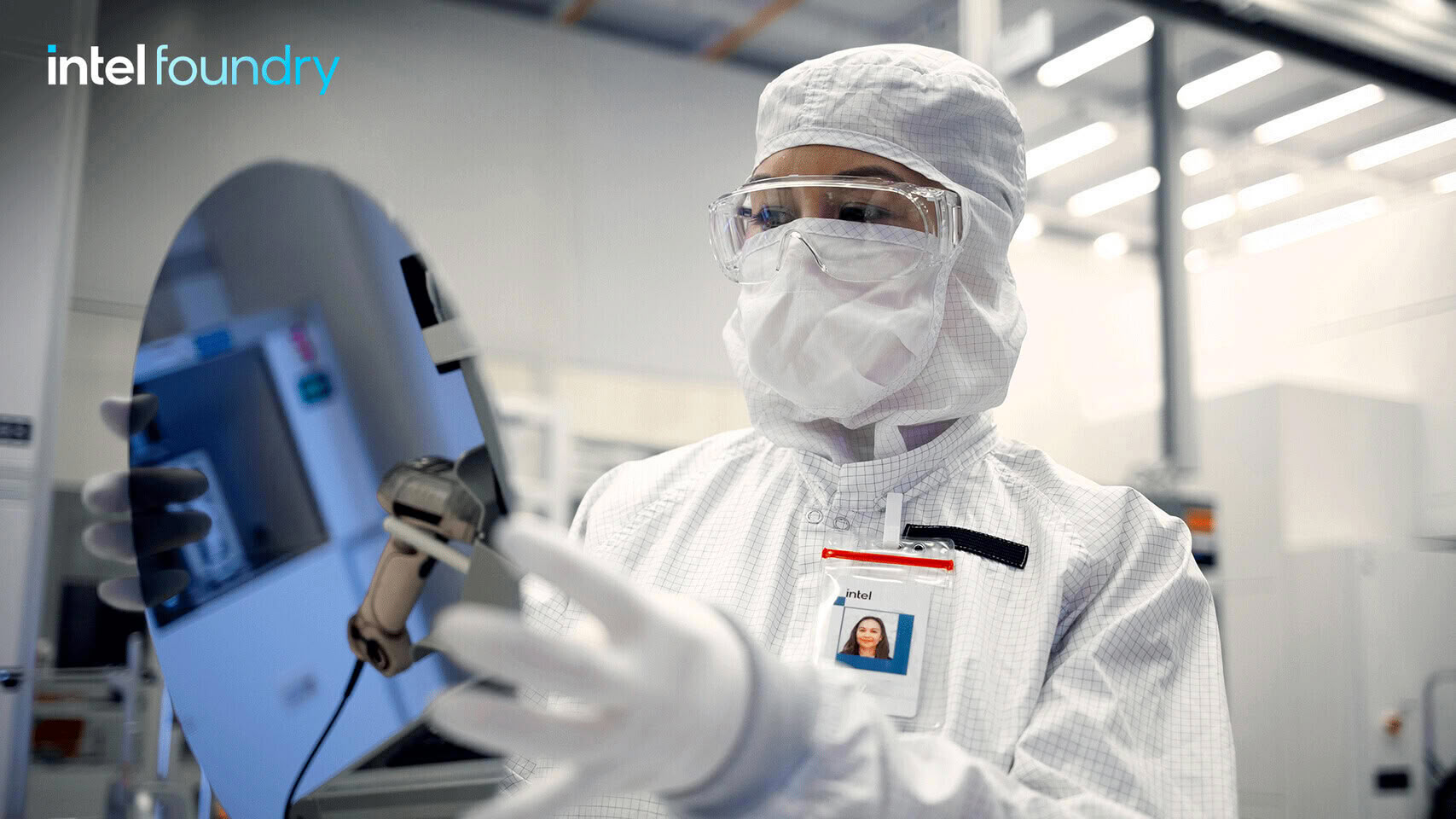
Core Disclosure in One View
| Item | Reported fact | Why it matters for semiconductor supply |
|---|---|---|
| Process conversion | Some Intel 18A resources in Oregon move to Intel 3. | Intel 3 is the node used by Xeon 6 Granite Rapids. |
| Original wafer use | CFO Dave Zinsner said the reallocated wafers were “generally used to produce Panther Lake products.” | Server supply can draw on capacity originally aligned to consumer silicon. |
| PC-demand condition | Zinsner linked the flexibility to weaker PC demand and said the slowdown would last at least into the first half of next year. | Client-side demand softness creates room for the server reallocation. |
| Intel 3 volume timing | CEO Lip-Bu Tan said new Intel 3 capacity is expected to enter mass production in the second half of 2027. | Short-term server relief remains bounded by process timing. |
| Substrate bottleneck | Zinsner said Intel is “similarly constrained on the substrate side.” | Package-related capacity can become the limiting factor after wafers. |
| Expansion schedule | A large share of the planned 40% substrate capacity expansion appears not to be available until the second half of 2027. | Supply flexibility may not fully appear in the immediate quarters. |
| Client roadmap | Nova Lake, using Intel 18A-P, is ahead of the original plan, and Wildcat Lake is sold out. | Client business continues despite the 18A-to-Intel 3 shift. |
Executive Statements Used as the Evidence Base
The financial officer's explanation centers on capacity fungibility. Chief Financial Officer Dave Zinsner said the reallocated Intel 18A wafers were “generally used to produce Panther Lake products.” He tied the adjustment to PC demand turning weaker, adding that Intel expects the PC market slowdown to continue at least into the first half of next year.
The executive focus on servers was broader than one factory. Chief Executive Officer Lip-Bu Tan said the newly added Intel 3 capacity is projected to reach mass production in the second half of 2027. He also said, “The entire industry is still responding to one of the worst supply shortages in history, driven by unprecedented demand created by super intelligence. In that context, I am pleased with the progress in third-quarter server supply growth. But I also recognize that continuing challenges remain in meeting server demand in the coming quarters.”
Substrate availability was another disclosed constraint. Zinsner said Intel is “similarly constrained on the substrate side,” and the company suggested that a large part of its planned 40% substrate expansion may not arrive until the second half of 2027.
Why the 18A-to-Intel 3 Shift Matters
The disclosed decision changes which product families can draw on the same manufacturing pool. Intel 18A is connected in the report to Panther Lake products, while Intel 3 is connected to Xeon 6 Granite Rapids. When PC demand is soft, Intel can redirect selected Intel 18A wafer use toward Intel 3 production support rather than treating server supply as a separate, fixed capacity envelope.
For server procurement, the meaningful question is not only “does Intel 3 exist?” but “when does added Intel 3 volume become available?” The answer given on the call is the second half of 2027 for new capacity. That timing means third-quarter progress is positive but not the end of the constraint, especially as Lip-Bu Tan warned of continuing challenges in the coming quarters.
For client-device supply, the story is not that client chips have been abandoned. Intel still cited Nova Lake on Intel 18A-P as ahead of schedule and described Wildcat Lake as sold out. The immediate uncertainty is how the Oregon conversion may affect Panther Lake supply, which the company did not quantify in the call material summarized here.
Common Misreadings to Avoid
- “18A capacity moved away” does not automatically mean Panther Lake has stopped. The disclosure is about reusing selected wafers, and the client roadmap remains visible through Nova Lake and Wildcat Lake.
- “The bottleneck is only fabs” is incomplete. Zinsner's substrate comment, plus the 40% expansion timing, shows that packaging-related inputs can matter as much as wafer process.
- “Server supply is fixed in one quarter” misses the statement. Intel acknowledged third-quarter improvement while warning that server demand in the coming quarters still creates challenges.
- “PC demand weakness is only a market comment” understates the operational implication. The call framed weaker PC demand as creating the adjustment room for the capacity shift.
Semiconductor Buyer and Engineer Checklist
- Map any Xeon 6 Granite Rapids timing assumptions against Intel 3 mass production expected in the second half of 2027.
- Review Panther Lake-dependent schedules against the Oregon Intel 18A-to-Intel 3 conversion, while noting that the effect has not been specified in the disclosed summary.
- Include substrate and packaging constraints in risk models, because Intel said it is similarly constrained on the substrate side.
- Track the 40% planned substrate capacity expansion as a second-half 2027 readiness signal, not only a capacity announcement.
- Use Nova Lake on Intel 18A-P and Wildcat Lake sold-out status as client-side continuity markers alongside the server shift.
FAQ: What the Disclosure Signals for Electronicseng Readers
Why would Intel convert Intel 18A capacity to Intel 3?
Because Xeon 6 Granite Rapids uses Intel 3, and the reallocated 18A wafers were generally used to produce Panther Lake products. Weaker PC demand at least into the first half of next year gives Intel room to prioritize server supply.
Has Intel solved server supply?
No. The call reported third-quarter progress, but Lip-Bu Tan emphasized that the industry still faces one of the worst supply shortages in history, driven by super intelligence demand, and that coming quarters remain challenging for server supply.
Is Intel 18A being abandoned?
No. The disclosed change is a reallocation of some Intel 18A resources in Oregon to Intel 3. Intel also continued to cite Intel 18A-P for Nova Lake and described Wildcat Lake as sold out.
What is the most important timing metric?
The second half of 2027 appears in two places: added Intel 3 capacity is expected to enter mass production then, and a large part of the planned 40% substrate expansion appears tied to the same period.
Electronicseng Takeaway
For this site's semiconductor audience, the signal is allocation under pressure: Intel is moving selected Intel 18A capacity toward Intel 3 to support Xeon server supply, while still pointing to client initiatives such as Nova Lake and Wildcat Lake. The practical decision for engineers and procurement teams is to watch not only the 18A and Intel 3 labels, but the second-half 2027 readiness of new Intel 3 volume and the 40% substrate expansion, because those timing anchors determine how much server demand relief can reach shipments after the third-quarter progress.