
Electronicseng Semiconductors: Apple M6 MacBook Pro CPU, Neural Engine and Bandwidth Analysis
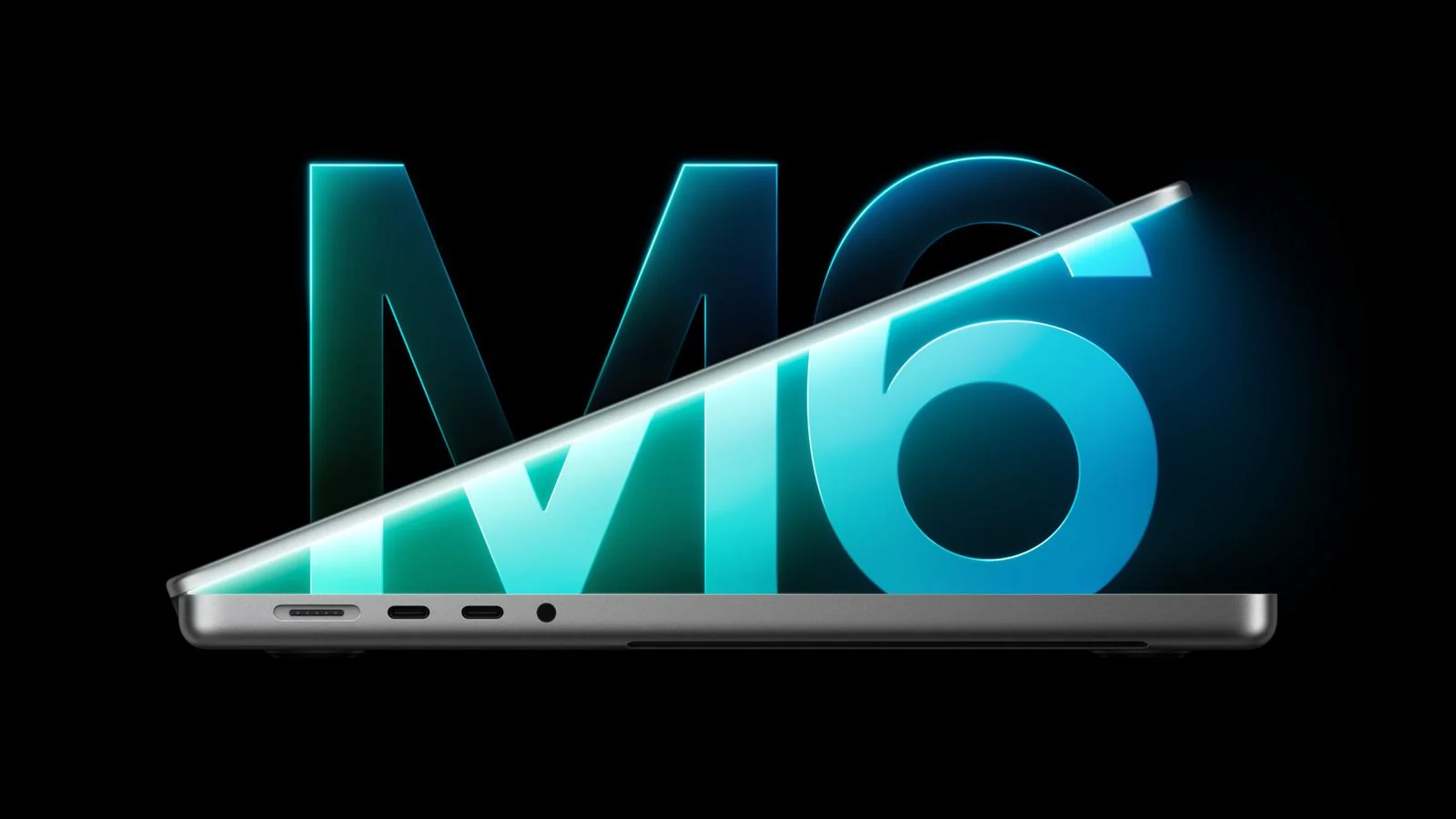
This Electronicseng Semiconductors review treats the new 14-inch MacBook Pro as a silicon-centered product update rather than a chassis refresh. The key question for engineers and procurement teams is not simply whether Apple changed a model name, but how M6 redistributes CPU cores, expands GPU capacity, doubles neural-engine core count and alters memory throughput for specific memory configurations.
CPU topology and GPU scaling define the M6 update
Apple reorganized the core hierarchy. M6 uses a 12-core CPU architecture: 2 super cores, 4 performance cores and 6 efficiency cores. By comparison, M5 uses a 10-core CPU with 4 super cores and 6 efficiency cores. The change is therefore not only an added core count but a different balance between peak compute and lower-power execution.
On the graphics side, M6 provides a 12-core GPU, while M5 provides a 10-core GPU. Apple’s stated comparison says that, relative to M5, graphics performance increases by up to 30% and artificial-intelligence workload processing speed increases by up to 25%. The expected application impact includes rendering, video processing, gaming and some local artificial-intelligence tasks.
| Parameter | M6 | M5 |
|---|---|---|
| CPU | 12-core CPU architecture: 2 super cores, 4 performance cores, 6 efficiency cores | 10-core CPU: 4 super cores, 6 efficiency cores |
| GPU | 12-core GPU | 10-core GPU |
| Neural engine | dual 16-core neural engine system, 32 cores total | 16-core neural engine |
| Memory bandwidth (24GB or 32GB memory) | 170GB/s | 153GB/s |
Neural engine growth and the limits of local AI claims
The neural-engine subsystem receives the most visible structural change. M6 adopts a dual 16-core neural engine system, totaling 32 cores, compared with the single 16-core neural engine in M5. Apple also added extra neural accelerators inside the GPU to improve efficiency when running artificial-intelligence models on the device.
The company positions this as enabling Apple Intelligence features and local large language models. Compared with sending data to cloud servers, on-device model execution can reduce network dependence for some tasks and help protect user privacy. The result, however, still depends on model scale, unified memory capacity and software optimization for the new hardware.
Memory bandwidth, wireless, displays and storage
- Memory bandwidth changes only for Apple’s 24GB or 32GB memory configuration range: M6 reaches 170GB/s, while M5 records 153GB/s, an increase of about 11.1%. Apple notes the gain applies to 24GB and 32GB memory versions, not every configuration.
- The new 14-inch MacBook Pro supports Wi-Fi 7 and Bluetooth 6 through the Apple-designed N1 wireless chip. When routers and network environments are compatible, Wi-Fi 7 can provide higher transfer capability and lower latency, while Bluetooth 6 continues the updated wireless standard.
- External display capability improves slightly: the machine can drive two 4K external displays at refresh rates up to 165Hz, while the previous generation supported 144Hz.
- Storage remains unchanged at 1TB SSD starting. Apple had already ended the 512GB entry configuration in March 2026, so this launch continues existing storage capacity rather than moving directly from 512GB to 1TB.
- Industrial design changes are limited. Apple says other configurations largely carry over the previous generation, without a full redesign or the long-rumored OLED touchscreen.
Pricing, roadmap uncertainty and common misreadings
Pricing and timing are clear for the base machine: in the United States the starting price is $1,999, preorders begin October 28, and official availability is November 6. Despite lower-entry-price expectations among some buyers, the machine continues to occupy the professional notebook segment.
This update does not represent completion of the whole MacBook Pro line. The market has long discussed a higher-end MacBook Pro with OLED display, touch control and a redesigned body, but those models are expected to use M5 Pro and M5 Max rather than directly launching M6 Pro and M6 Max. Earlier reporting also indicates Apple may skip M6 Pro and M6 Max and introduce M7 series high-performance chips in 2027. If that plan holds, the product cycle of the standard M6 MacBook Pro may be relatively short, and major structural redesigns may be reserved for the next high-end machines.
Common misconceptions
- Misconception 1: The 11.1% memory-bandwidth improvement applies to every configuration. It does not; Apple ties it to 24GB or 32GB memory configurations.
- Misconception 2: The storage announcement means a sudden jump from 512GB to 1TB. It does not; 512GB entry was already canceled in March 2026.
- Misconception 3: M6 proves the MacBook Pro redesign has arrived. It does not; the 14-inch MacBook Pro update is chip-led, with limited external changes and no confirmed OLED touchscreen.
- Misconception 4: Higher neural-engine core count alone guarantees smoother local AI. In practice model scale, unified memory and software optimization also determine results.
Selection checklist for semiconductor, hardware procurement and engineering teams
- Map the bottleneck to the core mix: If software depends on sustained peak compute, evaluate the M6 12-core CPU architecture; if it relies mainly on efficiency tasks, compare M5 10-core CPU with 4 super cores and 6 efficiency cores.
- Quantify graphics and AI uplift against measured workloads: Apple’s up to 30% graphics performance increase and up to 25% AI workload processing speed increase are useful only when the workload is GPU- or neural-engine-bound.
- Choose memory configurations carefully: The 170GB/s versus 153GB/s comparison is meaningful only when the purchase includes 24GB or 32GB memory.
- Validate deployment environment: For Wi-Fi 7 and Bluetooth 6 benefits, confirm router compatibility, Bluetooth 6 device support and network stack readiness through the N1 wireless chip.
- Plan multi-monitor workflows: If the use case requires two 4K external displays, check whether 165Hz is needed or whether the previous 144Hz baseline already suffices.
- Account for roadmap risk: Teams waiting for an OLED display, touch interaction or a redesigned chassis should note that those high-end variants are expected to use M5 Pro and M5 Max, while M6 Pro and M6 Max may be bypassed in favor of the 2027 M7 series.
FAQ: evaluating the M6 MacBook Pro from a semiconductor perspective
What is the main architectural difference between M6 and M5?
M6 moves to a 12-core CPU architecture with 2 super cores, 4 performance cores and 6 efficiency cores, while M5 uses a 10-core CPU with 4 super cores and 6 efficiency cores. M6 also pairs a 12-core GPU and dual 16-core neural engine system with 32 cores against M5’s 10-core GPU and 16-core neural engine.
How much performance improvement does Apple claim?
Apple compares M6 with M5 and claims graphics performance up 30% and artificial-intelligence workload processing speed up 25%. It also reports memory bandwidth for 24GB or 32GB memory configurations at 170GB/s, about 11.1% higher than M5’s 153GB/s.
Who is most likely to find the update valuable?
Users still on earlier Apple Silicon or Intel platforms may see stronger appeal. Owners of an M5 MacBook Pro should evaluate whether the 30% graphics uplift and AI improvements offset upgrade cost for their specific workflows.
For Electronicseng readers, the M6 MacBook Pro is best read as a SoC and subsystem recalibration: more GPU capacity, a larger neural-engine pool, selective memory-bandwidth gains and updated wireless standards. It is not a full platform redesign, and it does not close the product cycle. Procurement teams should therefore judge it by workload, memory configuration, network infrastructure and expected refresh interval, not by the headline core count alone.