
Marvell and Lumentum at $115 billion: A Semiconductor Stack-by-Stack Comparison for AI Optics Buyers
Engineers who specify parts for an AI cluster know that headline deal values matter far less than the resulting bill of materials. On one side of this transaction sits a connectivity-semiconductor supplier whose DSPs, switch silicon and custom accelerators already live inside optical modules; on the other sits a photonics vendor whose lasers, modules and compound-semiconductor lines sit just outside them. Now they are one balance sheet: Marvell agreed to take Lumentum into an all-stock combination at an implied enterprise value of $115 billion including debt, uniting the two Nvidia-backed suppliers that Jensen Huang has described as trillion-dollar territory. This Electronicseng Semiconductors review therefore scores the tie-up the way we would score a switch platform: layer by layer, trade-off by trade-off, with attention to power per bit, serviceability and allocation risk rather than press-release superlatives.
Deal Terms on the Bench: What $115 billion Actually Buys
Marvell's own investor disclosure prices Lumentum at roughly $1,132 per share on an enterprise-value basis, with Lumentum holders receiving 4.500 Marvell shares for each share they own (investor.marvell.com). The scale is the point: this is not bolt-on IP. Marvell has recently completed a $3.25 billion purchase of Celestial AI, an optical-interconnect startup that adds roughly $50 million of annual non-GAAP operating expense to its run rate, according to the company's completion announcement. Stacking those numbers side by side shows a buyer that moved from single-digit-billion component acquisitions to a platform purchase many multiples larger inside a single cycle.
Scepticism was priced in from day one. Axel Rudolph, chief technical analyst at IG Group, told Reuters this is an enormous bet, and that investors are right to ask whether Marvell is paying too much and taking on too much at once. Both share prices slid after the announcement, coming on the heels of a week of heavy technology selling and at a moment when AI capex economics are under scrutiny.
Asset-by-Asset Scorecard
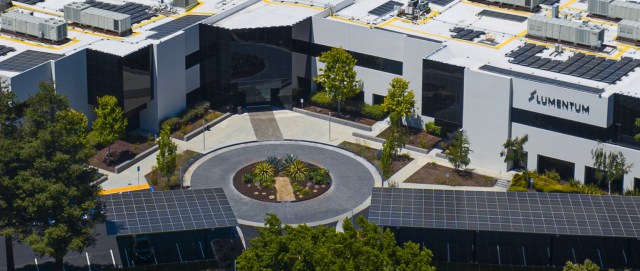 Lumentum brings high-performance lasers, optical transceivers and optical circuit-switching capability to the combined portfolio. (Source: Lumentum)
| Stack layer | Marvell before | Lumentum before | Post-deal engineering verdict |
|---|---|---|---|
| Electrical interconnect (DSP, retimer, SerDes know-how) | Core strength | Limited | No new capability, but tighter co-design is now internal |
| Switching and XPU attach | Network switching, custom accelerators | Absent | Unchanged; the differentiator is who owns the optics behind it |
| Lasers and laser sub-assemblies | Buyer | Owner | Critical win: control of the scarcest item in the AI optics chain |
| Transceiver manufacturing at volume | Partial | Extensive | Vertical integration raises cost leverage but also fab utilisation risk |
| Optical circuit switching (OCS) | Absent | R300-class MEMS OCS products | Opens scale-up paths that bypass electrical spine layers |
| Compound-semiconductor process (InP) | Absent | Owned lines | The single hardest asset to replicate; capacity adds over years, not quarters |
| Customer surface | Hyperscaler ASIC programmes | Cloud and telecom optics | Overlap is modest, which is why the deal is additive rather than consolidating |
Lumentum is headquartered in San Jose, California, and contributes specialised compound semiconductor manufacturing and process technologies, including indium phosphide (InP). That fab footprint, not the module assembly capacity, is the strategic prize.
Five Ways to Move Traffic Between Racks: A Comparison
Since the early 2020s, industry watchers have pointed to deals like this, having long called for a much closer co-design of electrical and optical technologies. The reason is architectural: in cloud computing, the hand-off between silicon-based NICs and laser-driven transceivers is a major connectivity bottleneck. “AI infrastructure is undergoing a fundamental architectural shift toward optical connectivity, creating an opportunity that comes along once in a generation,” said Matt Murphy, chairman and CEO of Marvell. “We intend to help shape the next era of AI connectivity,” he added.
The following comparison is the practical frame for judging whether the merger changes anything on a design desk today.
| Interconnect option | Where the optics sit | Power/latency behaviour | Serviceability | Best-fit deployment |
|---|---|---|---|---|
| Pluggable with DSP | Faceplate module, separate from ASIC | Mature baseline; DSP retiming costs watts and latency | Excellent — hot-swap field replacement | Multi-vendor fabrics, brownfield capacity growth |
| LPO / LRO | Faceplate module, DSP removed | Saves power, but leans on host electrical channel quality | Good, with stricter link validation | Short-reach intra-data-center links with clean boards |
| NPO | Near the package on the same substrate region | Meaningful electrical-path reduction without full co-packaging | Reduced — the module is board-bound | Custom ASIC and XPU attach designs |
| CPO | Co-packaged with switch or accelerator silicon | Broadcom cites a 70% improvement in optical interconnect power for its 51.2 Tbps Bailly CPO switch (broadcom.com); SemiAnalysis models up to 84% transceiver power savings versus DSP optics under a full CPO transition | Weak — yield, repair and upgrade become system-level problems | Largest greenfield AI fabrics, single-supplier risk acceptable |
| OCS | Reconfigurable light path, no electrical conversion | Ultra-low latency, removes electrical spine stages | New category; requires re-planned topology software | GPU-pool reconfiguration and fault bypass in AI/ML clusters |
Peer-reviewed comparison work narrows the gap claim: a 2026 energy study in the Journal of Lightwave Technology found current CPO transceivers improve energy efficiency by 23% versus LPO and by 67% versus DSP-based links (opg.optica.org). Those are real numbers, but they are switch-port numbers, not accelerator-side numbers, which is exactly where Marvell's transceiver DSP franchise sits.
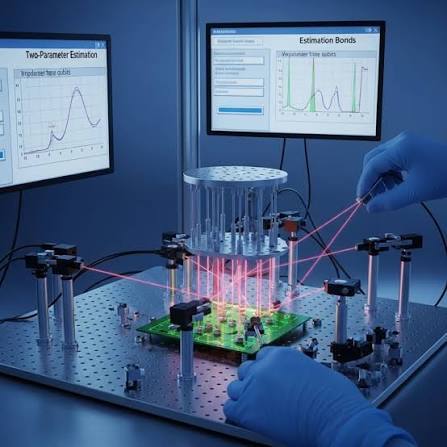 Lumentum manufactures semiconductor lasers, laser sub-assemblies and wavelength management systems. (Source: Lumentum)
The Bottleneck Being Bought
A tighter co-design across the electrical and optical signal chain could significantly reduce both latency and power draw. That is what Lumentum CEO Michael Hurlston calls a “$550 billion” market opportunity. As optical connectivity moves closer to compute, the co-design could encompass the full signal path: silicon, lasers, packaging and power efficiency. Through the Lumentum deal, Marvell gains access to the laser chips that generate the light used in optical connections, plus optical circuit switches that redirect light without electrical conversion.
Two data points suggest this is not a paper strategy. First, Marvell and Lumentum already co-demonstrated optical circuit switching for AI scale-up infrastructure in March 2026 (lightreading.com) — a supplier pairing that predates the merger. Second, Lumentum's R300 platform is a 300-by-300 OCS positioned to replace traditional spine switches in AI/ML clusters (lumentum.com). The lasers are a critical building block in near-packaged optics (NPO) and co-packaged optics (CPO) designs, so control over laser supply converts directly into design-in leverage.
Supply Risk: Lasers, InP and Allocation
Demand-side forecasts support the strategic logic but complicate the cost case. LightCounting's March 2026 Ethernet Optics newsletter frames AI cluster optics as a potential $100 billion market by 2030 and expects enough production capacity to double optical transceiver sales in 2026. On the supply side, InP substrate capacity has stretched laser lead times out past 2027, PhotonCap's component-market analysis warns, while TrendForce-projected monthly EML and CW-DFB output only roughly doubles in 2026 to about 50 million units.
For buyers, that arithmetic implies allocation risk, not scarcity of finished modules. An owner of both the laser fab and the transceiver DSP has first claim on scarce die when the queue forms — which is precisely the concern a $550 billion opportunity narrative cannot answer. Expect independent transceiver makers and mid-size cluster operators to dual-source optics more aggressively in the next design cycle.
Market Timing and Nvidia's Role
Nvidia backs both companies and invested $2 billion each in Marvell and Lumentum earlier this year, a point worth mentioning. Marvell CEO Murphy calls this deal a double down on supporting Nvidia, and shot down concerns about Nvidia's circular dealmaking. “I think having two of the key suppliers come together, that support that ecosystem, is going to be a big benefit for Nvidia,” he said.
The competitive read-through is straightforward: a vertically integrated laser-plus-DSP-plus-switch portfolio gives Marvell a broader foundation for competing with Broadcom, whose CPO switch roadmap already reached commercial delivery in 2024. The tie-up of two AI connectivity suppliers could help create a more vertically integrated AI networking portfolio and allow Marvell to compete more aggressively with Broadcom on multi-rack systems, not just component sockets.
Common Misconceptions Our Readers Should Drop
- “CPO kills the pluggable module.” Pluggables remain the most serviceable and multi-vendor option; CPO is a power play for greenfield fabrics, not a near-term replacement for installed racks.
- “Marvell bought optics to make transceivers cheaper.” The scarce asset is InP laser die and packaging yield, not module assembly labour.
- “OCS is just a faster switch.” An optical circuit switch reroutes light without electrical conversion; its value is reconfigurable topology and fault bypass, not port bandwidth.
- “A $115 billion price tag means the buyer is desperate.” All-stock structures shift valuation risk onto both sets of shareholders; the real question is integration sequencing across two very different process cultures.
- “Nvidia alignment de-risks the deal.” It concentrates it: a single ecosystem's capex cycle now sits behind a large share of Marvell's connectivity roadmap.
Action List: What Different Roles Should Do Next
- Hardware architects: freeze CPO assumptions at the port level for one more design cycle, and quantify your power budget under pluggable, LPO and NPO scenarios before committing to a co-packaged fabric.
- Procurement: treat laser die as a constrained component class. Secure written capacity commitments for InP-based parts and qualify a second EML source; lead times already run past 2027.
- Supply-chain analysts: track Marvell's post-close disclosure of Celestial AI, Lumentum fab utilisation and transceiver ASP erosion as the three leading indicators of whether co-design converts into margin.
- Module vendors outside the combined ecosystem: expect Marvell-sourced DSPs to be tuned first for Lumentum lasers; prioritise host-side interoperability evidence in your next hyperscaler qualification.
- Investors and strategy teams: separate the connectivity TAM story from the balance-sheet mechanics — the equity swap ratio, not the headline enterprise value, determines dilution risk.
FAQ
Is this a cash acquisition?
No. It is an all-stock combination, with Lumentum shareholders receiving 4.500 Marvell shares per share; the $115 billion figure is an implied enterprise value including debt, per Marvell's investor release.
Why does a chip company need a laser company?
Because the electrical-to-optical hand-off is where latency and watts concentrate. Marvell's DSPs, switches and custom accelerators already sit inside data-center transceivers; owning the laser and the InP process closes the remaining part of the signal path.
Which interconnect architecture benefits most?
NPO and CPO first, since both depend on stable, high-yield laser supply. OCS gains a second leg: pairing Marvell's switching and DSP IP with light-path reconfiguration could remove electrical spine stages from scale-up fabrics.
Does this immediately pressure Broadcom?
Not in shipping silicon. Broadcom's 51.2 Tbps CPO switch reached commercial delivery in 2024, so it holds a deployment head start. What changes is competitive scope: Marvell can now bid optics, DSP, switch and lasers as one stack.
What should I watch over the next two quarters?
Regulatory and shareholder approval, integration guidance for Lumentum's telecom-exposed revenue, laser capacity expansion cadence, and whether hyperscaler customers begin requesting co-designed electrical-optical reference architectures rather than discrete parts.
Verdict from the Electronicseng Semiconductors desk: as a parts-stack decision, this merger is defensive brilliance and offensive uncertainty at once. Owning lasers removes the choke point every AI networking designer now negotiates around, and the strategic rationale for buying Lumentum holds. Whether the price clears depends on execution questions no enterprise value can answer — cross-process integration, fab utilisation, and how fast a $550 billion market opportunity converts into shipped silicon and light.
By Rachel Williams, Electronicseng.