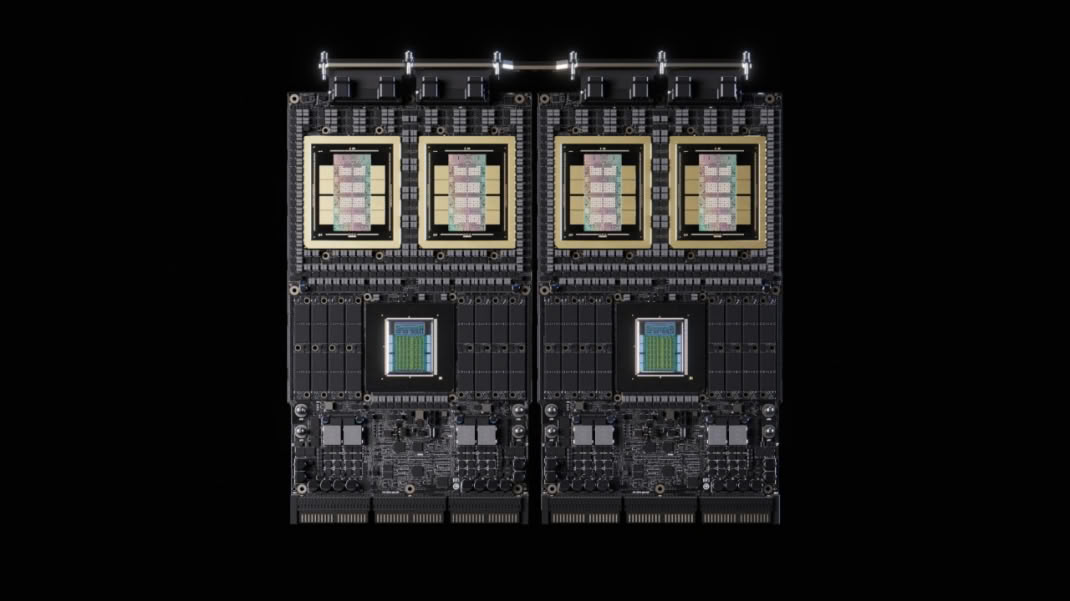
NVIDIA Vera Rubin Bandwidth Reset: HBM4, NVLink and Scale-Out Trade-Offs for Semiconductors
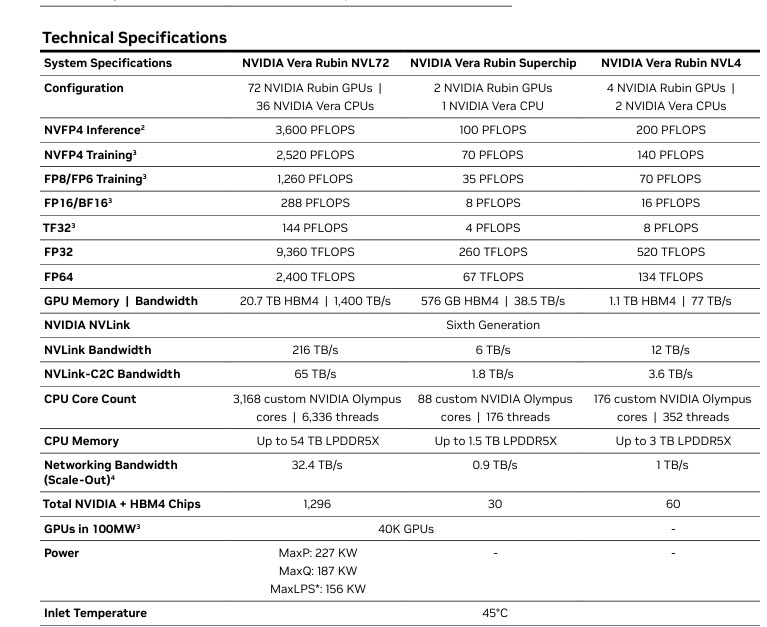
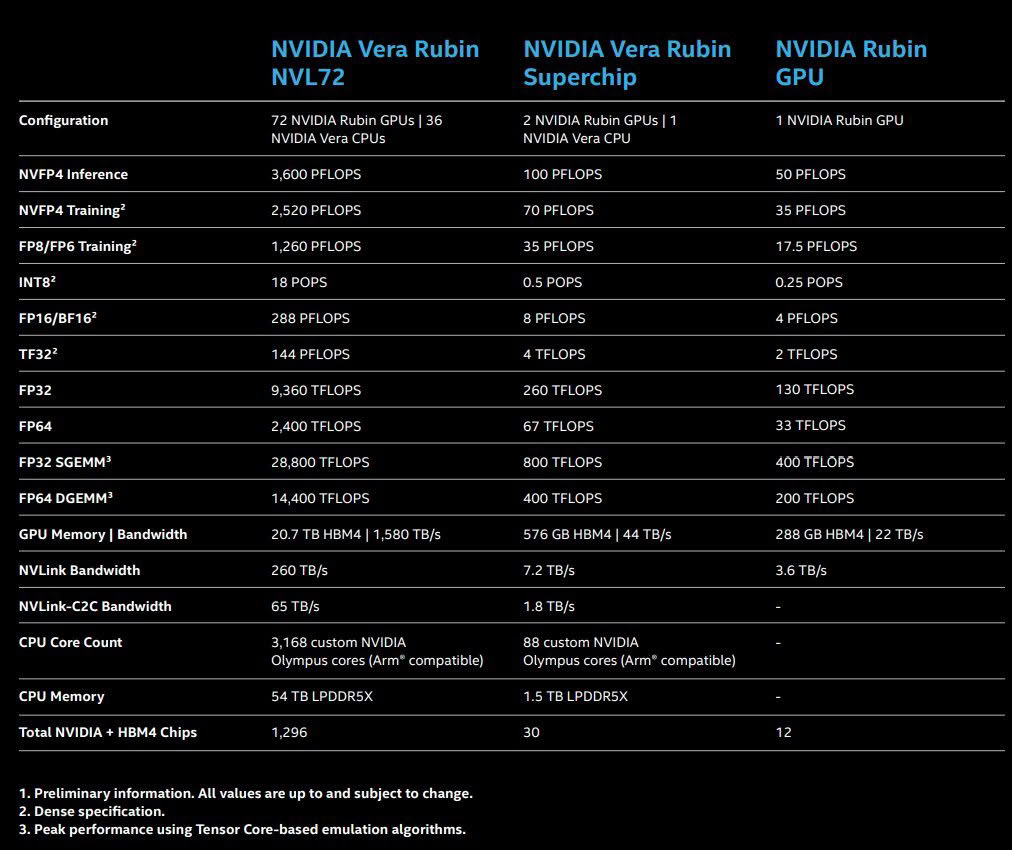
When the current NVIDIA Vera Rubin platform specification is read through a semiconductor supply and system-design lens, the key signal is not simply that the Rubin GPU lists 288 GB of HBM4 memory. The more consequential number is memory bandwidth: the published value is 19.2 TB/s, while earlier NVIDIA technical materials had used the phrase “up to 22 TB/s”. Measured against that ceiling figure, the current number is approximately 12.7% lower. That gap changes the design conversation. It shifts attention from a maximum theoretical target to the bandwidth NVIDIA appears willing to standardize across volume products, and it opens questions about HBM4 qualification, power, thermal behavior, signal integrity, and the balance between GPU-side memory capacity and cluster-side communication.
What the HBM4 Change Means
HBM4 is the next-generation high-bandwidth memory technology behind the Rubin GPU specification. Its wider interface is intended to move model weights, activations, gradients, and intermediate data more rapidly into the compute path. In large AI training and inference workloads, compute capability alone is not enough; if memory bandwidth lags, compute units can stall while waiting for data. That is why HBM4 sits at the intersection of memory, packaging, interconnect, and system software, not just at the memory chip level.
For the Rubin platform, the earlier higher bandwidth target raised the bar for HBM4 suppliers. Achieving higher data rates is not only a memory-die problem. It also imposes constraints on power, heat, signaling, packaging, reliability, and production testing. A higher bandwidth requirement can reduce the population of qualified die and modules, even when the same architecture is being used. A lower published bandwidth target does not automatically imply a performance loss in every customer deployment, but it can widen the acceptable HBM4 pool and may improve yield and deliverability.
This does not mean vendors must redesign every HBM4 product from scratch. A more practical reading is that some HBM4 parts that may have failed the earlier “up to” ceiling, but still meet the newly published bandwidth figure, can become viable candidates. If that happens, the competitive advantage moves from chasing the absolute top rate to delivering qualified HBM4 at scale, with stable power, thermal margin, and test repeatability.
Comparison Table: Published Vera Rubin Bandwidth Figures
| Specification | Earlier or reference figure | Current published figure | Reported change | Engineering interpretation |
|---|---|---|---|---|
| Rubin GPU HBM4 memory bandwidth | “up to 22 TB/s” | 19.2 TB/s | approximately 12.7% lower | A move from a maximum ceiling to a lower standardized bandwidth budget; may support qualification and volume supply. |
| Rubin GPU HBM4 capacity | 288 GB in current platform data | 288 GB | No published change | Capacity remains a separate performance axis from bandwidth; large-model workloads still need enough memory per GPU. |
| Vera Rubin Superchip NVLink bandwidth | 7.2 TB/s | 6 TB/s | approximately 16.7% lower | Reduces the nominal GPU-to-GPU link budget; impact depends on communication-heavy workloads, model parallelism, and scheduling. |
| Vera Rubin Superchip scale-out network bandwidth | 0.8 TB/s | 0.9 TB/s | Increase in published scale-out bandwidth | Shifts more emphasis toward cross-node movement in large clusters, where inter-server transfers can become the limiting factor. |
NVLink and Scale-Out: A One-Down, One-Up Adjustment
Beyond HBM4, the current specification also revises the NVLink numbers attached to the Vera Rubin Superchip. NVLink is NVIDIA’s high-speed GPU interconnect, and it is central to tightly coupled multi-GPU systems. In the latest product data, NVLink bandwidth is listed at 6 TB/s, down from 7.2 TB/s, a change of approximately 16.7%. That reduction is meaningful for workloads that move large amounts of intermediate data between GPUs, such as model-parallel training, expert routing in mixture-of-experts architectures, and other communication-sensitive inference paths.
At the same time, the scale-out network figure for the Vera Rubin Superchip moves in the opposite direction: it rises from 0.8 TB/s to 0.9 TB/s. Scale-out networking connects separate compute nodes so that many GPUs can be organized into one large system. In modern AI clusters, the bottleneck is not always inside a single GPU package or even inside a single rack. As model and cluster size increases, data exchange across servers can dominate wall-clock time. The combination of a lower NVLink budget and a higher scale-out budget suggests a re-balancing of where the platform expects data to move.
It is not valid to convert a 16.7% NVLink reduction directly into a 16.7% loss of AI performance. Actual outcomes depend on the model architecture, tensor and pipeline parallel strategy, software communication efficiency, job placement, and whether the workload is more compute-bound, memory-bandwidth-bound, or network-bound. A lower bandwidth ceiling can hurt some communication-intensive cases while being largely invisible in other workloads, especially if software stacks can hide part of the difference through overlap, batching, or alternative parallelism.
Checklist: How to Interpret the Specification Change
-
Verify whether the 19.2 TB/s figure is a volume-product baseline, a configuration-specific value, or a newly standardized ceiling. The earlier “up to 22 TB/s” wording was explicitly a maximum, so apples-to-apples comparison requires the same qualification context.
-
Map your workload to the correct bottleneck. Training and inference are not uniform: large parameter movement stresses HBM4 bandwidth, multi-GPU coordination stresses NVLink, and cross-rack jobs stress the scale-out network.
-
Check HBM4 supply assumptions. If a lower bandwidth target can accept a broader set of qualified parts, procurement should focus on delivery capacity, test yield, thermal consistency, and long-term support rather than peak die specification alone.
-
Evaluate system software maturity. NVIDIA’s published platform data, including the Vera Rubin NVL72 rack-scale configuration, shows that hardware figures only become useful when communication libraries, scheduling, and framework support are stable.
-
Treat the change as a design trade-off, not a confirmed shortage or confirmed defect. The specification alone does not prove whether HBM4 availability, NVLink engineering, or cluster balance drove the adjustment.
Common Misconceptions
Misconception 1: A lower “up to” number means the whole platform is slower.
The previous 22 TB/s value was described as a maximum. The current 19.2 TB/s value is a different bandwidth budget, not necessarily the operating point of every real training or inference task. System performance still depends on compute, memory capacity, packaging, cooling, NVLink behavior, scale-out networking, and software optimization.
Misconception 2: Lower NVLink bandwidth automatically means lower cluster performance.
NVLink reduction of approximately 16.7% matters for GPU-to-GPU communication, but the real impact depends on the degree of parallelism, traffic patterns, and whether the scale-out network can absorb part of the workload. The increase from 0.8 TB/s to 0.9 TB/s shows that the platform may be trading some local interconnect headroom for broader cluster connectivity.
Misconception 3: HBM4 suppliers must restart from zero.
If the bandwidth requirement moves to a lower published target, existing HBM4 programs may simply be re-qualified or accepted under a broader tolerance range. The issue is more likely related to volume, yield, power, and reliability than a complete redesign.
FAQ: What Readers Should Ask Next
Q: Does the Rubin GPU still have 288 GB of HBM4?
A: Yes. The published platform specification continues to list 288 GB of HBM4 memory for the Rubin GPU. The discussion centers on bandwidth, not capacity.
Q: What is the exact HBM4 bandwidth now?
A: The current published figure is 19.2 TB/s. The earlier technical material referenced “up to 22 TB/s”, which is approximately 12.7% above the current listed number.
Q: Did NVLink bandwidth decrease?
A: The current product data lists NVLink bandwidth for the Vera Rubin Superchip at 6 TB/s, down from 7.2 TB/s, which is approximately 16.7% lower.
Q: Did anything increase?
A: The scale-out network bandwidth figure for the Vera Rubin Superchip rises from 0.8 TB/s to 0.9 TB/s in the published material.
Q: Should engineers treat this as a supply-chain warning?
A: Not by itself. It may indicate a supply or yield-friendly design choice, but it could also reflect system-level performance rebalancing. A stronger signal would come from vendor qualification data, packaging yield, power and thermal validation, and NVIDIA follow-up disclosures.
Action Recommendations for Semiconductor and Hardware Teams
-
Component buyers should track whether HBM4 qualification criteria are being relaxed at the platform level. The practical question is not only the top speed a part can reach, but how many parts can meet the published bandwidth target under volume test conditions.
-
System architects should rerun communication models with the new bandwidth assumptions. In particular, compare expert-parallel or tensor-parallel patterns against the revised 6 TB/s NVLink budget and the 0.9 TB/s scale-out network figure.
-
Memory and packaging engineers should focus on the full chain: HBM4 stacking, interface signal integrity, power delivery, thermal dissipation, and reliability testing. A bandwidth spec is only one point in a multi-layer constraint problem.
-
Analysts should separate specification revision from confirmed performance regression. The Vera Rubin platform still combines large HBM4 capacity, GPU compute, the Vera Rubin NVL72 rack form factor, 72 Rubin GPUs in that published rack-scale view, and sixth generation NVLink as part of the broader system story.
-
Customer teams planning AI infrastructure should monitor real benchmark releases and software-stack evidence. The decisive question is whether NVIDIA can ship volume systems and whether measured training and inference results match customer expectations after the specification change.
For the semiconductor supply chain, the most durable lesson from this revision is that platform performance is a budgeting exercise, not a single peak metric. A lower memory-bandwidth ceiling can improve manufacturability, but a higher scale-out budget can be equally important once systems move beyond one package or one rack. A lower NVLink figure can reduce some intra-GPU communication headroom, while a higher node-to-node network figure can support larger clusters. The final product outcome depends on how those budgets interact in silicon, firmware, frameworks, and deployment workloads.