
Why the Raspberry Pi 5 16GB Now Costs $385: A Semiconductor Supply-Chain Post-Mortem
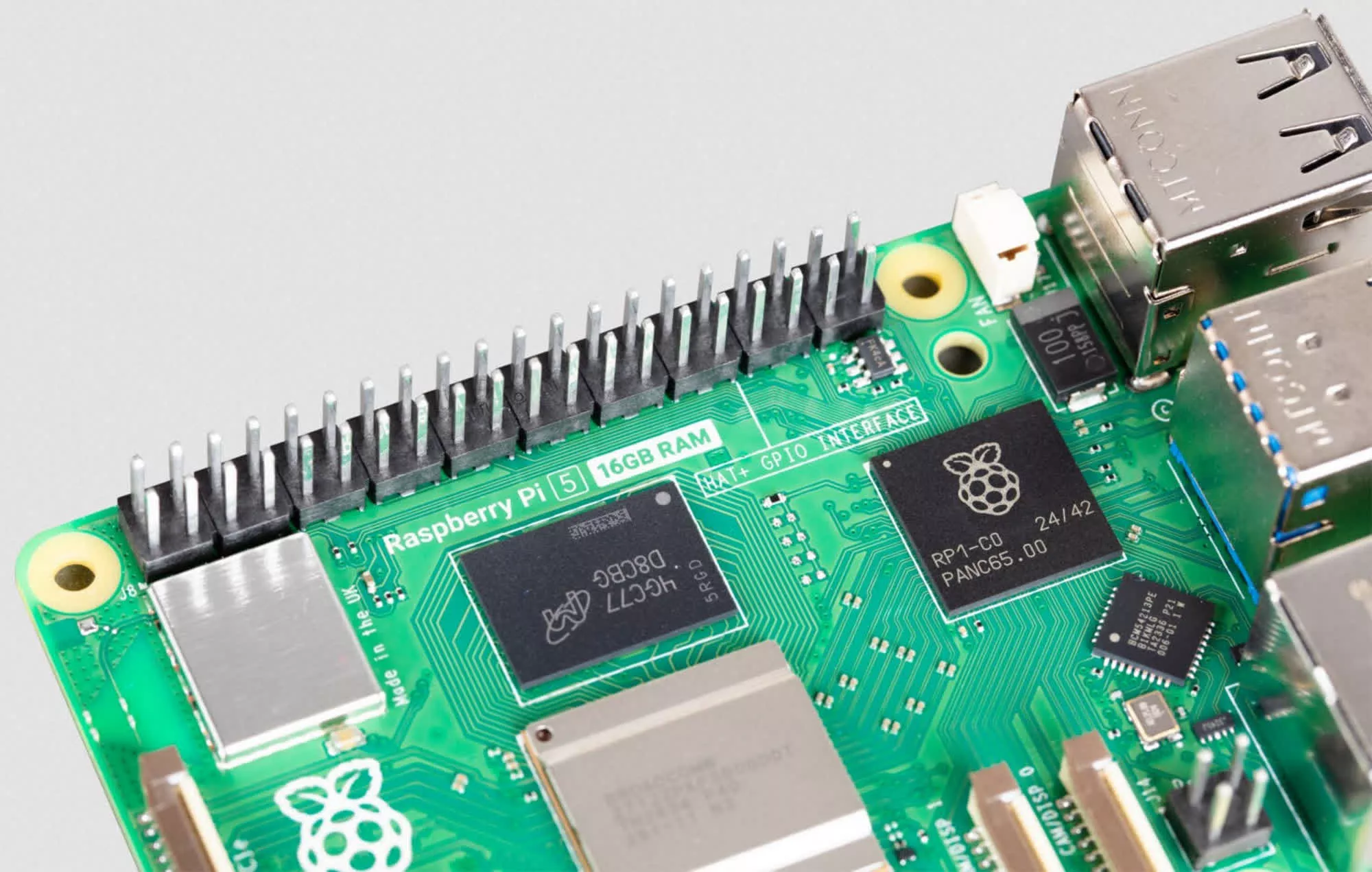
The 16GB memory option is the one SKU in the Raspberry Pi range with no second supplier behind it. The package it needs is a legacy mobile-DRAM part (16GB-class LPDDR4X) that leading fabs are phasing out while AI-bound HBM absorbs wafer starts, so when Eben Upton said the company lacks an alternative supply source, he was stating a qualification fact, not a negotiating posture. That single-source dependency is what carried a board listed at $120 in 2025 to $385 today — a $265 rise that is more than double the launch price.
This post-mortem reads the case the way a component engineer would: what the actual price curve was, which physical part broke the business model, what the UK-based company did where dual sourcing was still possible, and which moves protect a design still on the drawing board. Raspberry Pi built its franchise on the "$35 computer" idea; the 16GB Raspberry Pi 5 is now the sharpest evidence of how far that assumption has moved in a single year.
Case File: What Changed, Step by Step
Conclusion first: this was not one decision but a sequence, and each step tracked the memory market rather than product demand. The 16GB variant of the Raspberry Pi 5 moved from $120 at launch to $385 in roughly four rounds of repricing documented across 2025 and 2026.
| Checkpoint | 16GB Raspberry Pi 5 price | Move | What it signals |
|---|---|---|---|
| 2023 — platform debut | not offered | 8GB Raspberry Pi 5 shipped at $80 | Highest density in the original stack |
| 2025 — 16GB launch | $120 | + $40 over the 8GB board | Eight extra gigabytes priced at about $5 per GB |
| December 2025 | approx. $145 | line-wide step of $5 to $25 (reported by Tom's Hardware) | First memory-driven pass-through |
| February 2026 | $205 | +$60; second hike in three months, already >70% over launch MSRP | Memory cost outrunning buffer stock |
| April 2026 | approx. $305 | a further ~$100 step in Raspberry Pi's own "more price increases" notice | Board-level absorption reached its limit |
| November 2026 | $385 | +$80, announced by Upton recently | Targeted hike, not a full-line increase |
The February and April values are as reported in trade press; the ~$305 figure is implied by the announced step sizes and is our reconstruction, not an official number. The trajectory nonetheless matches Upton's framing that the company was "forced" into the decision.
Why Did Only the 16GB Option Break?
Because only that density is single-sourced. Single-source dependency, in component terms, means one manufacturer ships the qualified part in the qualified footprint at the qualified density and nothing else drops in. Smaller capacities (1GB, 2GB, 4GB, 8GB) can be assembled from several vendors' LPDDR4 or LPDDR4X devices; a monolithic 16GB package cannot.
- Legacy mobile DRAM is being retired. Reporting by The Elec in April 2026 said Samsung Electronics had taken final orders and stopped accepting new ones for LPDDR4 and LPDDR4X, fulfilling only previously received volumes, with that production running out toward the end of 2026 and line conversion planned for early 2027.
- AI memory is consuming the wafer starts. TrendForce estimated in June 2026 that HBM would account for roughly 18%, 22% and 30% of total DRAM wafer input at the three leading suppliers across 2025, 2026 and 2027, and that tight commodity DRAM supply has handed suppliers greater pricing power even in HBM negotiations.
- The squeeze is device-wide, not brand-specific. IDC's memory-shortage analysis projects the same DRAM and NAND cost pressure resetting smartphone and PC pricing and specifications through 2026.
Set against that, Upton's position is unusually constrained: a board whose SoC memory controller is validated against a specific LPDDR4X configuration cannot simply re-lithograph its way to another vendor.
What the Counter-Case Teaches: The Dual-RAM Redesign
Where a second source existed, the company bought flexibility with hardware — and that is the most reusable lesson in the file. For the Raspberry Pi 4, the firm ended its exclusive reliance on Micron LPDDR4X and qualified a second supplier, Shenzhen-based Rayson Technology, whose largest qualified single device is 4GB. The consequence was a board revision (Raspberry Pi 4 Model B V1.5) carrying two memory chips instead of one, a bootloader from January 9, 2026 or later being required for the new parts, and memory speed still pinned at the LPDDR4 controller limit of 3200 MT/s, so the change delivered supply security rather than bandwidth.
Read the price sheet as three different procurement postures rather than three price changes:
| Product | November 2026 move | Reading |
|---|---|---|
| Raspberry Pi 5, 16GB | + $80, to $385 | Full pass-through: no alternative source at this density |
| Compute Module 5, 16GB variants | + $40 | Half the hike; embedded/industrial volumes are typically covered by longer agreements |
| Raspberry Pi 500+ (16GB all-in-one) | unchanged | Cost absorbed to defend a bundle position and reduce quote volatility for buyers |
| Raspberry Pi 4, 8GB | redesigned to dual-chip | Engineering spend substituted for price increase where a second source qualified |
Partial pass-through is not evidence of absent cost pressure. It marks the SKUs where the company is still holding price on purpose, which is exactly where a buyer should expect the next adjustment.
Selection and Procurement Playbook: Seven Moves That Hold Up
- Split the BOM and price the memory line item separately. A bill of materials that treats DRAM as a fixed attribute is a bill of materials that cannot be quoted forward.
- Qualify two densities or two footprints at design-in, not after the EOL notice lands — the Raspberry Pi 4 redesign shows the real cost is a PCB respin plus firmware and test changes.
- Design for memory-lean operation: headless services, container pruning, zram or compressed swap, and log-in-RAM discipline. Upton's own advice to existing users was to reduce memory footprint or move to a lower-capacity model.
- Recompute cost per gigabyte every quarter. Our estimate: the eight extra gigabytes that once added about $40 to a Raspberry Pi 5 now sit inside a $385 board, so "buy 16GB once and forget it" is no longer the cheap option by default.
- Compare against fixed-memory appliances, not just barebones. In a market where soldered DRAM is the expensive element, a complete mini PC that includes memory can undercut a single-board computer plus modules — the 16GB Raspberry Pi 5 now costs more than many complete compact PCs.
- Place last-time buys on parts with announced EOL windows, notably legacy LPDDR4/4X and DDR4, and keep inventory cover in months rather than weeks.
- Put a price-hike clause in the OEM agreement. Where the supplier is explicitly a price-taker on DRAM, a pass-through clause negotiated now is cheaper than a re-quote war in eighteen months.
Four Common Misreadings of the $385 Board
- "This is margin recovery." It is the opposite of margin recovery: the firm kept Raspberry Pi 500+ flat and only doubled the CM5 increase, which is what selective loss-leading looks like.
- "The whole range is going up." The November move targeted 16GB products specifically; Upton's stated preference was to adjust part of the line rather than raise everything.
- "$385 is the new normal." Upton described the increase as unavoidable given current conditions while stressing that the memory market situation is abnormal and will not last forever; if DRAM pricing normalises, part of the range could be repriced downward.
- "More RAM always means better value." When the incremental gigabyte is the scarce one, capacity headroom purchased at $265 of inflation above launch is a poor hedge.
What This Case Changes for Board-Level Design Decisions
The durable conclusion is structural rather than cyclical. For two decades the "$35 computer" premise implied that compute, not memory, was the budget line to manage. The Raspberry Pi 5 16GB case shows a single qualified DRAM density can reprice an entire platform by more than 220% from launch within a year, independent of the silicon at its centre. Engineers should now treat the memory configuration as a separate sourcing decision with its own roadmap, and analysts should expect hardware price lists to become more granular, with density-level SKUs diverging rather than moving together. Developers who need help tuning memory usage can raise workloads on the Raspberry Pi official forum, where company engineers advise users; enquiries to our editorial team can go to info@electronicseng.com.
Frequently Asked Questions
Why did only the 16GB versions get expensive?
Because 16GB-class LPDDR4X packages are supplied by a single qualified source while legacy mobile DRAM capacity is being retired, and no drop-in second source exists at that density. Lower capacities can be dual-sourced or assembled from two chips, which is precisely what the Raspberry Pi 4 dual-RAM revision did.
Is the 16GB Raspberry Pi 5 still cheaper than a mini PC?
At $385, generally no for comparable pre-owned configurations: the platform price is now higher than many complete compact PCs, even before you add a power supply, storage and case. The comparison flips in the board's favour where GPIO, long-term mechanical fit, or the vendor's software stack is genuinely required.
Will prices come back down?
Raspberry Pi has said the increases were driven by abnormal memory-market conditions and that pricing could be revised down if DRAM costs normalise and supply stabilises. Timing is a memory-market variable, not a company one: TrendForce and IDC both frame relief as dependent on HBM-driven capacity reallocation, which is scheduled through 2027.
Should I move my fleet to 8GB or 4GB boards?
Only after measuring real working-set usage. For headless services, gateways and k3s-class workloads, memory pressure can often be cut with compression and service pruning, letting an 8GB board do a 16GB board's job. For local model inference, in-memory databases or heavy container density, the savings will be consumed by swap-induced latency.
Does a Compute Module 5 design carry the same risk?
Yes, but with a buffer: the 16GB Compute Module 5 variants rose by $40 rather than $80, consistent with contract-covered embedded volume. Confirm with your supplier whether your density sits inside an agreement, and whether the module's memory is single-sourced at board level.
Reference Sources
- Raspberry Pi, official product and pricing news: https://www.raspberrypi.com/news/price-rises-for-some-16gb-raspberry-pi-products/
- Tom's Hardware, "Raspberry Pi 5 price increases drastically as AI shortage bites, 16GB version now $205": https://www.tomshardware.com/raspberry-pi/raspberry-pi-5-price-increases-drastically-as-ai-shortage-bites-16gb-version-now-usd205-second-price-increase-in-three-months-over-70-percent-more-expensive-than-original-msrp
- Tom's Hardware, 16GB Raspberry Pi 5 hiked to $385, more than triple its launch price: https://www.tomshardware.com/raspberry-pi/16gb-raspberry-pi-5-hiked-to-usd385-more-than-triple-its-launch-price-makers-are-already-shifting-to-pico-esp32-for-small-projects-mini-pcs-for-more-ambitious-tasks
- The Elec, "Samsung Electronics to End Orders for Legacy Mobile DRAM": https://www.thelec.net/news/articleView.html?idxno=6657
- TrendForce press centre, HBM wafer-input share and DRAM pricing power: https://www.trendforce.com/presscenter/news/20260602-13074.html
- CNX Software, "Raspberry Pi 4 dual RAM variant introduced to mitigate RAM price increases and supply challenges": https://www.cnx-software.com/2026-02-05/raspberry-pi-4-dual-ram-variant-introduced-to-mitigate-ram-price-increases-and-supply-challenges/
- IDC, "Global Memory Shortage Crisis: market analysis and potential impact on the smartphone and PC markets in 2026": https://www.idc.com/resource-center/blog/global-memory-shortage-crisis-market-analysis-and-the-potential-impact-on-the-smartphone-and-pc-markets-in-2026/
Written by Rachel Williams, Electronics & Engineering. Price reconstruction for April 2026 is an estimate derived from announced step sizes and is labelled as such.