
Electronicseng Semiconductors Guide: Reclaimed Memory as AI Capacity Strategy
For Electronicseng semiconductor readers, the AI infrastructure question has moved beyond accelerator roadmaps. Memory availability is now a gating engineering variable: installed DRAM, HBM supply, and interconnect choices determine whether racks can go live on schedule. Treating recovered server memory as an asset, rather than as scrap, gives procurement and design teams another lever.
Center for Strategic and International Studies estimates that 50% to 70% of all memory chips produced this year will be taken by data centers. In the U.S., the supply side is exposed to a narrow manufacturer base and plant expansion schedules measured in years. The consequence is operational: GPUs, servers, and facility capacity may be ready, yet missing memory can still stall a deployment while price moves push infrastructure costs higher.
Three outcomes of designing for reuse
Operators that build reuse into the hardware baseline typically gain three outcomes: usable capacity before new fab output arrives, more effective protection of scarce HBM, and a slower, more modular refresh rhythm.
Using installed DRAM as near-term capacity
Previous refresh cycles leave fleets with sizeable DRAM inventory that can be redeployed through Compute Express Link expansion devices. These devices connect memory over PCIe rather than through CPU native memory channels, enabling newer servers to draw from older DRAM generations. A single expansion controller can host a dozen reclaimed modules and more than one terabyte of memory; variants with in-line compression can nearly double usable capacity.
Compatibility planning is what turns this from a salvage project into a repeatable design practice. Platforms that adopt open interconnect standards and reserve physical space for expansion hardware provide a stable connection point for recovered modules, avoiding bespoke adapters for each new server generation. Every reused module also reduces competition for new fab capacity, cutting dependence on distant manufacturing chains.
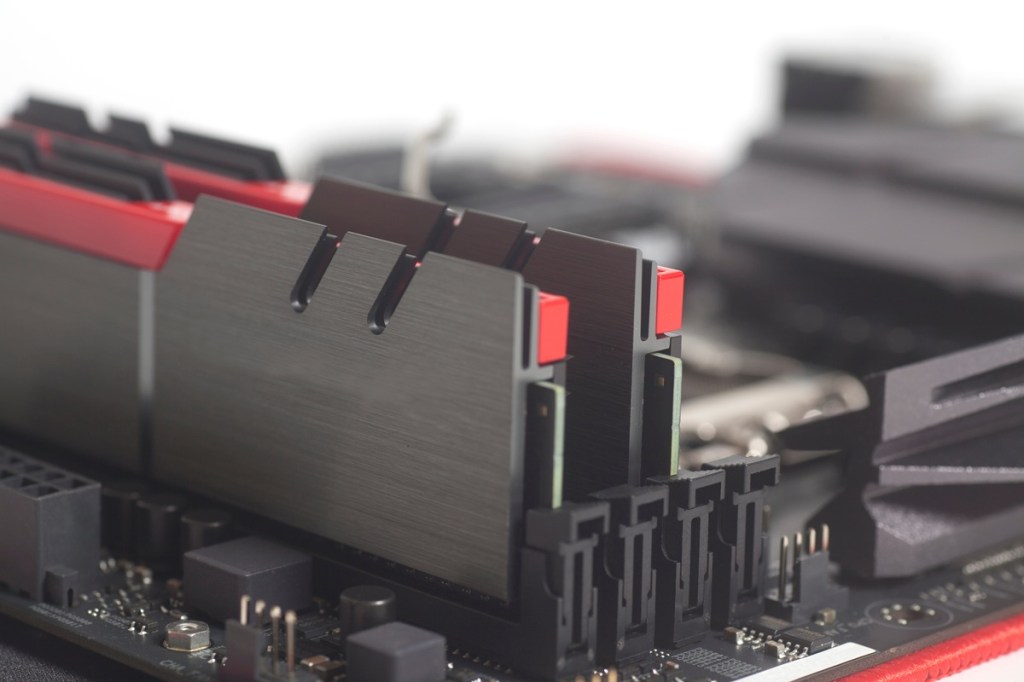 Reclaimed memory supports pre-fab capacity, extends scarce HBM usefulness, and breaks the whole-system refresh habit. Source: Adobe Stock.
A layered memory approach for scarce HBM
AI servers already separate memory into performance tiers. HBM sits next to the accelerator, and one stack can provide over 1 terabyte per second. Conventional DRAM is lower cost, and a DDR4 module tops out at 25.6 gigabytes per second. CXL, an open PCIe-based standard, inserts expanded or pooled memory into the hierarchy while preserving coherence, making older modules relevant again.
For accelerators engineered around HBM, no cheaper tier substitutes for that bandwidth. HBM remains the most constrained type because its stacked construction is more expensive and slower to produce than standard memory. Reuse therefore does not eliminate the HBM shortage; it changes allocation discipline.
Workload placement and validation
HBM-equipped accelerators are too valuable to spend on non-core functions. Supporting services such as caching, data preprocessing, and retrieval can move to reclaimed memory, keeping HBM for latency-sensitive training and real-time inference. Sizing machines against actual job classes also limits overprovisioning across large fleets.
Validation is mandatory. Compared with directly attached DRAM, CXL-attached memory adds latency, so operators must test each configuration under representative workloads before making purchasing commitments. Early qualification of older modules on new platforms means usable capacity is ready when procurement becomes constrained.
Reframing refresh cycles
A structural benefit is replacing whole-system retirement with component-level renewal. Different subsystems mature at different rates; retiring a full server because one part ages is a capacity waste. Modular, disaggregated architectures allow GPUs, CPUs, and memory chips to be replaced on separate schedules. A durable server design can support multiple component generations, letting memory already in the fleet remain active while accelerators are swapped.
Separating memory from every accelerator refresh lowers exposure to shortage pricing and long lead times. It also reduces electronic waste and Scope 3 emissions tied to manufacturing and sourcing new parts, which aligns with operator sustainability goals.
Memory tier comparison
| Tier | Role | Key constraint | Reuse implication |
|---|---|---|---|
| HBM | Accelerator-side bandwidth | Over 1 terabyte per second; slow and costly to make | Reserve for training and real-time inference |
| DDR4 | Cheaper mainstream DRAM | 25.6 gigabytes per second ceiling | Can be redeployed when compatible |
| CXL expansion | Expanded or pooled tier over PCIe | Adds latency versus directly attached DRAM | Requires workload validation and qualification |
Common misconceptions
- Reusing memory is only a scrapyard tactic: the article positions it as a design requirement that affects platform compatibility, capacity planning, and refresh policy.
- DRAM reuse replaces HBM: it cannot substitute where HBM bandwidth is required, but it can absorb supporting workloads.
- CXL means free capacity: latency and qualification still decide whether the tier performs well for a real workload.
FAQ: what should semiconductor buyers evaluate first?
- Is the bottleneck really memory? Yes; the constraint can coexist with available GPUs, servers, and data center capacity.
- What evidence shows the scale of demand? Center for Strategic and International Studies projects 50% to 70% of memory chips produced this year going to data centers.
- What can older DRAM do in an AI rack? It can supply expansion capacity for services such as caching, data preprocessing, and retrieval.
- What is the engineering risk? Added CXL latency and unqualified modules can degrade expected performance if not tested.
Action checklist for AI infrastructure teams
- Inventory retired and spare DRAM before setting new purchase targets.
- Design boards with open interconnect support and space for CXL expansion devices.
- Pre-qualify older modules on current platforms rather than waiting for supply pressure.
- Move suitable supporting services to reclaimed memory to protect HBM allocation.
- Measure latency and throughput against representative training and inference jobs.
- Shift refresh policies toward component replacement, not whole-system retirement.
Memory supply may eventually catch demand, but Electronicseng readers should plan for the interval. Teams that make reusability an early engineering priority gain schedule control and avoid leaving build-outs blocked by a single supplier allocation.