
Samsung 8LPU+ at IEDM 2026: A Semiconductor Reading of the Switch 2 Lite Rumor
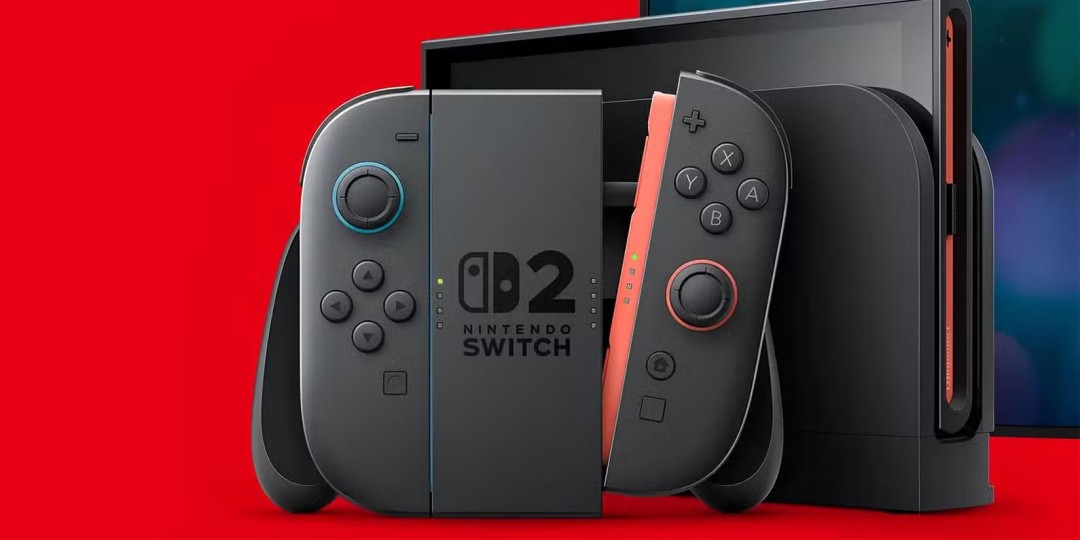
From a process-platform standpoint, the item worth separating from the hardware rumor is the second-generation 8LPU derivative that Samsung Foundry plans to present at IEDM 2026. Nintendo Patents Watch linked the process to a possible Switch 2 Lite candidate because Nintendo has not announced such a model. For design, sourcing, and analysis teams, the useful question is not whether a console exists, but what can and cannot be inferred from the disclosed 8LPU+ parameters.
Why the 8LPU+ Discussion Matters Beyond a Console Rumor
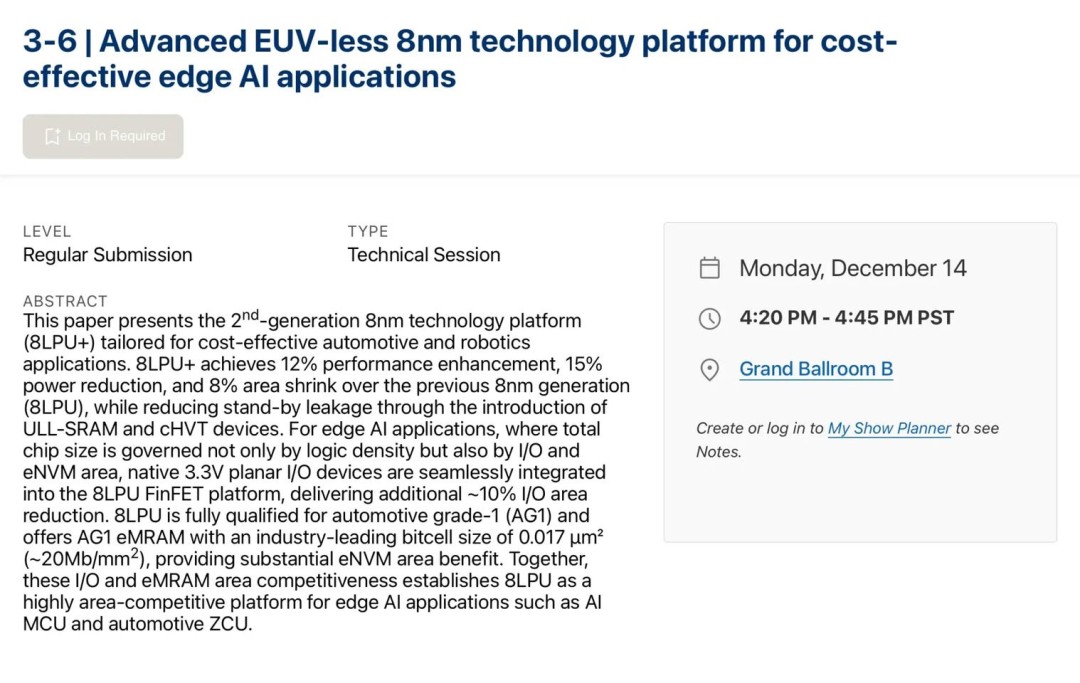
In the Samsung Foundry context, 8LPU+ is positioned as the second-generation version of 8LPU. The reported comparison figures are process-level relative changes rather than product claims: 12% performance improvement, 15% power reduction, 8% area shrinkage, and roughly 10% smaller I/O region. The available material also states that the platform still uses fully DUV lithography and that Samsung is promoting it for automotive, robotics, and edge AI chips.
Those two facts give the discussion a more useful frame than a simple gadget rumor. The process metrics describe what Samsung Foundry is saying about its 8LPU+ platform in 2026. The console question belongs to a different layer: whether a future device, a future chip variant, or a future supply-chain selection would use the process. Nintendo has not confirmed Switch 2 Lite, and the Samsung disclosure does not identify Nintendo or NVIDIA as the customer for the process numbers.
8LPU vs 8LPU+: A Limited Comparison
| Parameter | 8LPU reference | 8LPU+ reported change | Scope of the data |
|---|---|---|---|
| Performance | First-generation 8LPU baseline | 12% improvement | Process-level comparison in the Samsung Foundry IEDM 2026 discussion |
| Power consumption | First-generation 8LPU baseline | 15% reduction | Process-level comparison in the Samsung Foundry IEDM 2026 discussion |
| Chip area | First-generation 8LPU baseline | 8% shrinkage | Process-level comparison in the Samsung Foundry IEDM 2026 discussion |
| I/O region | First-generation 8LPU baseline | about 10% smaller | Process-level comparison in the Samsung Foundry IEDM 2026 discussion |
| Standby leakage | Not quantified in the available material | reduced | Qualitative statement in the Samsung Foundry IEDM 2026 discussion |
| Lithography | Not specified in the available material | fully DUV | Stated for 8LPU+ |
| Promotion target | Not specified in the available material | automotive, robotics, edge AI | Stated for 8LPU+ |
Where the Switch 2 Lite Link Comes From
The speculation starts from a semiconductor supply-chain detail: Switch 2 uses the NVIDIA T239 chip, and that chip is associated with Samsung 8 nm. Because 8LPU+ is described as the second-generation version of 8LPU, Nintendo Patents Watch treats it as a plausible candidate for a lower-cost, handheld-only derivative such as Switch 2 Lite. The reasoning is process continuity: a product family already built on a Samsung 8 nm path could, in theory, benefit from an 8LPU+ derivative if a future design chose it.
That is where the factual boundary must be drawn. The reported 8LPU+ deltas do not by themselves prove a Switch 2 Lite product. Samsung's current disclosed materials do not mention Nintendo or NVIDIA, and Nintendo has not announced Switch 2 Lite. Therefore, 8LPU+ and Switch 2 Lite remain connected only by unconfirmed speculation.
Checklist for Evaluating the Rumor
- Confirm whether Nintendo has officially announced Switch 2 Lite. If it has not, the product remains unconfirmed.
- Identify the origin of the numbers. The 12%, 15%, 8%, and 10% values are tied to the Samsung Foundry IEDM 2026 discussion of 8LPU+.
- Check whether the process material names a customer. The available disclosure does not mention Nintendo or NVIDIA.
- Map the chip relationship accurately: Switch 2 is linked to NVIDIA T239 and Samsung 8 nm, not automatically to 8LPU+.
- Note the lithography statement: 8LPU+ is said to use fully DUV lithography, which is a process-platform detail rather than a product specification.
- Keep system-level variables separate from process-level deltas, including package, battery, thermals, firmware, memory, and cost targets.
Common Misconceptions
- Misconception: “8LPU+ is the Switch 2 Lite process.”
Correction: No confirmation exists. The connection comes from Nintendo Patents Watch speculation, not from a Samsung Foundry customer announcement or a Nintendo product announcement. - Misconception: “The Switch 2 8 nm link proves the next model will use 8LPU+.”
Correction: The Switch 2 link explains why the idea is plausible, but it does not establish that a future device will use the platform. - Misconception: “Process improvements translate directly into the same user-facing gains.”
Correction: A 12% or 15% change at the process level is not automatically a 12% or 15% change in gameplay, battery life, heat, or price.
Data Citation Note
All quantitative deltas referenced in this article are tied to the Samsung Foundry IEDM 2026 discussion of 8LPU+ as described in the source material. They should not be read as published Switch 2 Lite specifications. The product-side anchors are narrower: Switch 2 uses NVIDIA T239 and is associated with Samsung 8 nm; Nintendo has not announced Switch 2 Lite; Samsung's disclosed materials do not mention Nintendo or NVIDIA; and Nintendo Patents Watch raised the candidate-process speculation.
Action Advice for Engineers, Analysts, and Supply-Chain Teams
For semiconductor designers, the useful signal is that Samsung Foundry is continuing to promote a second-generation 8LPU derivative at IEDM 2026 while emphasizing fully DUV lithography and markets such as automotive, robotics, and edge AI. That positioning may matter more for long-lived, power-constrained, cost-sensitive chips than for any single consumer device.
For hardware analysts, the prudent next step is to wait for a formal Nintendo announcement before treating Switch 2 Lite as a product with a defined silicon path. If a device is announced, the next verification point is whether the company or a credible technical source identifies the node and foundry relationship.
For procurement and supplier-management teams, there is no confirmed basis to revise sourcing assumptions for Switch 2 Lite. The responsible action is to track the IEDM 2026 disclosure, monitor Nintendo's official channels, and avoid treating unconfirmed process speculation as a purchasing signal.
The strongest factual core is therefore narrow but useful: Samsung Foundry plans to present 8LPU+, the second-generation 8LPU derivative, at IEDM 2026, and Nintendo Patents Watch has proposed it as a possible Switch 2 Lite candidate. The remaining product question is unresolved because Nintendo has not announced Switch 2 Lite and the process disclosure does not name Nintendo or NVIDIA.