
Flash-Memory Scarcity, 85.1% Margin: An Electronicseng Semiconductor Read on SanDisk’s Data-Center and HBF Pivot
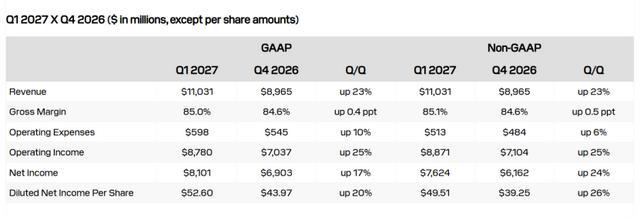
For readers tracking memory and compute design decisions, the clearest signal in SanDisk’s latest results is not only profitability, but the way a tight flash supply is being monetized across product mix. In Q1, adjusted gross margin reached 85.1%, compared with 84.6% in the previous quarter and 29.8% in the prior-year quarter. Management framed this quarter’s revenue increase as about 60% shipment-volume driven and 40% price driven, which tells engineers, sourcing teams, and analysts that both demand and pricing are doing work. This Electronicseng Semiconductors view unpacks the guidance, the data-center shift, the first HBF milestone, and the practical planning questions that follow.
1. The reported numbers: margin, guidance, and shareholder returns
SanDisk’s reported figures create a compact but unusually informative data set. The company is not presenting the margin move as a one-off seasonal effect; the prior-year comparison is the anchor that makes the step change visible, while the sequential comparison shows the trend continued from the previous quarter.
- Q1 profitability: Adjusted gross margin was 85.1%, higher than 84.6% in the previous quarter and far above 29.8% in the prior-year quarter.
- Growth composition: In this quarter, revenue growth came from both volume and price: about 60% was attributed to shipment volume, while 40% came from pricing.
- Fiscal Q2 2027 revenue outlook: The company guides to 12.2 billion to 12.6 billion dollars, above the 12.1 billion dollar analyst consensus.
- Fiscal Q2 2027 margin outlook: Adjusted gross margin is projected at 84.5% to 85.5%.
- Capital return: SanDisk reiterates that 100% of surplus cash will be returned to shareholders, and it has already committed 5.0 billion dollars to share repurchases in this fiscal quarter.
Data citation: The figures above are taken from SanDisk’s Q1 results and management commentary as reported in the source material, with the company’s fiscal Q2 2027 guidance and shareholder-return statement included for context.
2. Data-center demand is reshaping the NAND mix
David Goeckeler’s remarks put the current cycle in structural rather than purely cyclical terms. He describes a decade-long shift in where flash demand originates. Ten years ago, data-center applications accounted for about 20% of the industry, he says; now that share is nearly half, and the company expects more than 55% in 2027. The bid-demand increase of about 40% year over year is the operational symptom of that shift.
The AI-related detail matters as much as the market-share line. KV Cache is described as a workload pattern that could eventually represent about one-third of AI data-center flash demand by the end of this decade. In practice, that points to memory subsystems being designed around cache capacity, not only traditional storage tiers. Capacity is already being committed ahead: currently, about 50% of fiscal 2027 output is locked through new business module projects, and that ratio is expected to rise to about two-thirds in 2028.
- Monitor supplier capacity allocation, because fiscal 2027 and 2028 are not simply future years; they are already being shaped by contractual commitments.
- Interpret bid demand as forward visibility, not just current orders.
- Read KV Cache as a workload that changes flash sizing assumptions inside AI infrastructure.
3. HBF, PC softness, and automotive edge in one portfolio view
The product roadmap and the traditional PC market tell different stories. SanDisk says its first high-bandwidth flash (HBF) memory chip has completed tape-out. The company says the architecture offers read bandwidth comparable to HBM while carrying more capacity, and it expects to deliver first samples to customers next year. That makes HBF an engineering milestone rather than a finished volume solution, but it is exactly the kind of development that product planners need to track when evaluating memory subsystems where bandwidth is a design consideration.
On the client side, management identifies the current two quarters as a low point for PC sales. There is still caution about next year, when PC volumes may post a single-digit decline. At the same time, PC storage capacity, measured in EB, is expected to increase, and NAND market segments are guided to positive growth next year. The distinction is important: unit volume and capacity demand can move in opposite directions.
Automotive electronics are treated differently: they are described as one of the largest future market segments within edge computing. That does not change the near-term PC outlook, but it adds another long-cycle demand vector alongside data center.
4. Segment comparison: what SanDisk’s signals mean for engineering and sourcing
| Demand vector | Reported signal | Semiconductor planning implication |
|---|---|---|
| AI data-center flash | Data-center share moves from about 20% ten years ago to nearly half now, then more than 55% in 2027; bid demand up about 40%; KV Cache may reach about one-third of AI data-center flash by the end of this decade. | Treat AI infrastructure as the primary structural demand lens; build supplier scenarios around capacity reservations and KV Cache workload growth. |
| PC storage | Current two quarters are a sales trough; next year may bring a single-digit decline in PC volumes, but PC storage capacity measured in EB will grow. | Do not equate weak unit shipments with weak bit demand; model capacity growth separately from volume growth when planning NAND supply. |
| HBF | First HBF memory chip has completed tape-out; read bandwidth is comparable to HBM but capacity is larger; first customer samples are expected next year. | Move from concept evaluation to early technical assessment, but keep procurement exposure realistic until sampling and integration data are available. |
| Automotive edge | Automotive electronics are called one of the largest future market segments in edge computing. | Track long-horizon qualification and architecture relevance, especially where edge compute meets embedded memory needs. |
5. Common misconceptions to avoid
- Misconception: A 85.1% margin means the entire NAND market has moved to premium pricing. Reality: The number is SanDisk’s Q1 adjusted gross margin; growth attribution shows about 60% volume and 40% price, so the result reflects company-specific mix, pricing, and supply dynamics rather than a uniform market outcome.
- Misconception: HBF is an already shipping replacement for existing high-bandwidth memory. Reality: The source material describes a first product that has completed tape-out, with first samples expected next year.
- Misconception: Weak PC shipments mean all NAND segments will decline. Reality: Management says NAND market segments will all show positive growth next year, even if PC volumes may fall by a single digit.
- Misconception: Fiscal capacity reservations are purely a financial topic. Reality: If about 50% of fiscal 2027 output and about two-thirds of fiscal 2028 output are already locked through projects, engineers and sourcing teams are exposed to allocation risk at the design stage.
6. FAQ: the questions most likely to follow this update
How much of SanDisk’s Q1 revenue growth came from price?
Management attributes about 60% of the revenue increase to shipment volume and 40% to price. That makes volume the larger contributor in this quarter, even though price is the element most visible in the margin jump.
What is the company’s fiscal Q2 2027 revenue guidance?
SanDisk expects revenue of 12.2 billion to 12.6 billion dollars. That is above the 12.1 billion dollar analyst estimate. The adjusted gross margin outlook for the same period is 84.5% to 85.5%.
Why is the data-center trend more than a demand statistic?
David Goeckeler ties the shift to a changing industry structure: ten years ago data-center workloads were about 20% of the total; now they are nearly half; the company expects more than 55% in 2027. The about 40% increase in bid demand and the capacity lock-up figures show that the transition is already affecting supply planning.
What is the status of SanDisk’s HBF product?
SanDisk states that its first high-bandwidth flash memory chip has completed tape-out. The reported advantage is read bandwidth comparable to HBM with larger capacity. First samples to customers are expected next year.
What should readers take away for automotive and PC?
PC is in a short-cycle trough, with the current two quarters described as the low point and next-year volumes possibly declining by a single digit. Automotive is framed as one of the largest future market segments in edge computing. The combined message is that near-term weakness in one segment does not eliminate long-term demand vectors elsewhere.
7. Action advice for semiconductor teams
For engineers, procurement, and technical management, the practical conclusion is to separate price headlines from capacity reality. The margin data is important because it reflects scarcity and mix, but the more actionable variables are committed production, guidance, and emerging architecture.
- Design and roadmap teams: Evaluate HBF as a next-year sample topic, not an immediate supply replacement, and compare it against existing bandwidth and capacity constraints.
- Hardware sourcing teams: Build supplier plans around the fiscal 2027 and 2028 capacity allocation signals, including the about 50% fiscal 2027 reservation and the expected about two-thirds fiscal 2028 reservation.
- Product cost models: Recalibrate assumptions by separating volume from price. SanDisk’s this quarter split—about 60% volume and 40% price—shows that demand strength and monetization are not mutually exclusive.
- Analysts and planners: Track bid demand and data-center share as leading indicators, while watching KV Cache, PC capacity growth, and automotive edge as separate growth channels.
- Risk managers: Treat 100% surplus-cash return and the 5.0 billion dollar repurchase in this fiscal quarter as signals about balance-sheet confidence, but do not let financial return policy obscure supply risk for customers.
The final point for an Electronicseng Semiconductors audience is that flash is being pulled into a more complex memory hierarchy. The SanDisk numbers tell a company story, but the pattern tells a supply-chain story: data-center workloads, KV Cache, first HBF samples, PC capacity growth, and automotive edge are moving at different speeds. Teams that plan only on near-term price headlines will miss the longer arc. Teams that model capacity, architecture, and segment-level demand together will be better positioned to interpret the next NAND and flash-infrastructure cycle.