
Edge AI Toolchains Under the Microscope: How NXP, TI, Renesas, Microchip and Altera Are Removing Friction from Semiconductor Selection
Schedule risk in embedded AI rarely sits in the network architecture. It sits in the seam between a trained model and a specific part number — the conversions, compilations and repeated hardware validation that a multi-vendor toolchain forces the same team to run over and over. Silicon suppliers have noticed. The last few releases of their development platforms amount to a coordinated attempt to close that seam, and the practical consequence for engineers, hardware buyers and analysts is that platform strategy now belongs inside the device evaluation, not after it.
What follows treats every vendor move as an engineering decision with a cost and a schedule consequence attached: which bottleneck class it targets, which silicon it actually covers, and what a reader working to a production deadline should extract from it.
The bottleneck map: where the engineering hours really go
When larger AI and machine-learning (ML) models must run at the edge, embedded development becomes more complex, slower and costlier — which is precisely why streamlined development platforms have become an industry trend. The mechanics are well understood. Because embedded edge devices differ in architecture, a model generally needs conversion, quantization or another form of optimization, compilation for the target runtime, and empirical benchmarking and validation on the target hardware. Repeating that workflow across many hardware platforms is time-consuming and constitutes a critical bottleneck for development teams, while framework incompatibility across different silicon vendors complicates the picture further.
Read against the four vendor programs and one FPGA supplier discussed below, the bottleneck classes group as follows:
- Model optimization — quantization, operator fusion, pruning and architectural mapping, ideally exposed through a GUI instead of hand-written pipeline code.
- Benchmarking and validation — access to target silicon, or a remote surrogate for it, so that reported numbers are measured rather than extrapolated.
- Licensing economics — whether optimization features are gated behind a paid toolchain.
- Heterogeneous compute — distributing inference across CPU, GPU and dedicated NPUs inside a constrained power, thermal and memory envelope.
- Security hardening under real-time constraints — the requirement that dominates mission-critical applications.
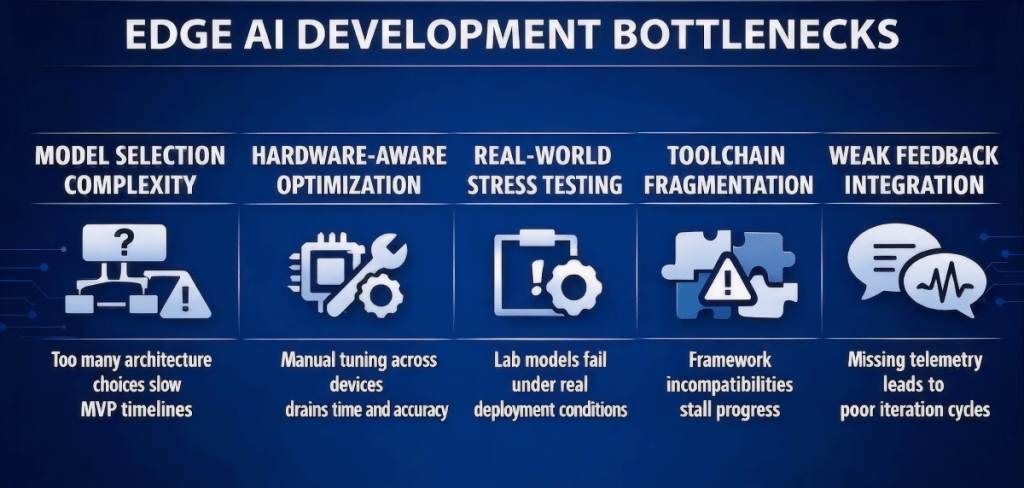
Figure 1: Edge AI development bottlenecks (Source: Saumitra Jagdale)
Vendor by vendor: what each platform rework actually shortens
NXP — eIQ moves from inference compiler to cloud-hosted agentic layer
NXP Semiconductor launched the eIQ software development platform in 2018. Since then it has travelled from a code-heavy inference engine compiler to the GUI-based eIQ toolkit, which performs graph-level profiling and then optimizes open-source TensorFlow, PyTorch and ONNX models inside a single, unified workflow. The optimization levers placed in front of the developer are quantization, operator fusion, pruning and architectural mapping, and the platform also carries extensions integrated with the Nvidia TAO toolkit, from which models can be imported.
Two attributes matter at the selection stage. First, the portfolio includes eIQ Time Series Studio, aimed at time-series AI/ML development that drives real-time decision-making at the edge. Second, the coverage list is explicit: NXP's i.MX 8 and i.MX 9 application processors, QorIQ Layerscape processors such as LS1046A, LX219 and 760A, and S32 automotive processors and microcontrollers (MCUs).
At CES 2026, NXP launched the eIQ AI hub, bringing the eIQ toolkit, eIQ Time Series Studio, eIQ GenAI Flow — a software pipeline for large language models — and an agentic AI framework onto one unified, cloud-based platform. From that platform, developers can run functional simulations, hardware-farm their models and run benchmarking tests, with the flexibility to move development from the cloud to on-premises if required.
Alongside the hub, the agentic AI framework extends the same acceleration logic that NXP applied to the rest of the eIQ tool suite. It is compatible with the company's Ara discrete neural processing units (NPUs), and because multi-model workflows in constrained edge environments necessitate heterogeneous computing, the framework distributes inference workloads across Ara NPUs, i.MX CPU cores and integrated GPU acceleration.
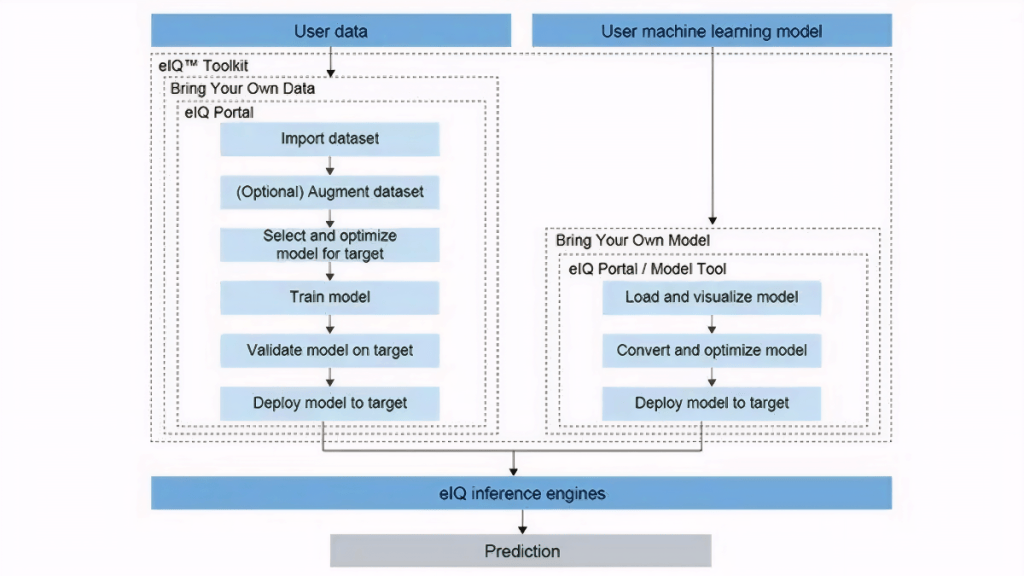
Figure 2: The machine-learning development pipeline of NXP's eIQ Toolkit (Source: NXP Semiconductors)
TI — one toolchain umbrella, a populated reference-model shelf
Addressing diverse applications, the CCStudio development ecosystem from Texas Instruments Inc. consolidates toolchains. TI states that it unites disparate hardware architectures, graphical configuration tools, compilers and edge AI deployment in one cohesive workflow, with tools for data collection, training, optimization and deployment provided across a product portfolio spanning the MSPM0, C2000, MSP430, SimpleLink, Hercules, Sitara, Jacinto, mmWave, C6000 and C7x families.
The resource library, Model Zoo, contains over 200 pretrained and hardware-optimized neural-network models based on the PyTorch, TensorFlow and ONNX frameworks, covering vision, audio, time-series and radar use cases; these model deployments are heavily based on advanced data signaling. For teams that cannot park every candidate device on the bench, Model Analyzer lets developers benchmark neural networks on TI hardware remotely over the cloud — the same pattern as NXP's AI hub — and CCStudio also supplies AI agents that accelerate code generation, system configuration and debugging.
The automotive thread runs through the same consolidation. TI collaborated with Synopsys to develop a Virtualizer Development Kit for digital twinning of the TA5 system-on-chip (SoC), producing software-defined hardware for automotive applications. The TDA5 SoC, integrated with the C7 NPU launched in January 2026, enables enhanced cross-domain fusion in advanced driver-assistance systems, gateway control and infotainment hosting, all on one device.
Renesas — co-design pulled above the compiler
Renesas Electronics Corp. assembles a broader set of tools and accelerates the development workflow at a level above software. Chiefly, Renesas 365 brings Altium Designer and e2 studio — Renesas's integrated development environment — under the same umbrella, enabling higher-level hardware-software co-design.
Because the platform is structured to hold all the tools at a single stop, the System Data Model, Renesas 365 with its integrated suite of AI-driven tools can unify board-level hardware design, system-level simulation, component sourcing and embedded software compilation into one cohesive ecosystem. For a team juggling schematic capture, thermal and signal assumptions, and part availability, that integration is the point: the workflow no longer restarts each time the artifact changes discipline.
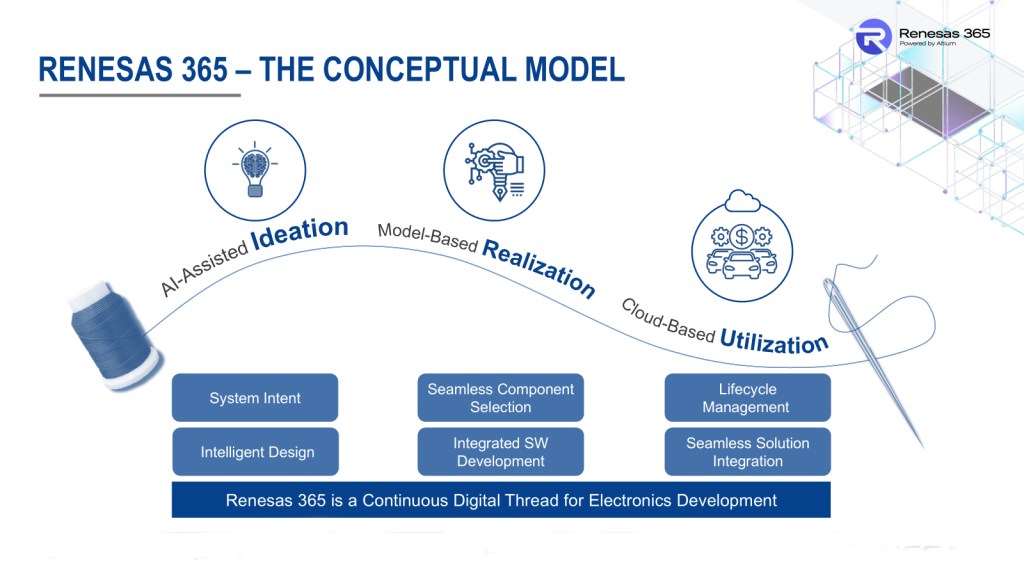
Figure 3: The structure Renesas 365 uses to fill gaps in the embedded systems development workflow (Source: Renesas Electronics Corp.)
On the model side, Renesas integrated its Reality AI tools into the cloud-based Renesas 365 platform to streamline training, optimization and deployment. The tool analyzes sensor data to create a tailored model, then streamlines training and optimization within a single, end-to-end workflow inside Renesas 365.
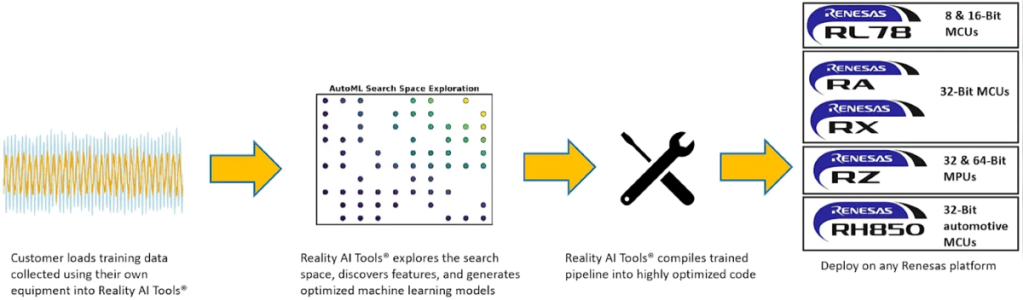
Figure 4: How the Reality AI tool of Renesas accelerates model deployment (Source: Renesas Electronics Corp.)
The cycle could shorten further through integration of Pictorus's code generator for behavioral modeling; Renesas acquired Pictorus in June 2026. Once assimilated into Renesas 365, the Rust-based code generator will expedite validating algorithms, running virtual prototypes and deploying edge applications.
Microchip — the licensing gate is removed
Like other silicon vendors, Microchip Technology Inc. offers an Edge AI Development Suite that supports its MCU and microprocessor (MPU) portfolio by integrating silicon, software and development tools for edge AI and IoT applications. The company's distinguishing move is commercial rather than architectural: MPLAB XC Pro Compilers and the MPLAB ML Development Suite are now available free of charge.
By removing licensing barriers for developers, code optimization features such as code size reductions and boosting code execution — features of the MPLAB XC PRO Compiler — are no longer hidden behind an expensive paywall. The updated licensing model allows unlimited installations for both individual users and development teams, providing unrestricted access to compiler optimization features and ML development tools across the company's MCU and MPU platforms.
The MPLAB ML Development Suite is a comprehensive tool for deploying ML models on Microchip products such as the dsPIC33 family, PIC32 MCUs and SAM MPUs. Its centerpiece is Model Builder, a Microsoft VS Code extension that automatically generates code based on raw sensory data; Microchip also dropped licensing costs from this plug-in.
FPGAs remain the exception: co-design, not configuration
The platforms above support edge AI deployment mainly on MCUs, SoCs, NPUs and GPUs — that is, fixed-function silicon. Deploying models on FPGAs is more nuanced and complex. Unlike edge AI deployment on fixed-function silicon, which relies largely on software, AI inference on FPGAs requires software-hardware co-design: the hardware-accelerator matrix must be explicitly configured to match the memory layout, data types and layer operations defined by the compiled neural-network model.
To bypass tedious low-level hardware configuration, silicon vendors have conventionally configured a fixed processing architecture and run ML models on an abstract layer via an overlaying architecture. Given FPGA resource constraints, developers have typically chosen to map models into multiple layers and run them on the overlay sequentially — but that sequential mapping creates a critical latency bottleneck in real-time edge applications.
Pure-play FPGA provider Altera Corp. addresses this with a solution for creating AI accelerators on its FPGAs and SoCs. Developers can design FPGAs using sequential mapping with Altera's FPGA AI Suite, and the company recently introduced spatial mapping tools in its toolchain suite. Supporting Altera Agilex 5, Agilex 7, Arria 10, Cyclone 10 GX and Stratix 10 FPGAs, the suite now has a spatial compiler that generates dedicated RTL using blocks from a pre-optimized library. Because development becomes more application-specific, the result is deterministic, higher-throughput performance for real-time computer vision, video analytics, natural language processing and sensor fusion tasks, with a shorter development time.
Microchip also enables model deployment on its PolarFire FPGAs, where developers can use the VectorBlox SDK to deploy TensorFlow, TensorFlow Lite, ONNX and OpenVINO-based models.
Comparison: bottleneck targeted, silicon covered, workflow consequence
| Vendor and platform | Bottleneck class targeted | Silicon in scope | Consequence for the development schedule |
|---|---|---|---|
| NXP — eIQ toolkit, eIQ Time Series Studio, eIQ AI hub, agentic AI framework with Ara NPUs | Model optimization; heterogeneous compute | i.MX 8, i.MX 9, QorIQ Layerscape (LS1046A, LX219, 760A), S32 | One GUI-driven workflow across TensorFlow, PyTorch and ONNX; simulation, hardware-farming and benchmarking hosted in cloud or on-premises |
| TI — CCStudio, Model Zoo, Model Analyzer | Toolchain consolidation; benchmarking access | MSPM0, C2000, MSP430, SimpleLink, Hercules, Sitara, Jacinto, mmWave, C6000, C7x; TDA5 with C7 NPU | over 200 pretrained reference models plus remote cloud benchmarking; AI agents assist code generation, configuration and debugging |
| Renesas — Renesas 365 with Altium Designer, e2 studio, System Data Model, Reality AI, Pictorus | Hardware-software co-design; sourcing | Board-level designs through embedded software targets | Board design, system simulation, component sourcing and embedded compilation stay in one ecosystem instead of restarting per discipline |
| Microchip — Edge AI Development Suite, MPLAB XC Pro Compilers, MPLAB ML Development Suite, Model Builder | Licensing economics | dsPIC33, PIC32 MCUs, SAM MPUs, PolarFire FPGAs | No paywall on code size and execution optimization; unlimited installations for individuals and teams |
| Altera — FPGA AI Suite with spatial compiler | Latency determinism on programmable logic | Agilex 5, Agilex 7, Arria 10, Cyclone 10 GX, Stratix 10 | Dedicated RTL generated from a pre-optimized block library replaces sequential overlay mapping, giving deterministic, higher-throughput behavior |
Data points worth quoting in your evaluation memo
- 2018 — the year NXP Semiconductor launched eIQ, the baseline against which the shift from inference compiler to cloud-based AI hub should be judged.
- CES 2026 — the eIQ AI hub announcement, consolidating the eIQ toolkit, eIQ Time Series Studio, eIQ GenAI Flow and an agentic AI framework.
- January 2026 — launch of the C7 NPU that pairs with the TDA5 SoC for cross-domain automotive fusion.
- June 2026 — Renesas's acquisition of Pictorus, whose Rust-based code generator is destined for Renesas 365.
- over 200 — the count of pretrained, hardware-optimized neural-network models in TI's Model Zoo across vision, audio, time-series and radar use cases.
Common misconceptions to strip out of your requirements list
- "Edge AI deployment is a software-only problem." That holds for fixed-function silicon — MCU, SoC, NPU, GPU. On FPGAs, inference requires software-hardware co-design, because the accelerator matrix has to match the model's memory layout, data types and layer operations.
- "One benchmark result transfers between platforms." Architecture differences are exactly why conversion, compilation and empirical validation must be repeated per target hardware; numbers obtained on a surrogate cloud instance still have to be tied to a specific part.
- "Quantization is the optimization story." Current toolchains bundle operator fusion, pruning and architectural mapping alongside quantization, and graph-level profiling comes before any of them.
- "Compiler optimization features are simply a cost of doing business." Microchip has removed that cost from the MPLAB XC PRO Compiler and the MPLAB ML Development Suite, so license fees should be scored explicitly in every toolchain comparison rather than assumed.
- "Overlay mapping on FPGAs is a detail we can tune later." Sequential layer-by-layer execution on an overlay creates a critical latency bottleneck in real-time applications — a topology choice, not a tuning parameter.
- "Toolchain breadth is marketing." Processor-family coverage and the size of the reference-model library are schedule levers; they determine how much of the porting work is already done.
FAQ
Can we assess a device's edge AI performance before the hardware reaches our lab?
Increasingly yes, which is one of the clearest signals in this cycle. TI exposes Model Analyzer for remote benchmarking of neural networks on TI hardware over the cloud, and NXP's eIQ AI hub provides functional simulation, hardware-farming of models and benchmarking tests, with the option to move development from cloud to on-premises. Teams evaluating multiple vendors should treat remote benchmark access as an evaluation criterion in its own right.
Does a wide processor list equal a mature toolchain?
Coverage is necessary but not sufficient. TI's CCStudio spans the MSPM0 through C7x families, and NXP's eIQ reaches i.MX 8, i.MX 9, QorIQ Layerscape and S32 devices — but what shortens a schedule is the unified workflow on top of that list: graph-level profiling, the optimization levers, and the pretrained models available for the target. Ask for the workflow, then check the silicon list against your own part selection.
Our architecture calls for FPGAs. Is the same tooling applicable?
Not directly. Model deployment on FPGAs remains more nuanced, and the practical choices are between sequential mapping and spatial mapping. Altera's FPGA AI Suite supports sequential mapping and now adds a spatial compiler that generates dedicated RTL from a pre-optimized block library on Agilex 5, Agilex 7, Arria 10, Cyclone 10 GX and Stratix 10, yielding deterministic, higher-throughput performance. Microchip's route on PolarFire FPGAs is the VectorBlox SDK, which accepts TensorFlow, TensorFlow Lite, ONNX and OpenVINO-based models.
Where should security sit in this evaluation?
At the same level as latency. Security hardening is described as crucial for mission-critical applications operating under real-time performance constraints, and it is one of the reasons vendors are optimizing their development workflows alongside model optimization and heterogeneous hardware handling. A toolchain that accelerates inference but leaves hardening to manual integration transfers schedule risk onto your team.
Do licensing changes actually matter for a team, not just an individual?
Yes, and Microchip's updated model is the clearest example: unlimited installations for both individual users and development teams, with unrestricted access to compiler optimization features and ML development tools across its MCU and MPU platforms, plus Model Builder inside Microsoft VS Code at no licensing cost. For organizations, installation count and feature gating scale costs quickly.
Action recommendations before you commit to a platform
- Score the toolchain alongside the datasheet. Map each candidate vendor's workflow against the five bottleneck classes above and record which steps remain manual on each platform.
- Enumerate your part list first. Confirm that the vendor's supported families — for example QorIQ Layerscape LS1046A, LX219 or 760A, or the MSPM0 to C7x range — actually contain the devices your design uses.
- Start from a reference model, not a paper benchmark. Where a library such as Model Zoo already covers your modality (vision, audio, time-series, radar), budget porting effort accordingly.
- Demand measured numbers on target silicon. Use remote benchmarking paths where physical hardware is unavailable, but require validation on the actual part before release.
- Put licensing in the BOM review. Free compiler suites and unlimited team installations change total cost of ownership as much as unit price.
- Treat programmable logic as a separate decision. If latency determinism is the requirement, evaluate spatial mapping and dedicated RTL generation rather than assuming an overlay will meet the real-time budget.
- Re-check the platform roadmap each quarter. With acquisitions such as Pictorus in June 2026 and hub-level re-platforming announced at CES 2026, toolchain capability is moving faster than most component life cycles.
What this rework means for semiconductor buyers
A critical trend in the streamlining of development platforms is that building development ecosystems has become essential rather than optional. Supporting open-source frameworks, eliminating licensing fees and running edge AI across a range of hardware platforms does more than collapse offerings into one place: it promotes multi-architecture compatibility, strengthens open-developer communities and advances cross-platform standardization. For the Electronicseng Semiconductors audience, the takeaway is a change of habit. Read the toolchain announcement with the same attention you give a process or package announcement, verify that the claimed coverage includes the exact part you intend to buy, and insist on validation on target hardware before any commitment is made.