
Electronicseng Semiconductors: Solidigm's $45 Billion U.S. NAND Fab Plan and Dalian Equipment Export Risk
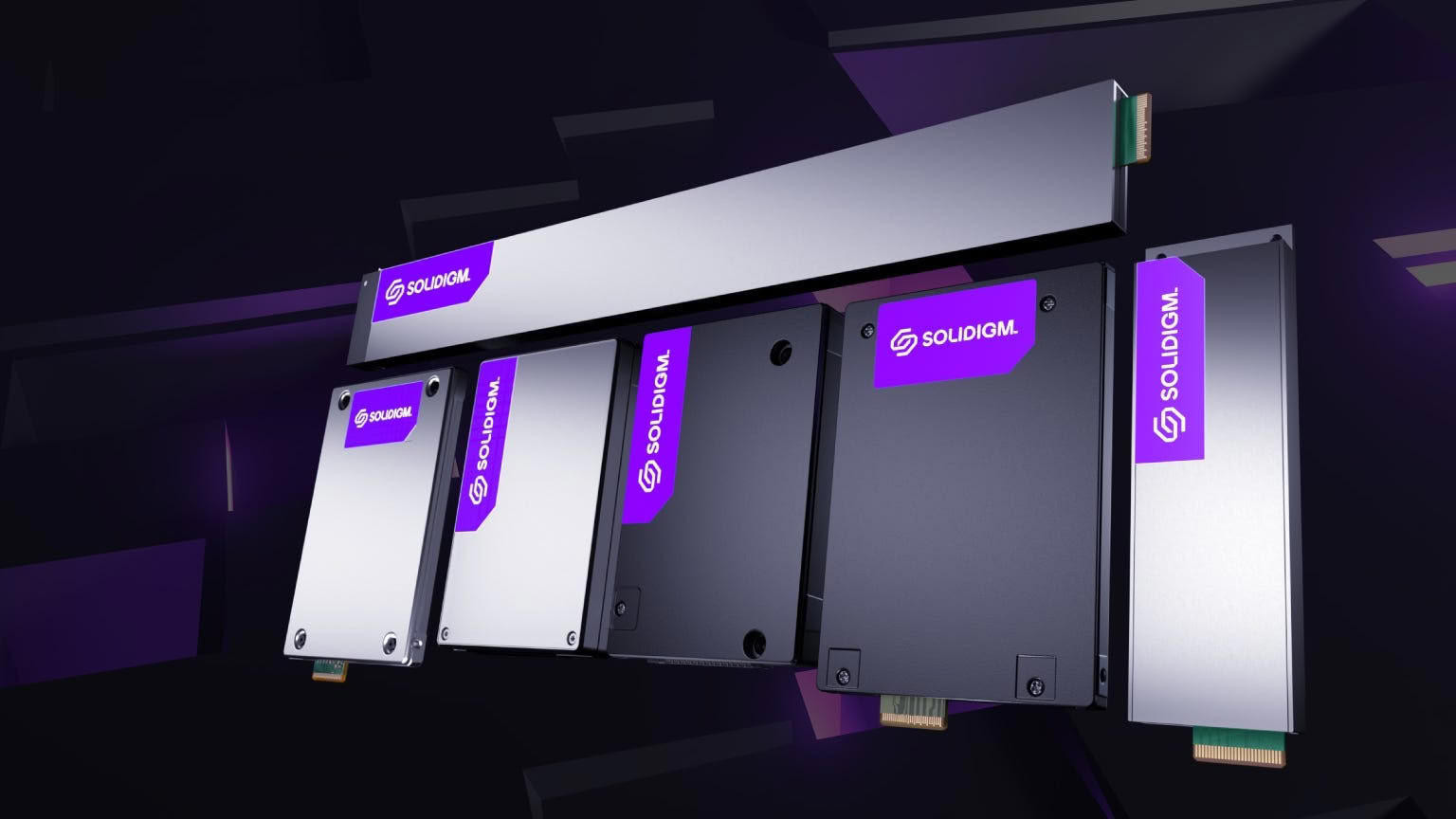
For semiconductor equipment, memory design, and procurement teams, the Solidigm story is best read as a licensing and supply-chain sequencing problem. According to people familiar with the matter, the company has discussed building a NAND flash fab in the United States at a scale that could reach $45 billion, while also seeking approval from the U.S. government to ship manufacturing tools into China for upgrades at the Dalian plant. The two actions are not independent: one is a possible future U.S. capacity expansion, and the other is an immediate attempt to equip and raise output at an existing NAND site already central to SK hynix's enterprise storage portfolio.
Key Facts at a Glance
| Item | Status in the master briefing | Why it matters for engineering and supply-chain planning |
|---|---|---|
| $45 billion | An investment plan presented to the U.S. government; not described as an approved final commitment. | Sets the scale of the proposed U.S. NAND fab but does not guarantee construction. |
| 2027 | The earliest possible construction start mentioned for a U.S. site. | Leaves time for policy, permitting, financing, and demand changes to alter the plan. |
| U.S. Department of Commerce | Recipient of a longer-term outlook that may reach $100 billion. | Shows the discussion includes future scale beyond the initial U.S. proposal. |
| upstate New York | One of the potential sites being considered. | Site selection remains unresolved; no location is locked in. |
| Dalian plant | An existing NAND production facility in China linked to the U.S. approval request. | Equipment access directly affects near-term yield, output, and financing assumptions. |
| Mod B | A Dalian area built in 2023 but not fully equipped because of the memory downturn. | The upgrade target is installation of more manufacturing equipment to lift NAND output. |
| 2025 | The year when certain China-facility VEU-related exemption arrangements were withdrawn for SK hynix and Samsung Electronics plants. | Annual license filing becomes a recurring supply-chain risk, not a one-time administrative task. |
The Two-Track Logic: U.S. Fab Talk and Dalian Tool Approval
Solidigm's U.S. proposal is tied to a request to move equipment to China for the Dalian facility. The Dalian plant is important within SK hynix's NAND business. It began as part of Intel's NAND flash operation, and after SK hynix acquired that storage business, the site became part of the larger memory structure. Solidigm mainly sells enterprise solid-state drives, so the facility supports data-center and enterprise storage products rather than consumer-oriented supply only.
From a capacity-planning perspective, the logic is straightforward. Artificial-intelligence data centers need more NAND-backed storage, and cloud infrastructure spending depends on the availability and price of NAND flash, the storage medium inside solid-state drives. Expanding output or upgrading tools at an established fab can be faster than greenfield construction. The U.S. government's export-control posture, however, treats maintenance of existing operations differently from equipment that raises capacity or advances technology.
What engineers and buyers should track
- Whether annual licenses for tools going into China are granted on schedule.
- Whether the U.S. government distinguishes between replacement equipment and expansion equipment in Dalian.
- Whether Mod B receives additional manufacturing equipment to increase NAND flash output.
- Whether revenue from any approved Dalian upgrade becomes a bridge to later U.S. construction funding.
- Whether a $100 billion long-term figure remains an outlook rather than a committed budget.
Export Control Is the Real Gatekeeper
The critical variable is not construction equipment itself; it is permission to export that equipment into China. After 2025, SK hynix and Samsung Electronics no longer received the earlier VEU-related exemption treatment for some of their China plants. Instead, they must apply year by year for U.S. government approval to bring relevant tools into Chinese fabs. Washington has signaled that tools necessary to keep existing operations running may be allowed, while equipment aimed at capacity expansion or technology upgrades faces stricter review.
For procurement teams, the practical consequence is that NAND availability is no longer only a wafer-start or tool-capacity question. It is also a trade-policy question. If a company cannot receive expansion tools in an existing plant, the bottleneck may appear not as demand weakness but as an inability to convert installed space into production. In Solidigm's case, the company wants to install more tools in Mod B, the area completed in 2023 but left partially idle during the memory downturn.
How the U.S. Plan Could Change the Supply Map
| Dimension | Dalian upgrade route | U.S. new-fab route |
|---|---|---|
| Speed to impact | Could raise output at an existing site if equipment export approvals are granted. | Longer, with a possible 2027 construction start at the earliest. |
| Main bottleneck | U.S.-China export permission for expansion tools and annual licensing. | Capital cost, construction cycle, financing, and long-term return uncertainty. |
| Strategic effect | Uses installed fab space and may support near-term enterprise SSD demand. | Reduces dependence on the single Dalian base and may align with U.S. localization policy. |
| Risk | Approval uncertainty can delay capacity conversion at Mod B. | U.S. fab construction costs are typically higher than South Korea or other existing sites. |
Corporate Signals: IPO Pause Does Not End the Capacity Problem
Solidigm's capital path is still open-ended. The company was previously considered as a candidate for an initial public offering that could fund expansion. SK hynix has since paused evaluation of Solidigm listing and pre-listing financing because of capital-market conditions and stock performance. Even with that pause, the company has said Solidigm needs new production capacity for AI-driven storage demand and will continue to assess investment size, timing, and funding sources.
The larger $100 billion figure mentioned to the U.S. Department of Commerce should be treated as a long-term possibility, not a current appropriation. Upstate New York remains only one potential location. That wording matters for semiconductor market analysts: a headline number can influence expectations even when site selection, equipment orders, workforce commitments, and customer contracts are still undecided.
Market Context: AI Demand Is Pushing NAND Into a Strategic Layer
The NAND flash market sits inside the solid-state drive architecture used by data centers. As AI infrastructure expands, enterprise SSDs and high-performance storage demand increase. The main NAND producers named in the briefing, Samsung Electronics, SK hynix, and Micron, are reallocating capacity toward higher-margin data-center products. That shift affects cloud and AI buildout cost because NAND supply status feeds directly into storage subsystem pricing.
The same trend makes geographic exposure more sensitive. When demand rises, existing sites become more valuable, and the question of whether a site can be equipped becomes as important as whether it exists. For Solidigm, the Dalian plant is not simply a legacy asset; it is a current production position inside a NAND supply chain that is trying to serve an AI storage cycle.
Common Misconceptions
- The $45 billion figure is not proof of a confirmed U.S. fab. It is part of a negotiation and future plan.
- U.S. government approval for Dalian equipment is not assumed. It is one of the central conditions of the package.
- Mod B being built in 2023 does not mean it has been fully loaded with manufacturing tools.
- A paused IPO review does not remove Solidigm's need for new production capacity.
- NAND supply risk is not only a factory construction issue; export licensing and annual permits affect existing capacity.
Action Recommendations for Semiconductor and Electronics Teams
- Track license windows: Build supplier risk registers around annual U.S. government approvals for tools destined for Chinese fabs.
- Separate maintenance from expansion: Ask vendors to classify equipment as replacement, capacity increase, or technology upgrade, because U.S.-China policy treatment can differ.
- Model dual-site assumptions: Avoid treating the U.S. $45 billion plan and the Dalian Mod B upgrade as simultaneous committed capacity unless approvals are granted.
- Monitor financing signals: Any change in SK hynix's stance on Solidigm fundraising, IPO timing, or capital allocation can shift project probability.
- Watch data-center demand transmission: If AI storage demand remains strong, manufacturers may prioritize high-margin SSD products, which can tighten NAND supply for other categories.
FAQ
Is Solidigm definitely building a NAND factory in the United States?
No. The master briefing describes the $45 billion plan as part of ongoing negotiation and evaluation. The long-term $100 billion figure and the 2027 earliest construction start are potential scenarios, not final commitments.
Why does the Dalian plant matter if the story is about a U.S. fab?
Because the U.S. proposal is linked to a request to ship equipment to China for the Dalian plant. Dalian is an existing NAND production base in SK hynix's storage business, and Mod B was completed in 2023 but not fully equipped during the market downturn.
What changed after 2025?
Certain VEU-related exemption arrangements for China factories of SK hynix and Samsung Electronics were withdrawn, requiring annual applications for U.S. government permission to import relevant equipment into China.
Which location is chosen for the U.S. fab?
None is presented as final. Upstate New York is one location under consideration.
Bottom Line
From an Electronicseng Semiconductors perspective, the story is less about a single dollar number and more about sequencing. The Dalian upgrade could influence near-term NAND output and revenue, while the U.S. fab could influence longer-term regional production risk. If equipment export approvals do not align with the company's plan, a proposed U.S. facility may remain a negotiation item rather than a construction program.