
Electronicseng Semiconductors Case Study: TSMC's Night Hawk Program, 40 nm Pivot, and One Team Collaboration
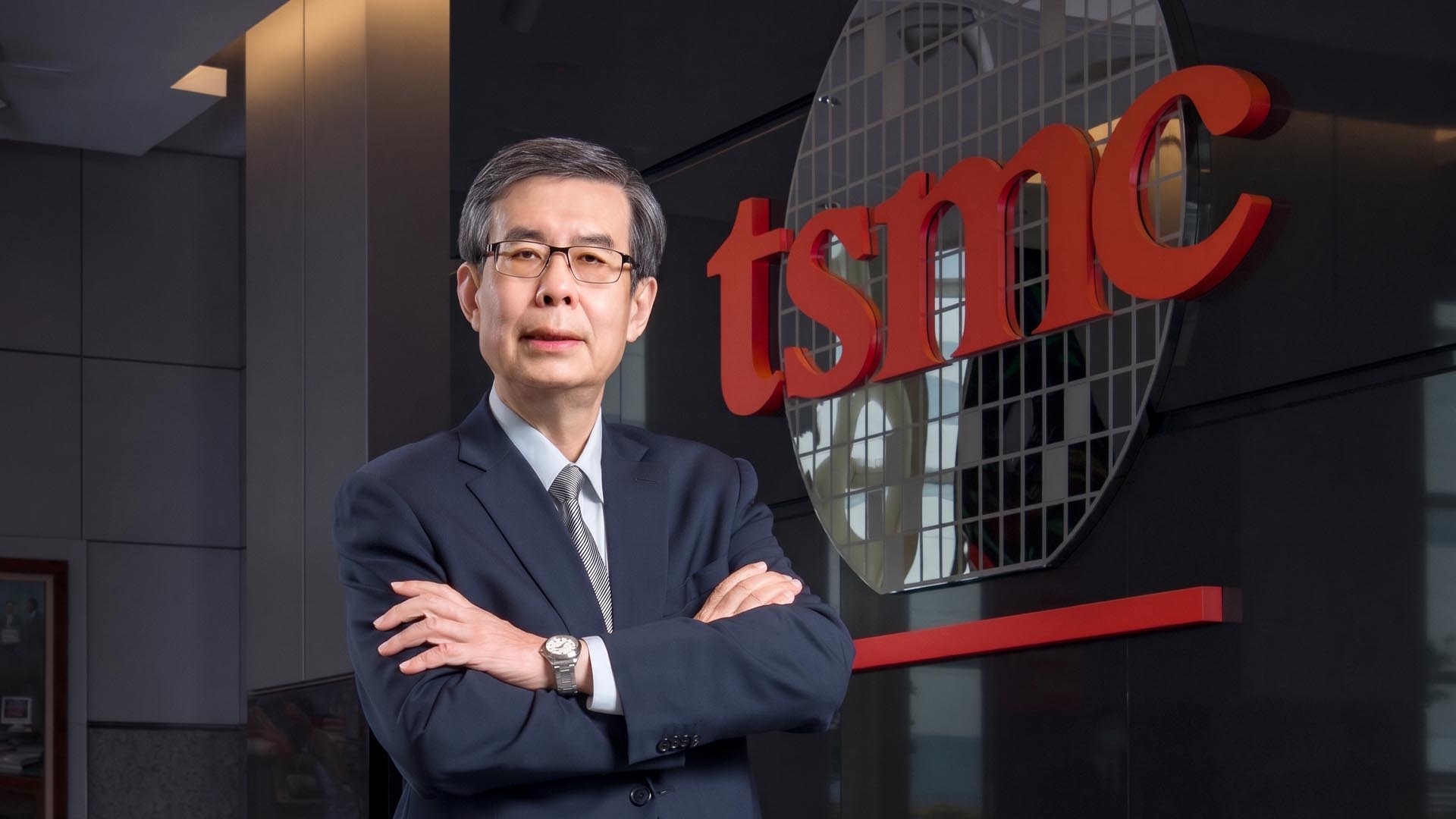
For semiconductor teams under pressure to shorten development cycles, the most expensive assumption is often that time itself is the bottleneck. That assumption sits behind TSMC's Night Hawk program, which Qin Yongpei described to students at National Cheng Kung University on October 29: a day-and-night relay intended to stretch research effort while the company pursued advanced process capability. The program lasted about half a year before it was judged unsuccessful. The episode is more useful as a management boundary case than as a simple cautionary anecdote, because it distinguishes labor coverage from problem-solving capacity.
Night Hawk and the arithmetic of time
The logic of the experiment was intentionally simple. If a TSMC research team could operate for 24 hours a day, and a competitor in the United States worked for 8 hours a day, the company might create a time-based advantage in closing the gap to more advanced manufacturing nodes. To test that logic, engineers were placed into a relay structure that kept development work active across day and night. The intended benefit was not merely longer shifts, but a compressed path from learning to implementation.
Where the time-based model broke down
The result was negative after about half a year. Qin emphasized that research is not a purely physical output that scales linearly with coverage. It depends on thinking, judgment, and innovation. In that sense, "R&D depends on brainpower, not labor" captures the conclusion of the episode. Adding more hours can keep a team present, but it does not guarantee a clearer problem statement, a faster root-cause path, or a decision that can safely move a process forward.
40 nm as the organizational hinge
The account then shifts from working hours to workflow. Qin identified the 40 nm process generation as a key turning point in TSMC's organization. Under the 40-nanometer transition, the older model had research teams complete process development and then hand the result to fab operations. When that sequential handoff proved insufficient, the company moved toward the One Team model. This was described as more than a general appeal for colleagues to help one another: it asked different functions to work around a shared objective and to accept joint responsibility for the final outcome.
What changes when the fab enters earlier
The operational change can be seen in the development-to-production path. Instead of waiting for a completed process package, the fab can take part earlier. The handoff overlap between research and manufacturing becomes longer, giving the teams more time to anticipate problems before volume production. The intended effect is a smoother transition from process definition to fab execution, because manufacturing considerations are present while decisions are still open.
Root-cause analysis as a shared responsibility
The story also reframes incident response. A process issue is not assigned to the function that discovered it, nor left to a single group to solve in isolation. Instead, multiple teams can be assembled to analyze the root cause. The practical implication is that problem ownership starts before root-cause ownership can be safely concluded. A multi-team review may be more effective than departmental handling, particularly when the issue crosses development and manufacturing boundaries.
One Team beyond internal handoffs
The same logic extends beyond Taiwan. Qin said that One Team is also applied to overseas expansion: Taiwan teams and overseas teams need close collaboration, and the Taiwan side should take part of the responsibility for making an overseas site succeed. The organization therefore treats overseas sites not as isolated copies, but as shared outcomes that require coordinated accountability. Cross-team cooperation was credited with improving process development and mass-production efficiency, while also being described as a culture that requires sustained effort to build.
Column angle: why this case belongs in Semiconductors, not general news
The story can be read as a workflow-system issue rather than a personnel anecdote. Semiconductor development is connected to manufacturing execution through handoffs that can become costly if they occur too late. When a company treats the handoff as a fixed boundary, it may lose time that could have been used to influence decisions earlier. From an Electronicseng perspective, the case is therefore about workflow leverage, not about the moral value of working harder.
Decision implications for hardware programs
For teams under competitive pressure, the temptation is to respond with schedule compression. The account suggests a different compression target: remove decision delays. If the bottleneck is that manufacturing constraints arrive after process choices are made, adding hours to research alone may not fix it. If the bottleneck is that teams cannot agree on root cause because each function owns only a segment, cross-team analysis may reduce delay more than extended coverage.
How to interpret the 24-hour versus 8-hour comparison
The comparison should not be read as a claim that every United States team working 8 hours is slower, or that every team working 24 hours is faster. In the account, the ratio was a proposed shortcut: a time advantage might substitute for a capability gap. The failure after about half a year indicates that the substitution does not hold when the output requires creative judgment.
Implications for team structure
Sequential organizations optimize for clean boundaries: one team completes a package, another accepts it. Collaborative organizations optimize for shared uncertainty: participants carry the problem together until the result can be safely closed. The One Team description fits the second pattern, especially when a process issue is not limited to a single department.
Implications for performance measurement
Engineering teams that want to follow the logic of this case can look for more than available hours. Useful review questions include: How early is manufacturing input provided? How long is the overlap between development and production? How many cross-functional reviews are completed for a process issue? The answers point to whether time is being converted into coordination and decision quality.
Data points referenced
The following points anchor the narrative. They are not a broader production record; they are the figures and markers tied to the account:
- Speaker context: TSMC executive Qin Yongpei
- Remark setting: exchange with students at National Cheng Kung University
- Date: October 29
- Night Hawk duration: about half a year
- Time comparison: 24 hours versus 8 hours
- Organizational threshold: 40 nm
- Alternative spelling of threshold: 40-nanometer
- Cultural model: One Team
- Geographic extension: collaboration involving Taiwan and overseas teams
Checklist for semiconductor teams
- Check whether a schedule problem is actually a cognitive problem: can the team define, test, and decide faster?
- Before adding coverage, ask what decisions would move earlier if more people were available overnight.
- Identify the point at which manufacturing expertise can first influence process definition.
- Measure handoff overlap, not just handoff completion.
- Require joint ownership of outcomes when multiple functions share risk.
- Use cross-team root-cause reviews when issues span development and manufacturing.
- For overseas expansion, define accountability across both sending and receiving sites.
Comparison table
Use this table to separate the two operating models discussed in the account:
| Dimension | Night Hawk model | One Team model |
|---|---|---|
| Core premise | Longer active development time can create advantage | Shared alignment across functions can improve final outcomes |
| Time structure | Day-and-night relay | Continuous coordination with earlier fab participation |
| Target | Advance process development against external pace | Improve development-to-production transition |
| Reference duration | Program lasted about half a year | Model continues as culture-building work |
| Key assumption challenged | R&D output scales with labor hours | Departments can succeed through isolated handoffs |
| Problem-solving mode | Departmental effort over extended hours | Multi-team root-cause analysis |
| Geographic reach | Focus on internal development capacity | Extends to Taiwan teams and overseas team collaboration |
Common misconceptions
Misconception 1: More hours should automatically produce more innovation
The Night Hawk case shows why this is misleading in process research. The missing variable is not attendance; it is the ability to interpret problems, make judgments, and create new solutions. When those activities are limited, longer hours may simply add coordination overhead.
Misconception 2: One Team is only a communication slogan
In this context, One Team refers to joint responsibility for final results. If departments only exchange messages but still optimize local outputs, the culture has not been established.
Misconception 3: Earlier fab participation is a later schedule adjustment
The change matters because it moves manufacturing knowledge into the window when process decisions remain open. Once those decisions are fixed, the available corrective options shrink.
Misconception 4: Overseas collaboration is only travel and time zones
The account connects overseas expansion to shared ownership. That means the sending and receiving teams are both accountable for whether the process succeeds in the new site.
FAQ
What was TSMC trying to solve with Night Hawk?
It was trying to create a competitive path toward advanced process capability by extending research operation from a normal work pattern to a 24-hour relay, while making a comparison against a competitor in the United States working an 8-hour day.
Why did it fail?
The explanation given is that research success depends on thinking, judgment, and innovation. Extending time does not automatically create those conditions, which is why the conclusion is that R&D depends on brainpower, not labor.
What was the role of 40 nm?
40 nm is presented as the process generation at which TSMC reconsidered the research-to-fab handoff. It became the hinge point for shifting from a sequential model to One Team collaboration.
What changed after One Team?
Fab teams participated earlier, development and manufacturing overlap was extended, and process issues could be analyzed by multiple teams instead of one department.
Why does this matter for semiconductor projects?
Because the lesson maps directly onto technical leadership: the limiting factor may be alignment and cognitive capacity, not the number of hours available on a calendar.
Action recommendations
For teams dealing with process development, manufacturing transition, and cross-site rollout, the following actions are relevant:
- Before approving a longer working window, require a clear decision path: which question will be answered faster by extra hours?
- Put a manufacturing representative in the process definition stage, not only at handoff.
- Track the overlap period between research completion and production readiness as a leading indicator.
- For process failures, convene root-cause analysis with research and fab functions together.
- Define overseas expansion roles so both Taiwan teams and overseas teams have ownership of the site outcome.
- Use time-based comparisons carefully: 24 hours versus 8 hours is not a fair productivity model when innovation quality is the output.
For Electronicseng's Semiconductors audience, the practical value of the story is not in the label "Night Hawk," but in the boundary it draws: semiconductor competitiveness is shaped by time, but only when time is converted into coordination, insight, and accountable team behavior.