
Spec'ing AMD EPYC Embedded 9006 CPUs: Zen 6, up to 256 cores and seven-year longevity in the field | Electronicseng Semiconductors
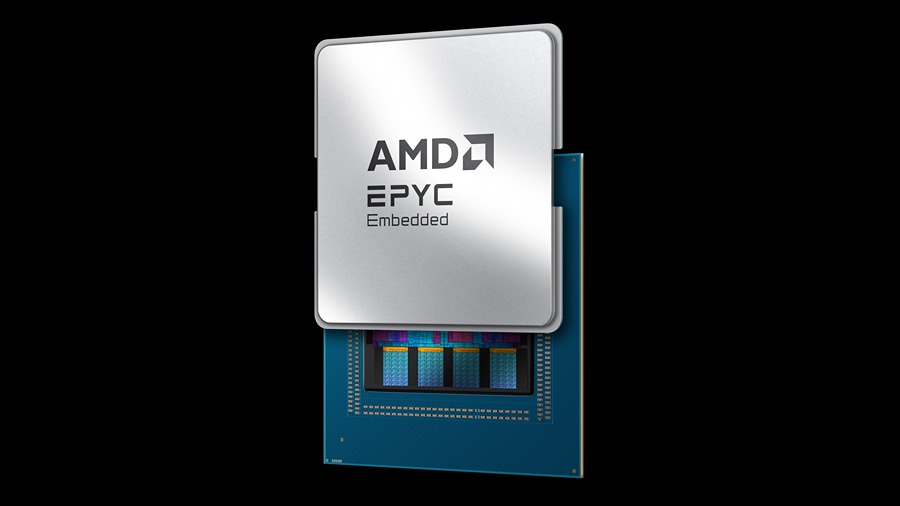
The number that decides a test floor is not core count; it is whether the control node can keep handlers, pattern generators and data pipelines fed. AMD EPYC Embedded 9006 Series SP7 CPUs answer that with up to 256 cores on the Zen 6 core architecture, up to 1.8x throughput versus 5th Gen AMD EPYC 9005 Series processors, and seven-year product longevity for equipment that must stay in service well beyond a consumer cycle.
AMD introduced the AMD EPYC Embedded 9006 Series SP7 processors in 2026 to widen its x86 embedded portfolio across three workloads: semiconductor automated test equipment (ATE), high-end firewalls and enterprise storage. For engineering and procurement teams this is a spec sheet to read against your own line, not a headline. The binding constraints are memory qualification, PCIe Gen 6 channel integrity and firmware signing.
What actually changed at the device level
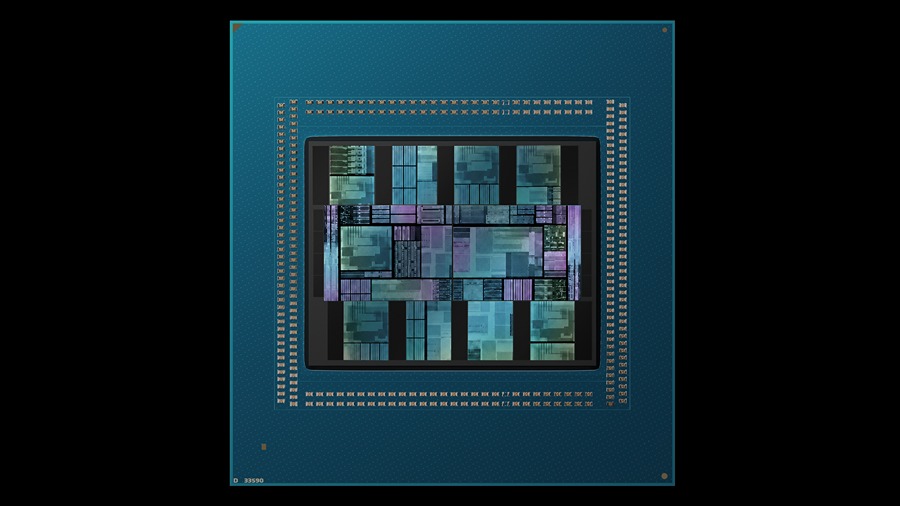
Conclusion first: the generational delta sits disproportionately on the memory and I/O side, not on the cores alone. AMD EPYC Embedded 9006 CPUs provide up to 256 cores and 512 threads, up to 1.8x throughput, up to 1.5x higher I/O bandwidth and up to 2.7x higher memory bandwidth versus the prior generation. Sixteen DDR5 memory channels support RDIMM speeds up to 8,000 megatransfers per second (MT/s) and MRDIMM speeds up to 12,800 MT/s. Up to 96 PCIe Gen 6 lanes operate at 64 gigatransfers per second, with flexible PCIe Gen 6 and CXL 3.1 support for networking, storage, accelerators, test equipment and memory expansion.
Run the arithmetic yourself before trusting any vendor slide: 16 channels x 12,800 MT/s x 64 bits works out to roughly 1.63 TB/s of theoretical per-socket memory bandwidth. That is our own derivation, not an AMD-published figure, and sustained bandwidth in a chassis depends on populate rules, DIMM rank loading and whether your supplier has qualified modules at that speed class.
Two ecosystem details belong in your build plan. First, MRDIMM at that rate is still moving through standards work: JEDEC's own release lists second-generation DDR5 MRDIMM raw card designs targeting 12,800 MT/s as in development, while the Gen1 expectation circulating in vendor documentation is 8,800 MT/s. Treat MRDIMM as a qualification milestone, not a pick-from-the-distributor line item. Second, PCIe 6.0 electricals are a different design problem: per PCI-SIG, the specification reaches 64.0 GT/s per lane using PAM4 signalling with FLIT-based encoding and low-latency forward error correction, which changes insertion-loss budgets, retimer decisions and channel validation compared with Gen 5 NRZ.
| Design dimension | RDIMM path (safer today) | MRDIMM / CXL path (higher ceiling) |
|---|---|---|
| Memory speed class | up to 8,000 megatransfers per second (MT/s) | up to 12,800 MT/s, JEDEC Gen2 raw cards still in development |
| Channel load | 12 to 32 DIMMs, rank choice drives real clock ceilings | 16 channels populated; module availability is the gate |
| Host interface | Up to 96 PCIe Gen 6 lanes at 64 gigatransfers per second | PCIe Gen 6 plus CXL 3.1 for memory expansion and pooling |
| Board effort | Reused Gen 5 layouts usually fail 6.0 loss budgets | Retimer/redriver characterisation plus CXL device attestation |
Where AMD EPYC Embedded 9006 processors sit in the chain
AMD EPYC Embedded 9006 processors are positioned as the control and orchestration engine behind three equipment categories, and each one stresses a different subsystem.
Semiconductor ATE systems
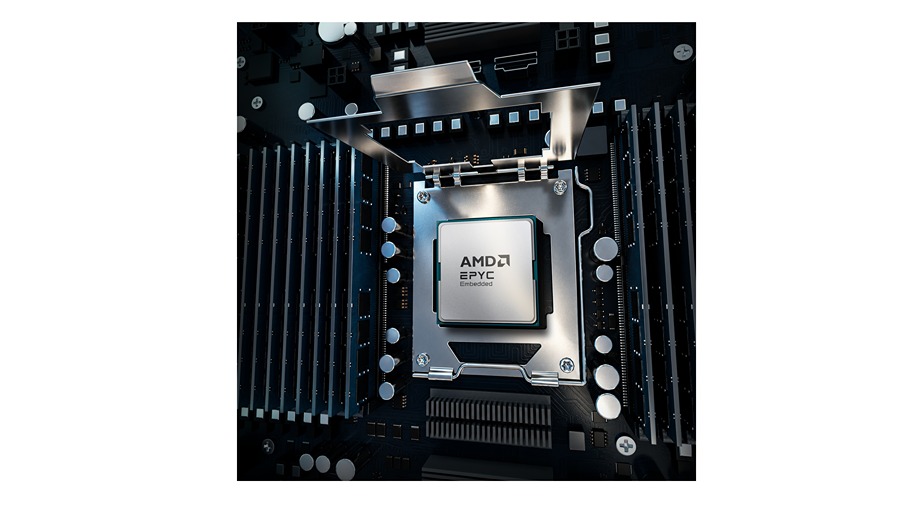
EPYC Embedded 9006 CPUs support semiconductor-ATE systems that enable production-scale validation of new memory and I/O devices. They manage memory and storage test workloads and interfaces for high-speed DDR5 RDIMM and emerging MRDIMM technology, plus switches and devices supporting PCIe Gen 6 and CXL 3.1, and add compute scalability for running more tests in parallel. Advantest has argued in its investor technical briefing that per-device bit growth lengthens test time and pulls tester demand through the whole flow — which is exactly why the memory-bandwidth and lane-count uplift matters more to a test cell than a raw core-count bump. Analysts at Futurum Group frame the same point from the vendor side, asking whether the 256-core SP7 parts can take the AI memory test floor.
High-end firewalls
AI infrastructure keeps inflating traffic volumes, and high-end firewalls supporting 400G/800G networks need more throughput and more security processing per session. EPYC Embedded 9006 CPUs act as the control-plane engine: managing growing security policies and network sessions, processing new flows and traffic exceptions, and feeding data-plane accelerators. AMD quotes up to 1.3x higher firewall throughput versus the previous generation, measured on a DPDK L3 forwarding benchmark — a packet-forwarding number that says little about stateful inspection at your rule count.
Enterprise storage
For storage controllers, AMD EPYC Embedded 9006 CPUs power NVM Express connectivity, data movement and storage processing to manage NVMe devices, and accelerate compression, caching and RAID services. AMD claims up to 1.5x on the intelligent storage acceleration library (ISA-L) benchmark, which measures how fast a processor performs specific functions used in storage services. For a wider view of how this generation is placed in cloud infrastructure, our write-up on 6th Gen AMD EPYC and AMD Pensando DPUs on Oracle Cloud Infrastructure covers the sibling server silicon and the offload split.
How to spec it: a six-step checklist
- Map the workload, not the headline. AMD offers a range of SKUs with 64 to 256 core counts, trading frequency, power and cache. A test cell that is I/O-bound rarely needs the top part; a firewall with deep inspection does.
- Choose your memory path first. RDIMM at up to 8,000 megatransfers per second (MT/s) is buildable now; MRDIMM at up to 12,800 MT/s should be scheduled as a qualification project with your module supplier.
- Do a lane budget. Count every PCIe Gen 6 device, CXL 3.1 expander and NVMe namespace against Up to 96 PCIe Gen 6 lanes, then re-check bifurcation with the board vendor.
- Re-run channel simulation. 64 gigatransfers per second per lane on PAM4 with FEC is not a Gen 5 drop-in; expect retimer changes and a fresh compliance-validation cycle.
- Verify the security chain against your fleet ops. AMD root of trust (ART) establishes the immutable silicon root of trust and secure boot, and supports post-quantum cryptography for firmware signing; ART also carries hardware protection against physical and side-channel attacks. The AMD Security Processor (ASP) is the boot orchestrator, provides a trusted execution environment, secure debug for authorised diagnostics, and manages VM memory keys. Caliptra, an open-source vendor-agnostic silicon root of trust, handles device identity and attestation so a remote entity can verify the platform is genuine and running the expected BIOS and firmware. AMD has not disclosed which algorithm it signs with, but NIST finalised its first post-quantum standards in August 2024 — including ML-DSA and SLH-DSA for signatures — which is the reference frame your security review should use. Our companion read on Google Cloud TPU 8tx confidential AI covers what the host CPU actually controls in a confidential-compute envelope.
- Plan serviceability and the refresh window. These parts build on the EPYC 9006 server CPU architecture, with seven-year product longevity, embedded-focused firmware and software updates, enterprise-class reliability, availability and serviceability features, and telemetry plus predictive failure analysis on supported platform implementations.
Common pitfalls we see in embedded qualification
- Reading "up to" as a floor. The up to 1.8x, up to 1.3x and up to 1.5x figures are AMD internal estimates dated 10/26 and 11/26, not shippable-machine measurements. Re-measure on your workload image before any capacity commitment.
- Building a long-lived qualification on a dying benchmark. SPECrate 2017 retires on November 17, 2026, so SPECrate2017_int_base comparisons in launch material cannot anchor a five-year ATE programme.
- Assuming single-thread gains scale. Both the DPDK and ISA-L notes are captured with one core and SMT disabled in places, so parallel test cells need their own numbers.
- Ignoring module and board ramp. Sixteen DDR5 channels with MRDIMM availability, plus SP7 platform designs from board vendors, set your real first-ship date — not the CPU announcement.
- Skipping attestation in ops. Caliptra-based identity checks only pay off if your fleet tooling actually queries them at provisioning and update time.
Cost, availability and risk
Availability is staggered: the 128-core SKU processor arrives starting Nov. 15, with the remaining SKUs expected to begin shipping by end of year. AMD has published no pricing, so per-socket cost is analysis rather than fact; judge it on performance per rack and per test cell across the seven-year service window, since embedded longevity is what lets you amortise a requalification cycle instead of repeating it every hardware refresh. The risks to watch are ordinary ones: module qualification slipping past the MRDIMM target date, retimer and connector choices inflating board cost at 6.0 speeds, firmware update cadence being slower than your security SLA, and first-quarter allocation between embedded SP7 demand and the server line sharing the same architecture.
FAQ
Is EPYC Embedded 9006 just a server EPYC 9006 with a longer warranty?
No. It is built on the EPYC 9006 server CPU architecture but adds embedded-specific firmware updates, seven-year product longevity and RAS features with telemetry and predictive failure analysis on supported platforms — the difference is lifecycle and support model, not just the silicon.
How many cores should a memory test cell plan for?
Start from your parallel-test count and interface mix. SKUs span 64 to 256 core counts; a cell orchestrating high-speed DDR5 RDIMM and CXL 3.1 devices benefits more from the 512 threads and lane density than from peak clock.
Do I need MRDIMM to get the claimed uplift?
Not for first shipment. RDIMM at up to 8,000 megatransfers per second (MT/s) is the buildable path today, while MRDIMM at up to 12,800 MT/s unlocks the memory-bandwidth claims — and JEDEC lists those Gen2 raw cards as still in development.
When can I actually buy boards?
The 128-core part starts Nov. 15 and the rest of the stack ships by end of year; board and chassis availability from platform vendors typically trails the CPU date by one validation cycle.
Action recommendations
- Freeze a workload baseline this quarter using your own DPDK L3FWD and ISA-L Erasure equivalents, so you have an in-house reference instead of vendor estimates.
- Open a module qualification line item with at least two DDR5 suppliers and confirm MRDIMM roadmaps against the JEDEC Gen2 timeline.
- Re-validate the PCIe Gen 6 channel with the board house before committing to a 2027 equipment launch.
- Write the post-quantum firmware-signing requirement into your supplier security spec now, while platforms are still early in design.
Benchmark footnotes as published
Note 1: The SPECrate2017_int_base comparison uses AMD internal estimates for a 2P 6th Generation EPYC Embedded processor as of 11/26, plus 2P 5th Gen EPYC measurements as of 7/26. For 2P AMD EPYC 9976, 512C total, 16x64GB 12800 MT/s MRDIMM, AOCC 6.0, the SPECrate2017_int_base result is 4900. For 2P AMD EPYC 9965, 384C total, 12x64GB DDR5-6400, AOCC 5.0, performance determinism, the SPECrate2017_int_base result is 2740. SPEC, SPECint, and SPECrate are registered trademarks of Standard Performance Evaluation Corporation. Learn more at spec.org. SPECrate 2017 will be a retired benchmark on November 17, 2026, and SPEC will no longer review or publish SPECrate 2017 results. (EES7-008)
Note 2: DPDK L3 forwarding performance comes from AMD testing conducted in October 2026, using the DPDK L3FWD benchmark. The 6th Gen AMD EPYC Embedded 9756 (128 cores) and 5th Gen AMD EPYC 9755 (128 cores) platforms were each configured with 400 Gb/s aggregate NIC bandwidth (2 × 200 Gb/s). The 6th Gen AMD EPYC Embedded 9756 platform was configured with 32 × 128 GB DDR5 RDIMMs operating at 8000 MT/s. The 5th Gen AMD EPYC 9755 system was configured with 24 × 24 GB DDR5 RDIMMs operating at 6400 MT/s. Performance reflects a comparison using DPDK packet-forwarding throughput, with both configurations tested using one core and one thread per port. Estimated results are subject to change when products are released in market. Results may vary due to factors including system configurations, software versions and BIOS settings. (EES7-003)
Note 3 and Note 5: The AMD EPYC Embedded 9756 processor figures are based on AMD internal estimates as of 11/26 and published product specifications for AMD EPYC 9005 Series Processors as of 6/26. Estimated results are subject to change when products are released in market. (EES7-004, EES7-005)
Note 4: ISA-L performance comparison uses AMD internal estimates for the 6th Gen AMD EPYC Embedded 9756 processor as of 10/26, and measurements of 5th Gen AMD EPYC 9755, as of 6/26. ISA-L Erasure, CRC32_ISCSI, SHA-256, AES-XTS-128 encode, and AES-XTS-256 encode performance were evaluated using cold data, one core, SMT disabled. System Configurations: the 6th Gen AMD EPYC Embedded 9756 (128 cores/256 threads) was configured on an AMD reference platform with 32 × 128 GB dual-rank DDR5 RDIMMs operating at 8000 MT/s, Ubuntu 24.04.4 with Linux kernel 6.18.54, and custom BIOS settings including a 3.15 GHz base frequency, NPS2, and AVX-512. The 5th Gen AMD EPYC 9755 system (128 cores/256 threads) was configured with 24 × 24 GB single-rank DDR5 RDIMMs operating at 6400 MT/s, Ubuntu 24.04.4 with Linux kernel 6.18.54, and custom BIOS settings including a 2.70 GHz base frequency, NPS1, and AVX-512. Estimated results are subject to change when products are released in market. Results may vary due to factors including system configurations, software versions and BIOS settings. (EES7-002)
Sources and further reading
- AMD Newsroom — 6th Gen AMD EPYC Embedded press kit: https://newsroom.amd.com/press-kits/6th-gen-epyc-venice/
- JEDEC — DDR5 MRDIMM ecosystem and Gen2 raw card targets: https://www.jedec.org/news/pressreleases/jedec%C2%AE-advances-ddr5-mrdimm-ecosystem-new-memory-interface-logic-and-expanded
- PCI-SIG — PCI Express 6.0 Specification at 64.0 GT/s: https://pcisig.com/pci-express-6.0-specification
- NIST CSRC — Post-Quantum Cryptography standards: https://csrc.nist.gov/projects/post-quantum-cryptography
- Standard Performance Evaluation Corporation: https://spec.org
- Advantest — investor technical briefing on memory test needs and test time: https://www.advantest.com/document/en/investors/ir-library/briefing/E_IR_technical_briefing_231129_note.pdf
- Futurum Group — analysis of EPYC Embedded 9006 on the AI memory test floor: https://futurumgroup.com/insights/will-amds-256-core-epyc-embedded-9006-win-the-ai-memory-test-floor/