
OLED iPad Air in H1 2027: An Electronicseng Semiconductors Q&A on Panel Supply, Spec Cuts and Sourcing Risk
Apple is expected to replace the LCD on both sizes of the iPad Air with OLED in the first half of 2027, which would make the Air the third iPad line to leave LCD behind. The short answer for engineers and buyers: read the panel as a single-stack LTPS display held at 60Hz, not a recycled iPad Pro. The allocation and qualification status behind that spec cut matters more than the launch month itself.
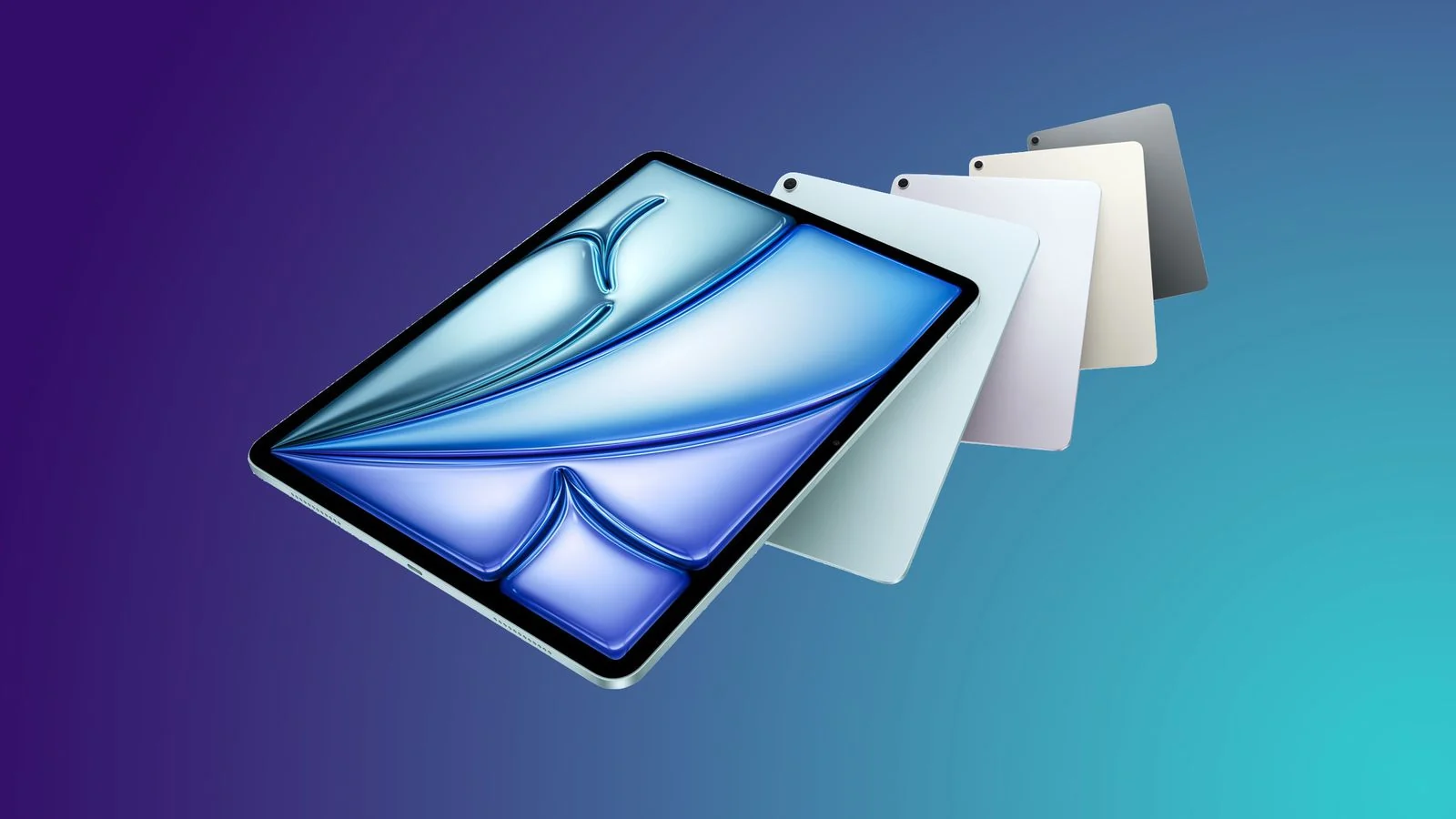
What exactly is Apple switching, and what stays the same?
Conclusion first: the headline change is the emissive layer, not the whole display architecture. The iPad Air with the M4 chip still uses an LCD today. If this transition lands, the Air becomes the third iPad product line running OLED, after the iPad Pro introduced OLED in 2024 and the new iPad mini with its 8.5-inch OLED panel went on sale this November.
The rumor itself has now been running for more than a year. Back in October 2025, reporting said Apple was developing an OLED iPad Air and that timing would not be earlier than 2027; the latest version of the story narrows the window to the first half of 2027 and applies to both sizes at once, so the conversion is a dual-size move rather than a single-model refresh. For device teams, that sequencing matters: a mid-cycle panel swap on a mainstream line usually implies a fixed tooling and driver-IC footprint, with the display module being the component that changes.
How do the OLED iPad Air and OLED iPad Pro differ on paper?
They are separated on three engineering axes: emissive stack, backplane, and refresh. Reporting indicates the OLED iPad Air will use a single-stack emissive structure similar to the OLED iPad mini, paired with an LTPS (low-temperature polycrystalline silicon) backplane, while the iPad Pro uses a dual-stack emissive structure for higher brightness and a more advanced LTPO (low-temperature polycrystalline oxide) backplane.
LTPO is the reason ProMotion exists. Oxide transistors hold pixel charge longer between refresh intervals, so the panel can cut refresh count on static content and save power. On the iPad Pro that enables a variable refresh range of 10Hz to 120Hz under ProMotion. The OLED iPad Air is expected to stay at 60Hz, which keeps ProMotion an iPad Pro-exclusive feature and sharpens the segmentation across Apple's tablet stack. Independent display-industry reference material from oled-info puts the LTPO advantage at roughly 5% to 15% power savings versus an LTPS backplane — a useful sanity check on why Apple would not move LTPO down to the Air while it is still protecting Pro's price umbrella.
| Comparison axis | Expected OLED iPad Air | OLED iPad Pro today |
|---|---|---|
| Emissive structure | Single-stack, similar to the OLED iPad mini | Dual-stack for higher brightness |
| Backplane | LTPS (low-temperature polycrystalline silicon) | LTPO (low-temperature polycrystalline oxide) |
| Refresh behaviour | Expected to stay at 60Hz | ProMotion, variable 10Hz to 120Hz |
| Panel lead | Samsung Display expected as main supplier; BOE chasing one size | LG Display expected to remain the dominant source |
| Line coverage | Both sizes move off LCD | Two screen-size models counted in forecast volumes |
Who supplies the panels, and what does the allocation say about real capacity?
The allocation picture is the part most retellings skip. Samsung Display is expected to carry the bulk of OLED panel supply for the OLED iPad Air. BOE is pursuing an order for one of the two sizes, but it still has to clear Apple's supplier qualification process first. If Samsung takes both the iPad Air and iPad mini OLED work, it is positioned to become the largest supplier of Apple's OLED iPad panels overall. On the high end, LG Display is still expected to dominate iPad Pro OLED panel supply.
Two things worth watching on the fab side. First, a secondary-source slot for only one size is a normal qualification pattern: capacity ramps by product cut, not by line. Reporting from Tech Times has described BOE targeting 2027 iPad Air OLED panels at its Chongqing-based facility, with an initial allocation possibly weighted toward units for the Chinese market — that is a report, not a confirmed program, and it does not change the qualification gate that Apple applies before volume orders. Second, mid-size IT OLED economics run on Gen 8.6 mother glass rather than smartphone Gen 6 glass, so a panel that looks like an iPhone display still hits different cost and cut-efficiency curves. Our breakdown of Apple's HMO OLED push, sputtering and ALD covers the backplane process steps that separate oxide-based IT panels from LTPS phone panels, and why Samsung Display and LG Display are re-tooling rather than just re-ordering.
Are 4 to 5 million units realistic, and what does the demand math say?
Industry forecasts put 2027 shipments of the OLED iPad Air and the OLED iPad mini at 4 million to 5 million units each, with the OLED iPad Pro expected to ship about 3 million to 4 million units. The iPad Air and iPad Pro figures both count two screen-size models. Set against Apple's own earlier expectation, the gap is instructive: current iPad Pro projections sit visibly below the roughly 10 million units per year target discussed before launch, and industry voices point to the higher price as one of the main reasons demand fell short.
The pricing context supports that read. CNET's June 2026 price-reset table shows the 11-inch iPad Pro moving from $999 to $1,199 and the 11-inch iPad Air from $599 to $749, a step that raises the entry price of every OLED path in the lineup before the Air conversion even begins. On the panel side, Omdia forecast tablet OLED panel shipments to grow 39% year on year in 2026 to 15 million units while LCD stayed broadly stable, and separately put tandem (multi-stack) penetration at 36% of the OLED tablet and notebook panel market in 2026. In other words: the OLED tablet pie is expanding quickly, but the single-stack, non-tandem Air panel is the price-sensitive slice of it — which is exactly why one supplier leading and a second supplier qualifying for one size is a fragile setup.
If you are sizing the display roadmap across Apple's IT products, this conversion is not an isolated event; the same OLED migration logic is what underpins our analysis of OLED MacBook Pro adoption and the roughly 75% cumulative drop in Mini-LED laptop panel volumes forecast for the 2025 to 2027 window.
What are the failure modes between now and the launch window?
Three, ranked by how likely they are to move the date rather than the spec:
- Qualification, not capacity. BOE is still on the outside of the approval gate for this program. Until it clears, the Air OLED order is effectively single-sourced to Samsung Display — one supplier, one yield curve, and very little negotiation leverage on price for Apple.
- Single-stack mid-size lifetime. A 60Hz single-stack panel is a defensible cost choice, but tablets held on documents, toolbars and keyboards for years are a static-image stress case. Watch for brightness ceiling and dimming-strategy concessions in early teardowns.
- Tool-cycle and materials timing. A conversion of both sizes in the first half of 2027 means panel orders, module fixtures and driver-IC variants are locked roughly a year ahead. Any slip in Gen 8.6 output qualification shows up as a launch-window delay long before it shows up as a spec change.
Common misconceptions about the OLED iPad Air
- "OLED means 120Hz." It does not. Refresh is a backplane and driver question. On the current reporting, the Air stays at 60Hz while ProMotion with 10Hz to 120Hz remains LTPO-exclusive to the iPad Pro.
- "BOE is a confirmed second source." It is chasing an order for one size, pending Apple qualification. Design-in on a dual-sourced assumption is premature.
- "The Air gets the Pro's panel." Different stack (single versus dual) and different backplane (LTPS versus LTPO) mean different brightness, power and cost curves.
- "Only one size switches in 2027." The reporting covers a dual-size move: both screen-size models of the iPad Air leave LCD in the same transition.
FAQ: the questions procurement and design teams ask first
Is the OLED iPad Air confirmed for the first half of 2027?
No. It is a supply-chain report. The window has moved from "not before 2027" in the October 2025 accounts to "first half of 2027" now, and the story has been circulating for more than a year. Treat it as a planning assumption with a stated confidence level, not a spec input.
Will the OLED iPad Air support ProMotion?
Not on current information. The Air is expected to keep a 60Hz panel on an LTPS backplane; ProMotion and the 10Hz to 120Hz variable range depend on LTPO and remain an iPad Pro feature.
Which supplier should a second-source plan assume?
Samsung Display as the primary for the OLED iPad Air. LG Display stays the reference point for iPad Pro panels. BOE should be modeled as a candidate for one size, gated by qualification, not as a live alternate.
Does OLED guarantee the Air will outsell the LCD model?
No. OLED removes LCD's contrast and thickness limits, but forecast demand for the OLED iPad Pro, at about 3 million to 4 million units, sits well below the roughly 10 million units per year pre-launch target. Price elasticity, not panel type, is the binding constraint.
Should accessory and industrial-design teams redesign now?
Only where the display module dictates the interface. Module thickness, antenna keep-out and thermal paths change with a single-stack OLED swap; enclosure dimensions across the two sizes have historically been stable through that kind of transition.
Action checklist before the H1 2027 window
- Model two panel scenarios, not one: single-sourced Samsung Display at 60Hz single-stack, and a dual-sourced case where BOE clears qualification for one of the two sizes.
- Lock display-driver and timing-controller assumptions early, since a fixed 60Hz LTPS panel and an LTPO ProMotion panel are different bills of materials, not different firmware options.
- Track the qualification milestone, not the rumor milestone. An Apple supplier-approval signal for BOE on an iPad-class cut is the leading indicator that pricing pressure can finally move.
- Stress-test total cost of ownership. June 2026 price resets across the iPad range raise the entry cost; if panel premium adds to that, the 4 million to 5 million unit forecast for the OLED iPad Air is the number to defend in your own demand plan.
- Watch tandem penetration as a leading price signal. Omdia's 36% tandem share for OLED tablet and notebook panels in 2026 tells you where capacity and material spend are going, and therefore how quickly single-stack panel prices can come down.
Where this lands: capacity rhythm over launch noise
The launch month is the least interesting variable. What should drive planning is the shape of the ramp: how fast a single-stack LTPS mid-size OLED reaches acceptable yield on Gen 8.6 glass, whether a second supplier clears qualification in time to take one size, and whether Apple keeps 60Hz off the Air to protect the Pro line's pricing. Panel investment decisions taken in 2026 are what determine whether the first half of 2027 delivers two OLED iPad Air sizes on schedule — and whether the display upgrade turns into volume, or into another premium price point that the tablet market declines to pay.
Sources and further reading
- Omdia, "Tablet OLED display shipments to grow 39% YoY in 2026 while LCD remains stable" — https://omdia.tech.informa.com/pr/2025/nov/tablet-oled-display-shipments-to-grow-39percent-yoy-in-2026-while-lcd-remains-stable
- Omdia, "Tandem penetration forecast to reach 36% share of OLED tablet and notebook panel market in 2026" — https://omdia.tech.informa.com/pr/2025/apr/tandem-penetration-forecast-to-reach-36-percent-share-of-oled-tablet-and-notebook-panel-market-in-2026
- oled-info, "LTPO OLED backplane technology" — https://www.oled-info.com/ltpo
- CNET, "Your next iPad and Mac are going to cost more" (June 2026 Apple price reset table) — https://www.cnet.com/tech/mobile/apple-price-increase-june-2026-ipad-mac-neo-news/
- Tech Times, "iPad Air OLED may split displays by geography: BOE for China, Samsung worldwide" — https://www.techtimes.com/articles/324221/20260812/ipad-air-oled-may-split-displays-geography-boe-china-samsung-worldwide.htm
- Electronicseng Semiconductors: Apple's HMO OLED push, sputtering and ALD — https://electronicseng.com/semiconductors/apple-oled-panel-process-sputtering-ald-samsung-lg
- Electronicseng Semiconductors: OLED MacBook Pro adoption and Mini-LED panel volumes — https://electronicseng.com/semiconductors/oled-macbook-pro-mini-led-shipment-drop